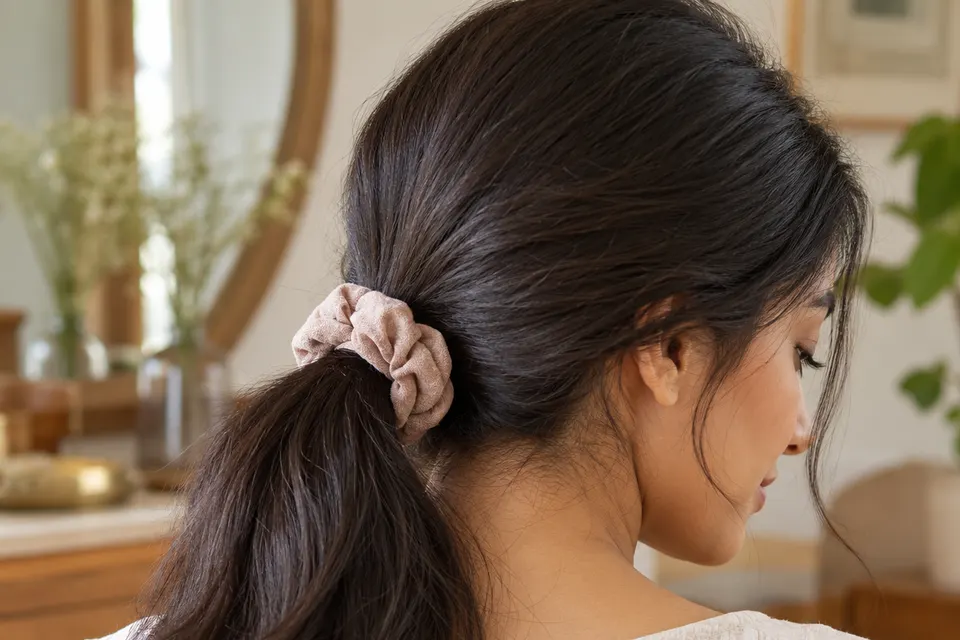
- loose hairstyles
- prevent traction alopecia
- hair tie breakage
- low tension ponytail
Low-Tension Hair-Tie Routine
A rotation of loose ponytails, clips and open hair that reduces repeated pulling at the same scalp points.
Important: this remedy is only a supportive home measure. Keep taking any medicine your doctor has prescribed, monitor your readings, and consult your doctor before adding anything new.
loose hairstyle for hair breakage: method, benefits and precautions
A loose hairstyle should feel comfortable rather than lifting the skin around the hairline. Start by noticing where tension occurs: at the temples, behind the ears or under a heavy bun. A style that looks neat is not automatically gentle if it hurts throughout the day.
Choose a tie without a damaged join that catches strands. Secure only as much as needed, and avoid tightening repeatedly whenever a few hairs escape. If the activity needs protective styling or equipment, find a safe arrangement rather than leaving hair loose around machinery.
Change the position when practical instead of pulling the same small area every day. Undo gently rather than ripping the tie through tangles. A soft-looking accessory can still pull if wrapped many times.
The purpose is reducing unnecessary tension, not treating every form of hair loss. Persistent soreness, patches or breakage at the hairline warrants assessment. Do not hide a painful area under an even tighter style to make the change less visible.
Ingredients
- Soft fabric hair ties
- A smooth claw clip
- A loose-style rotation
How to prepare
- Check for scalp pulling or headache.
- Secure hair with minimal tension.
- Change the tie position each day.
How to use
- Use a small portion or short session the first time.
- Change one thing at a time and note your response.
- Continue normal meals, hydration and prescribed treatment.
Helpful habits
- Use comfort as feedback.
- Inspect the tie for snagging joins.
- Keep workplace and activity safety in mind.
Precautions
- Broken edge hairs, scalp bumps or thinning where styles pull may need dermatology advice.
- Ask a clinician first if you have allergies, are pregnant, have a long-term condition or take regular medicines.
- Seek urgent care for severe pain, breathing difficulty, fainting, repeated vomiting, bleeding or rapidly worsening symptoms.
Frequently asked questions
Can a soft tie still pull?
- Yes, particularly if wrapped tightly many times.
Should loose hair override machine safety?
- No. Use an appropriately safe arrangement.
Prepared by: All Ayurvedics editorial team
No clinician review is recorded for this page. This is general information, not individual diagnosis or treatment advice.
Responsible site owner/editor: Manoj Singh. Editorial responsibility