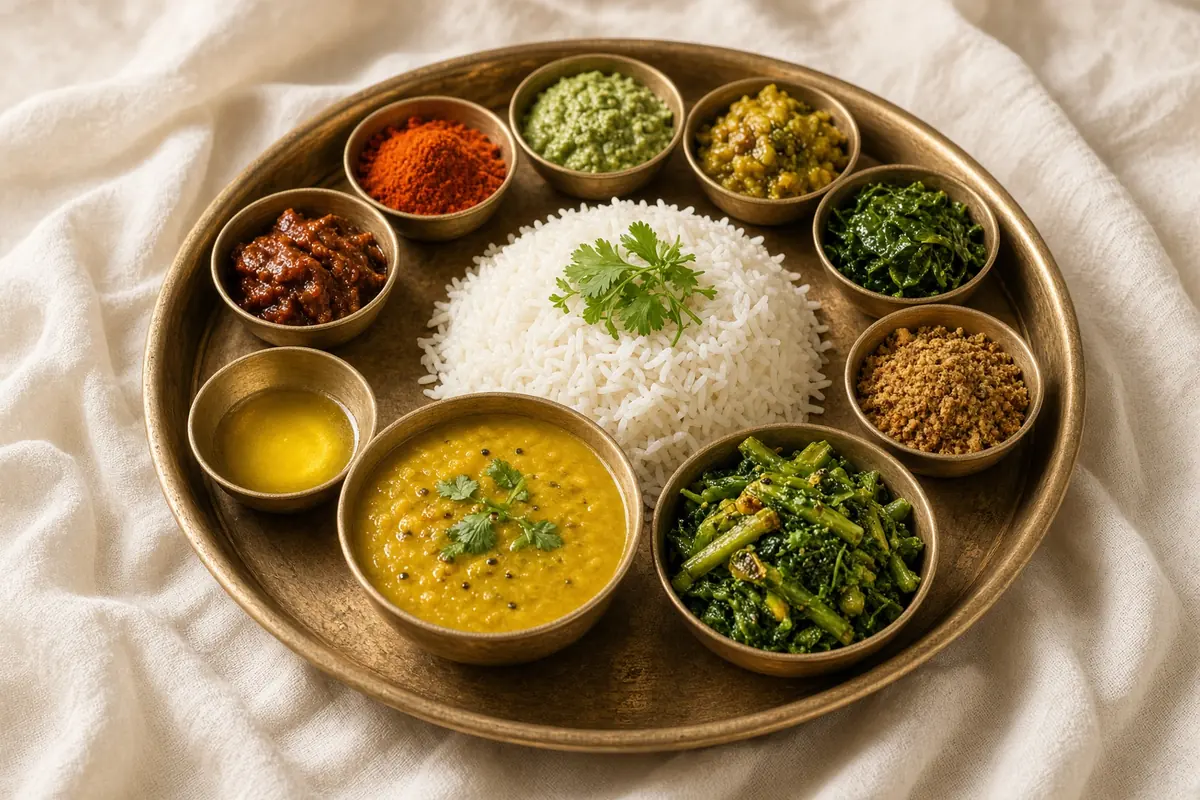
Dinacharya: a simple Ayurvedic daily routine you can actually keep
Ayurveda believes health is built in small, repeated habits. Here is a realistic version of dinacharya — the classical daily routine — for busy modern lives.
Published 20 September 2026 · 4 min read
Prepared by: All Ayurvedics editorial team
No clinician review is recorded for this page. This is general information, not individual diagnosis or treatment advice.
Responsible site owner/editor: Manoj Singh. Editorial responsibility
Ayurveda has a practical idea at its heart: build a day around repeatable habits. Classical texts call this dinacharya — literally, "the conduct of the day". A regular sleep schedule is also recommended by modern sleep guidance, but that does not validate every traditional step or promise a particular health result.
You do not need to follow every step described in the old texts to benefit. Think of dinacharya as a menu. Start with two or three habits that feel easy, keep them for a month, and then add more.
Why routine matters in Ayurveda
According to Ayurveda, the day moves through cycles associated with the three doshas. Early morning and evening are described with kapha qualities, midday with pitta, and the pre-dawn hours and late afternoon with vata. These are traditional descriptions, not measurements of digestion or metabolism.
Morning: set the tone
Keep a workable wake time. Some Ayurvedic traditions recommend rising before sunrise, in the period called brahma muhurta. You do not need to lose sleep to do that. Choose a schedule that allows enough sleep and keep it reasonably consistent, including weekends.
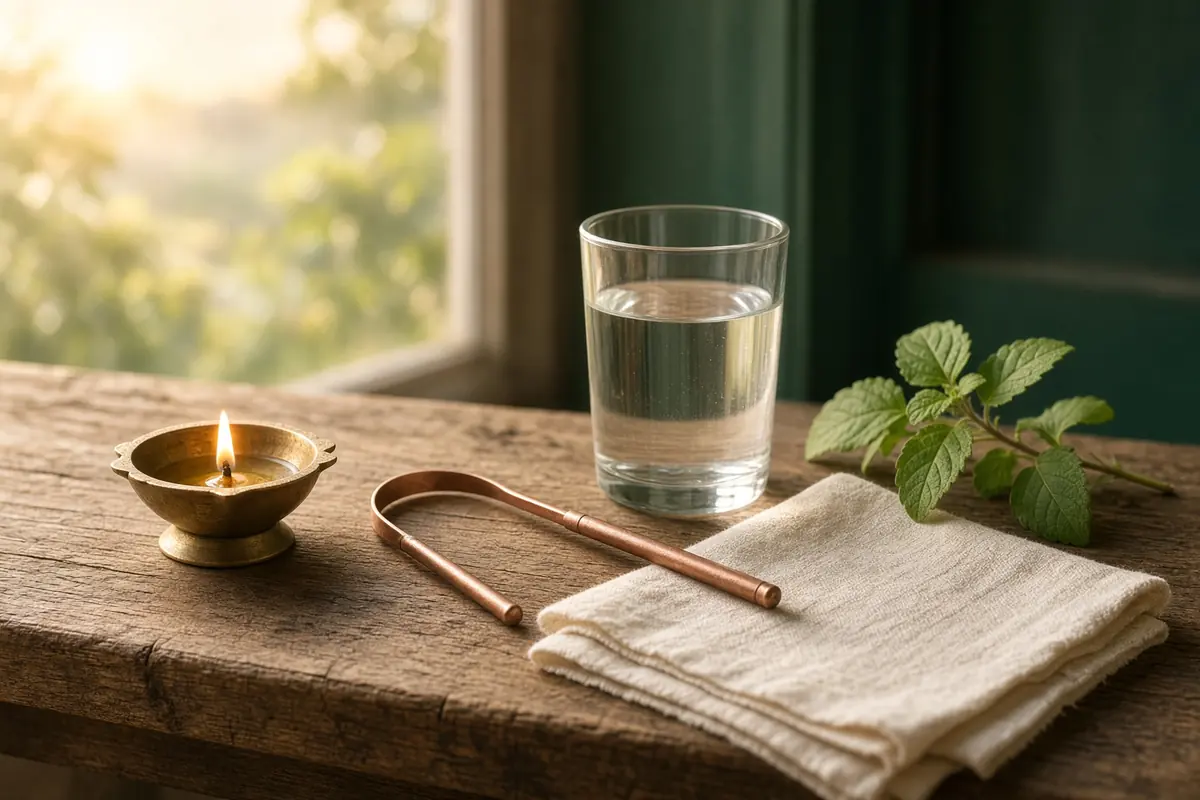
Clean the senses. After using the toilet, brush your teeth and gently scrape your tongue from back to front with a steel or copper tongue cleaner. This takes ten seconds and leaves the mouth noticeably fresher. Splash your eyes with cool water. Some people also practise oil pulling — swishing a spoon of sesame or coconut oil around the mouth for a few minutes — before brushing.
Drink water if you are thirsty. Warm water can be a pleasant morning choice, but its temperature has no established special digestive effect. Seek medical advice for persistent constipation or a change in bowel habits.
Move your body. Ten to thirty minutes of movement is enough: a brisk walk, a few rounds of surya namaskar, or simple stretches. Ayurveda suggests exercising to about half of your capacity — you should feel warm and lightly sweaty, not exhausted.
Self-massage (abhyanga). Before your bath, massage warm oil into your skin for five to ten minutes. Sesame oil suits most people in cooler months; coconut oil is a cooling choice in summer. Even a quick oiling of the scalp and feet is worthwhile on busy days. Then bathe with warm, not hot, water.
A few minutes of stillness. Sit quietly for five minutes, watch your breath, or practise a simple pranayama such as slow alternate-nostril breathing. This short pause makes a real difference to how the rest of the day feels.
Midday: eat your main meal
Ayurveda traditionally favours a substantial midday meal. You can place your main meal when it suits your schedule and appetite; digestion is not universally strongest at noon. Include a variety of foods, sit down when possible, and take an easy walk after eating if it feels comfortable.
Between meals, give digestion a rest rather than snacking constantly. If you are hungry, choose a piece of fruit, a few soaked nuts, or a cup of warm herbal tea.
Evening: slow down
As the light fades, Ayurveda encourages us to switch from doing to unwinding.
- Eat a lighter dinner, ideally two to three hours before bed. Soups, khichdi, dal with vegetables and chapati are good choices.
- Dim the lights and reduce screens in the last hour before sleep.
- A warm foot massage with a little oil, or a cup of warm milk with a pinch of cardamom, helps many people settle.
- Choose a bedtime that allows enough sleep and fits your household's schedule.
A realistic starter routine
If all of this feels like a lot, begin here:
- Choose a wake time that allows enough sleep and keep it reasonably consistent, including weekends.
- Scrape your tongue and drink a glass of warm water.
- Move for fifteen minutes.
- Include vegetables, protein and whole grains across the meals that fit your day.
- Switch off screens thirty minutes before bed.
Keep these five habits for four weeks and notice how your sleep, digestion and energy change. Then add abhyanga, meditation or an earlier bedtime.
A note on flexibility
Dinacharya is guidance, not a rulebook. Night-shift workers, new parents and people with health conditions will need to adapt it. The spirit of the practice is simple: regularity, attention and kindness towards your own body. If you have a medical condition, are pregnant, or take regular medication, talk to your doctor or a qualified Ayurvedic practitioner before making big changes — for example, to fasting or exercise.
Small steps, repeated daily, are what Ayurveda has always meant by lifestyle medicine.
Related remedies
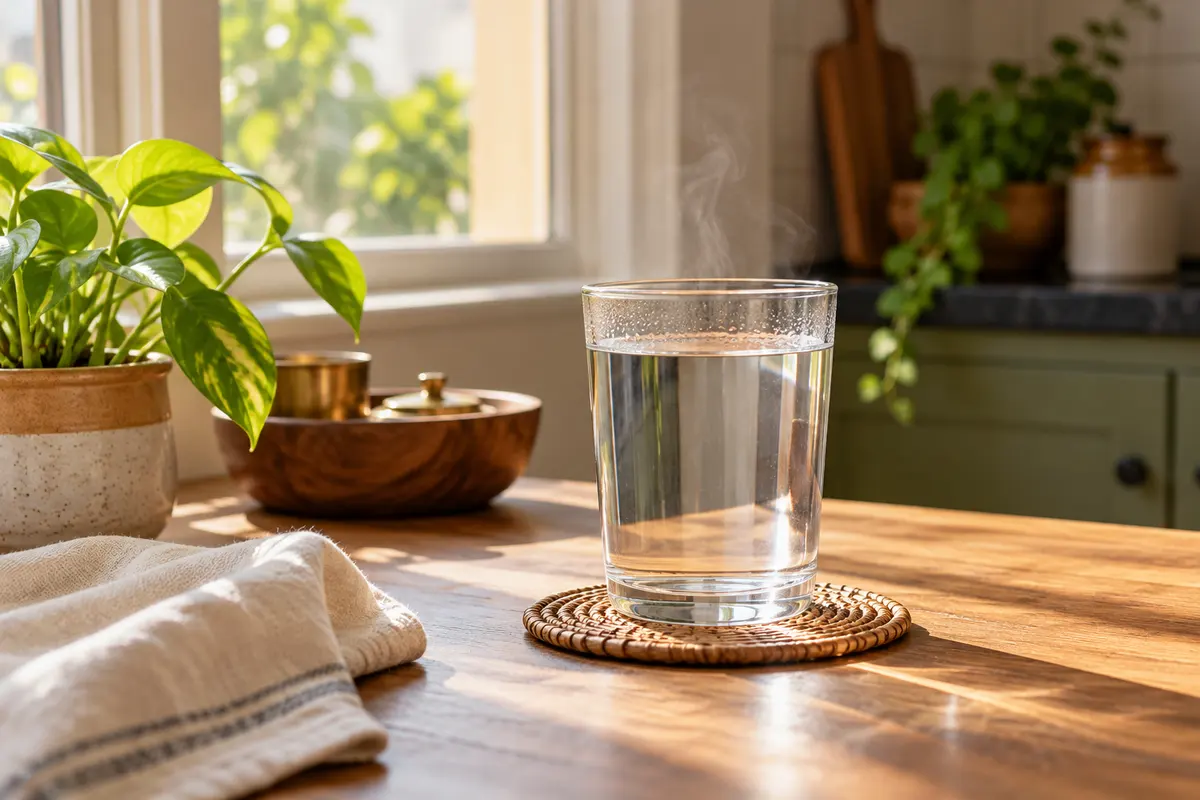 Warm Water in the Morning: A Simple Hydration RoutineWhat morning warm water can and cannot do, with safe hydration guidance and a clear correction of detox and rapid weight-loss claims.
 Water-Bottle Cues for a Steady Hydration HabitA flexible hydration routine based on thirst, weather and activity rather than a compulsory litre target.
 Coriander-Seed Infusion as a Caffeine-Free DrinkA mild coriander-seed drink for caffeine-free variety, without kidney-cleanse, diabetes-treatment or rapid weight-loss claims.
Get All Ayurvedics updates
Occasional recipes, kitchen notes and site updates in English or Hindi. Email us from your subscribed address to request removal.