Ayurvedic diet basics: six tastes, simple rules and a balanced plate
You don't need exotic superfoods to eat the Ayurvedic way. Learn the six tastes, the most useful eating habits and how to build a balanced Indian thali.
Published 28 August 2026 · 3 min read
Prepared by: All Ayurvedics editorial team
No clinician review is recorded for this page. This is general information, not individual diagnosis or treatment advice.
Responsible site owner/editor: Manoj Singh. Editorial responsibility
Ayurveda places great emphasis on food and how people eat. Its six-taste framework is a traditional way to describe meals, not a substitute for nutrition advice. A practical Indian plate can also follow well-supported principles: variety, vegetables, pulses, whole grains and attention to salt and added sugar.
The six tastes (shad rasa)
Ayurveda recognises six tastes, each built from particular elements and each with its own effect on the doshas:
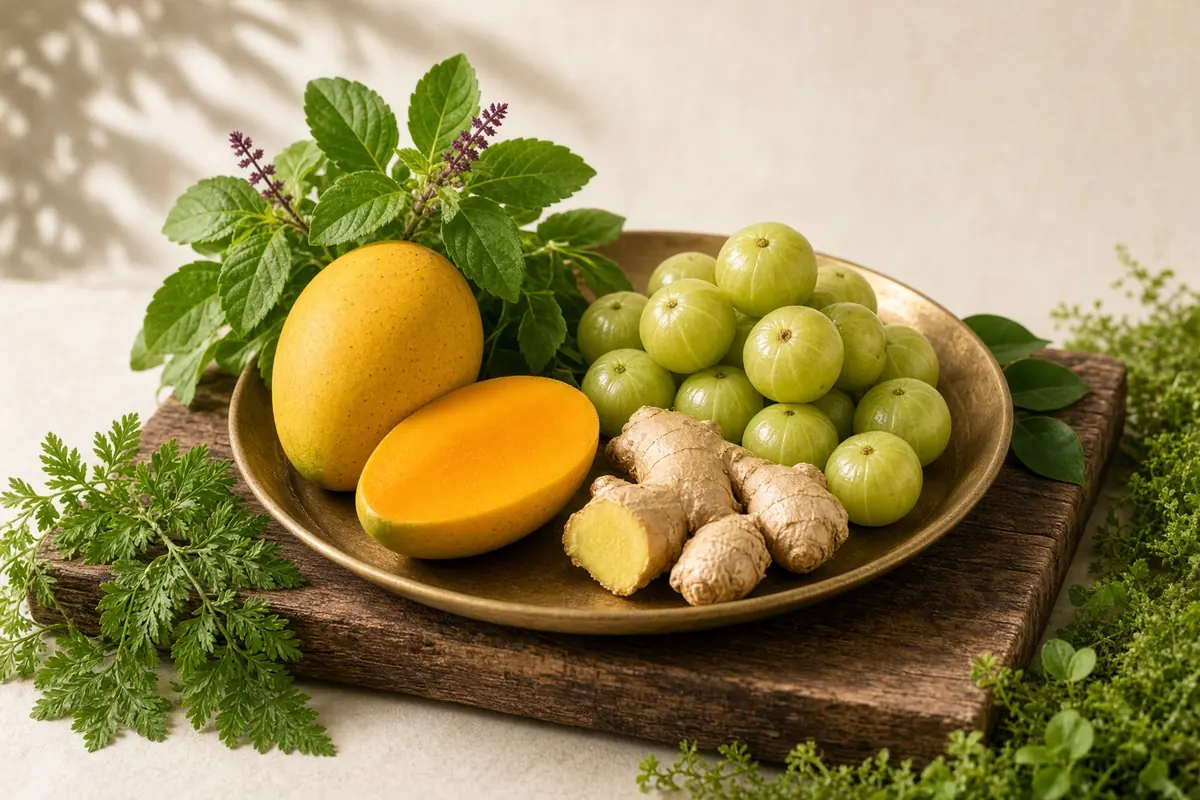
- Sweet (madhura) — grains, milk, ghee, dates, sweet fruits. Nourishing and grounding. Calms vata and pitta; increases kapha in excess.
- Sour (amla) — lemon, amla, curd, tamarind. Stimulates appetite. Calms vata; can aggravate pitta and kapha.
- Salty (lavana) — rock salt, sea salt. Described traditionally as stimulating taste; either kind contributes sodium, so use sparingly.
- Pungent (katu) — ginger, black pepper, chilli, garlic. Heating and clearing. Reduces kapha; can aggravate pitta and vata.
- Bitter (tikta) — bitter gourd, fenugreek and leafy greens. Ayurveda describes this taste as light; eating bitter foods does not "detoxify" the body.
- Astringent (kashaya) — lentils, pomegranate, unripe banana, green tea. Drying and firming. Reduces pitta and kapha; can increase vata.
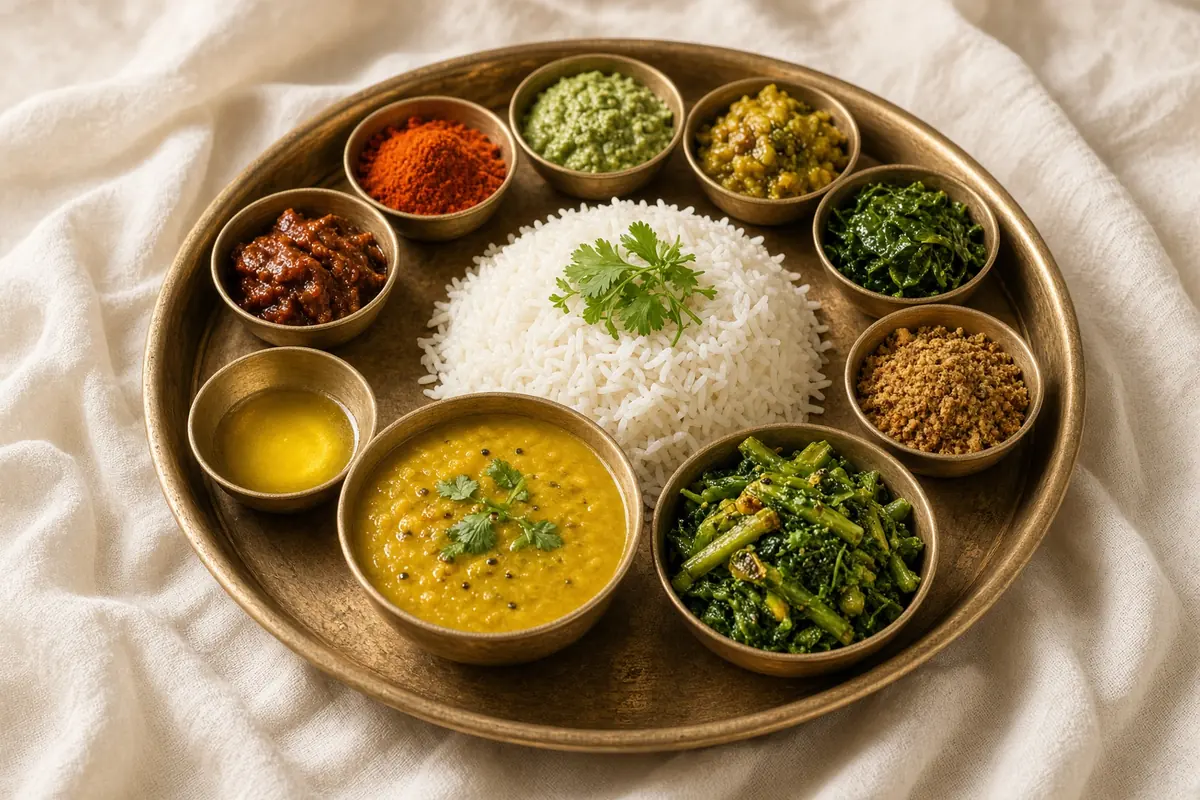
A balanced meal includes all six tastes in some measure. That is exactly what a traditional thali does: rice or roti (sweet), dal (astringent), a squeeze of lemon or pickle (sour), a pinch of salt, a spiced sabzi (pungent) and a bitter vegetable or methi.
Principles of how to eat
Ayurveda's eating guidelines are simple and surprisingly modern:
- Eat when you are hungry, and when the previous meal has been digested. Constant grazing is discouraged.
- Plan meals around your schedule and needs. A larger lunch is an Ayurvedic preference, not a medical rule about digestion.
- Eat freshly cooked, warm food where possible. Leftovers that have been refrigerated for days are considered heavy and less nourishing.
- Sit down and eat calmly. Eating while walking, arguing or scrolling on a phone is thought to weaken digestion.
- Chew well and eat at a moderate pace. Stop when you are about three-quarters full, leaving room for digestion.
- Sip warm water with meals rather than large amounts of iced drinks.
Food combinations to be careful with
Ayurveda describes certain combinations as viruddha ahara — incompatible foods that can be hard to digest together. Commonly mentioned examples include:
- Milk with sour fruits, fish, or salty foods.
- Honey heated or cooked, or mixed with an equal amount of ghee.
- Curd at night, or heated curd.
- Fruit eaten immediately after a heavy meal.
These are traditional food rules, not established toxic combinations. Do not remove nutritious foods solely because a combination appears on this list. Food allergies, intolerances and safe storage are separate, evidence-based concerns.
Building an Ayurvedic plate
A simple way to plan meals:
- Half the plate: seasonal vegetables, cooked with digestive spices.
- A quarter: whole grains — rice, wheat, millets such as jowar, bajra and ragi.
- A quarter: protein — dal, beans, paneer, curd at lunch, or eggs and fish if you eat them.
- A teaspoon of ghee or cold-pressed oil, a little fresh chutney, and warm water.
Spices as everyday support
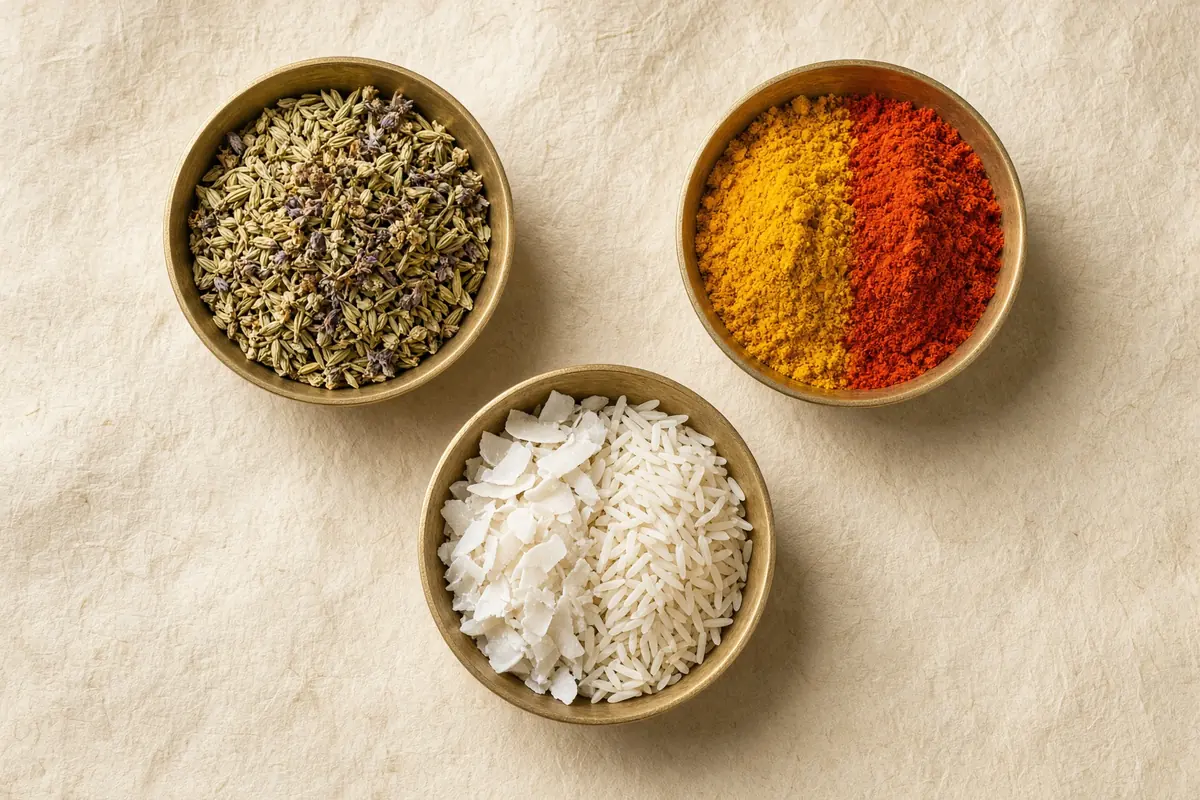
The Indian masala box adds flavour and variety. Cumin, coriander, fennel, turmeric, ginger, black pepper, ajwain and hing can make vegetable and pulse dishes appealing without extra salt. Culinary use is different from taking concentrated supplements.
Eating for your constitution
Once you understand the doshas, you can fine-tune your diet:
- Vata-predominant people do well with warm, moist, slightly oily foods and regular mealtimes.
- Pitta-predominant people benefit from cooling, less spicy food and not skipping meals.
- Kapha-predominant people thrive on lighter, warm, well-spiced meals and fewer sweets and dairy.
Keep it realistic
Ayurvedic eating is not about perfection. A home-cooked dal-chawal with a spoon of ghee and some vegetables, eaten calmly at the right time, is more Ayurvedic than an expensive "superfood" smoothie gulped at the desk.
If you have diabetes, high blood pressure, kidney disease, food allergies or are pregnant, your diet needs to be planned with your doctor or a registered dietitian. Ayurvedic principles can usually be adapted to fit within that advice.
Related remedies
 Steamed Dhokla on a Balanced Breakfast PlateHow to pair steamed dhokla with vegetables and protein while controlling sugary tempering and portions.
 Warm Water in the Morning: A Simple Hydration RoutineWhat morning warm water can and cannot do, with safe hydration guidance and a clear correction of detox and rapid weight-loss claims.
 Vegetable Poha for a Balanced Indian BreakfastA practical vegetable poha method with portion, protein pairing and food-safety guidance for a balanced Indian breakfast.
Get All Ayurvedics updates
Occasional recipes, kitchen notes and site updates in English or Hindi. Email us from your subscribed address to request removal.