Ritucharya: how to eat and live with India's six seasons
Ayurveda divides the year into six seasons and adjusts food and habits for each. Here is a practical guide to seasonal living in the Indian climate.
Published 5 September 2026 · 3 min read
Our grandparents rarely needed a nutrition chart. They ate sesame and jaggery in winter, cooling buttermilk and sattu in summer, and light, warm food when the rains arrived. This instinctive way of living with the seasons has a name in Ayurveda: ritucharya, the seasonal regimen.
The idea is that the qualities of each season — hot or cold, dry or damp — build up in the body. By adjusting food and habits in time, we stop small imbalances from turning into seasonal complaints.
The six Indian seasons
Ayurveda follows the traditional Indian calendar of six seasons, each roughly two months long. Exact timing varies with region — the hills, the coast and the plains all differ — so use the descriptions rather than the dates as your guide.
Shishira (late winter, roughly mid-January to mid-March)
The coldest, driest part of the year. Digestion is naturally strong, and the body needs warmth and nourishment.
- Favour warm, well-cooked and slightly oily food: soups, dals, root vegetables, whole grains, ghee.
- Sesame, jaggery, dry ginger and seasonal greens such as sarson and bathua are traditional favourites.
- Oil massage before a warm bath is especially valuable.
- Avoid cold drinks and very light, dry meals that leave you hungry.
Vasanta (spring, mid-March to mid-May)
As the sun warms up, the kapha that accumulated in winter begins to "melt". This is why coughs, colds, allergies and a heavy, sleepy feeling are common in spring.
- Eat lighter, warm meals with less oil, sugar and dairy.
- Add pungent and bitter tastes: ginger, black pepper, turmeric, fenugreek, neem flowers, bitter gourd.
- Old grains like barley and millets, and honey in small amounts, suit this season.
- Exercise more briskly and avoid sleeping during the day.
Grishma (summer, mid-May to mid-July)
Strong heat dries the body and weakens digestion. Energy dips and dehydration is common.
- Keep meals light and cooling: rice, moong dal, seasonal vegetables such as lauki, tori and cucumber, sweet juicy fruits.
- Drink plenty of water, buttermilk, coconut water, and traditional coolers such as aam panna or sattu drink.
- Reduce very spicy, salty, sour and fried foods, and alcohol.
- Stay out of the midday sun and rest in the hottest hours. A short afternoon rest is acceptable in this season only.
Varsha (monsoon, mid-July to mid-September)
The rains bring relief, but also dampness, weak digestion and a higher risk of infections from food and water.
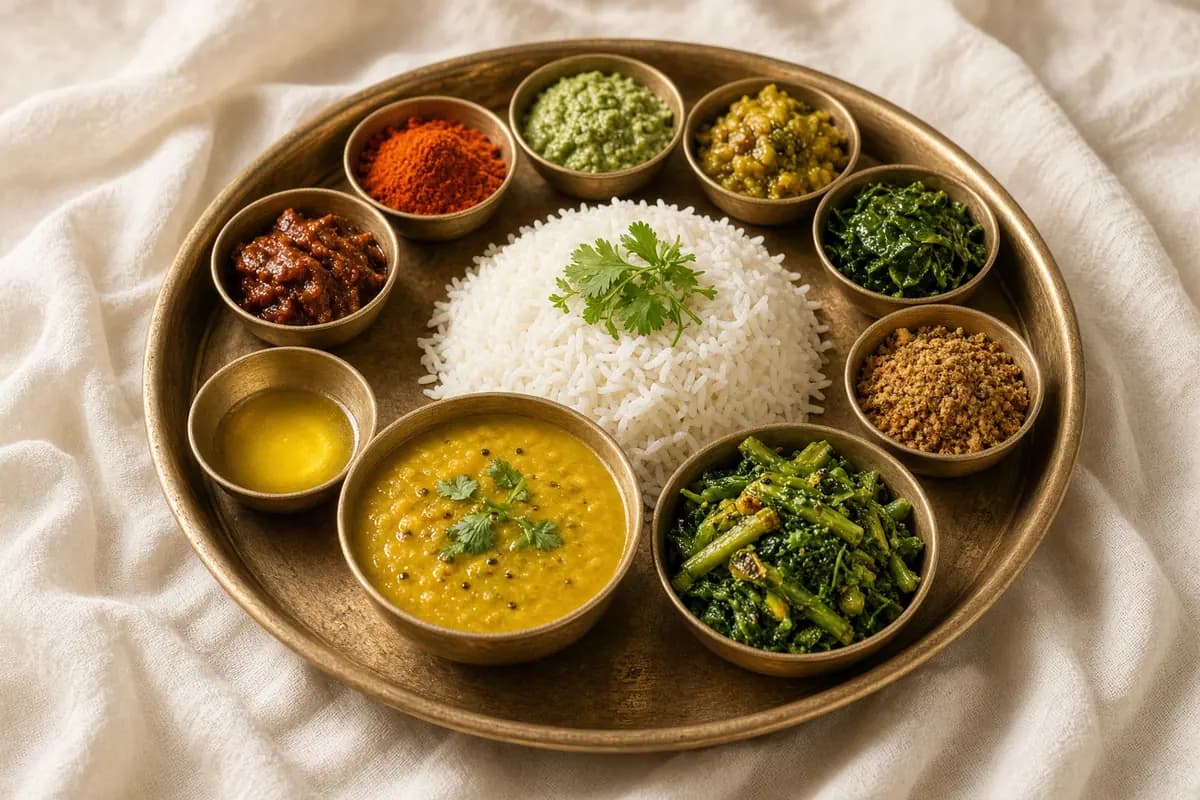
- Eat freshly cooked, warm, easily digestible food. Khichdi, soups and steamed dishes are ideal.
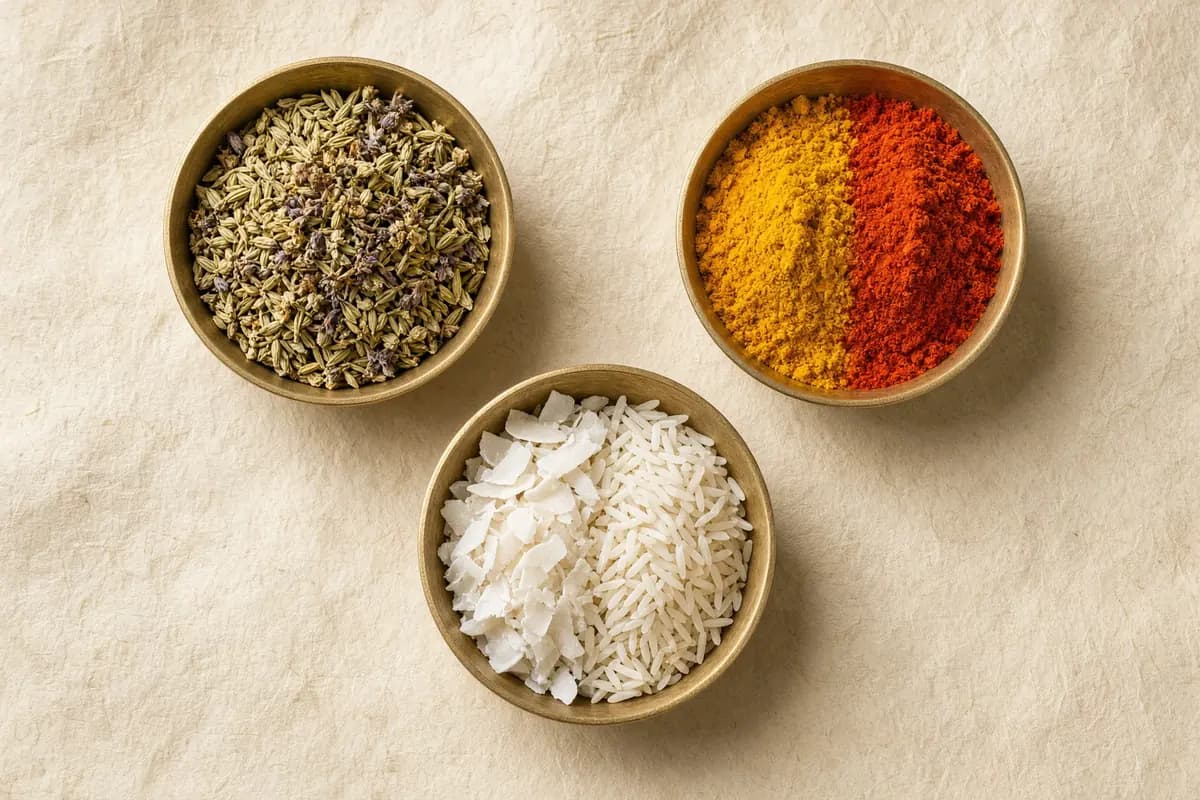
- Use digestive spices generously: ginger, cumin, ajwain, asafoetida (hing), black pepper.
- Drink boiled or filtered water, and avoid street food, raw salads and leafy greens that are hard to clean.
- Keep the body dry and warm, and avoid sleeping in damp clothes.
Sharad (autumn, mid-September to mid-November)
After the monsoon, the sudden heat of sharad tends to aggravate pitta. Acidity, skin rashes and irritability become more common.
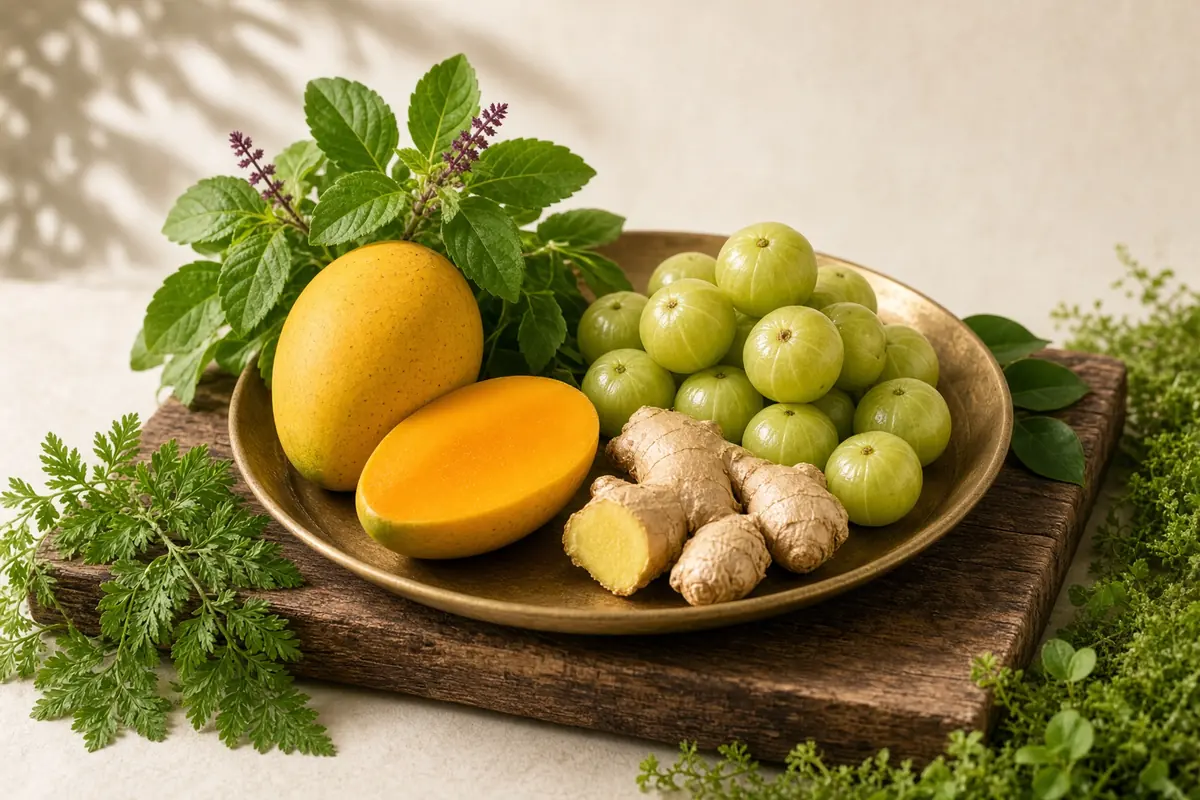
- Choose sweet, bitter and astringent tastes: ghee, rice, wheat, moong, pomegranate, amla, gourds, coriander.
- Reduce sour, spicy, fermented and deep-fried food.
- Traditions such as enjoying moonlight on Sharad Purnima reflect the cooling needs of this season.
Hemanta (early winter, mid-November to mid-January)
Cold returns, and digestive fire becomes strong again. It is a season for building strength.
- Enjoy nourishing food: whole grains, urad dal, milk, ghee, nuts, sesame and jaggery.
- Regular oil massage, exercise and exposure to morning sun are recommended.
- Avoid fasting for long periods or eating too little, which can aggravate vata.
The junctions between seasons
Ayurveda pays special attention to ritu sandhi — the two weeks at the end of one season and the start of the next. Change your diet and routine gradually during this period rather than overnight. It is also the time when many people catch colds, so be gentle with your body.
Local, seasonal and simple
The easiest way to follow ritucharya is to shop at your local vegetable market and cook what is abundant. Seasonal produce is fresher, cheaper and naturally suited to the needs of that time of year.
Keep it safe
Seasonal eating is about everyday food, not medicine. People with diabetes, kidney disease, heart conditions, food allergies or special diets should follow their doctor's advice first and adapt seasonal ideas within those limits. Pregnant and nursing women should check before adding herbs or making major changes.
Related remedies
 How to lose weight with thyroid (hypothyroidism): medicine timing, diet and strength trainingHypothyroidism slows metabolism and can make weight loss feel impossible — but it isn't. Here is how to lose weight with thyroid problems: take your thyroid tablet correctly so levels stay in range, eat protein- and fibre-rich Indian meals, add strength training to walking, and protect your sleep, all under your doctor's guidance.
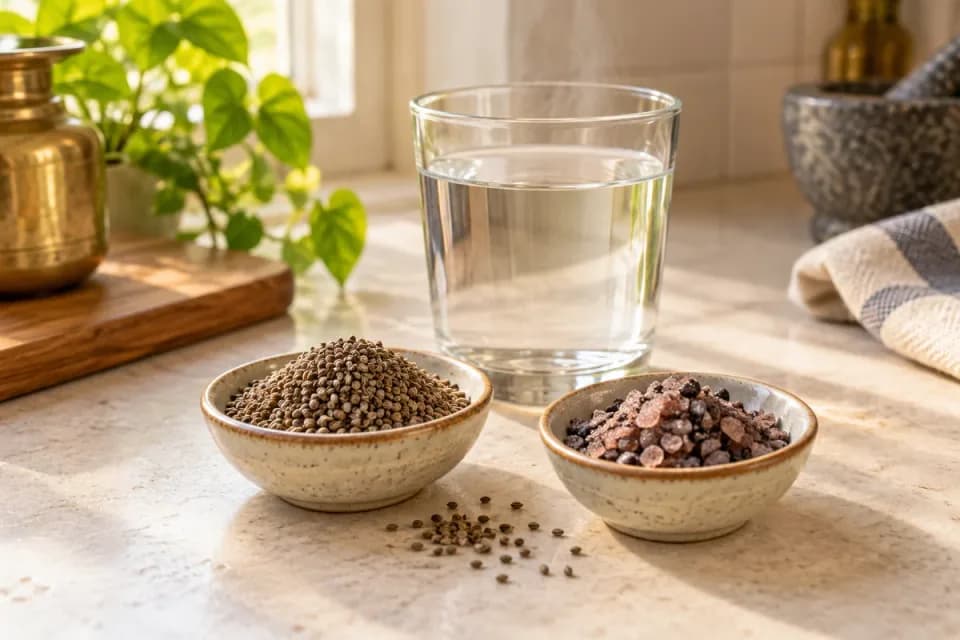 Ajwain with black salt for gasCarom seeds (ajwain) have a sharp, warming taste. A small pinch with black salt and warm water is a well-known kitchen measure for occasional gas and cramping after a heavy meal.
 Spiced buttermilk (takra) with lunchThin, freshly churned buttermilk with roasted cumin is praised in Ayurveda as one of the best drinks for digestion. It is light, cooling to the gut and easy to make.
Related recipes

Get a weekly dose of Ayurveda
One seasonal tip, one remedy and one simple habit — every week, in English or Hindi. No spam, unsubscribe any time.