Yoga and pranayama for beginners: a 20-minute home practice
Yoga and Ayurveda are sister sciences. This beginner-friendly 20-minute routine combines gentle postures, breathing and relaxation you can do at home.
Published 12 August 2026 · 4 min read
Prepared by: All Ayurvedics editorial team
No clinician review is recorded for this page. This is general information, not individual diagnosis or treatment advice.
Responsible site owner/editor: Manoj Singh. Editorial responsibility
Yoga and Ayurveda have related traditions, but they are different practices. This beginner routine offers gentle movement, breathing and rest. It is not a treatment plan or a replacement for the physical activity recommended for adults.
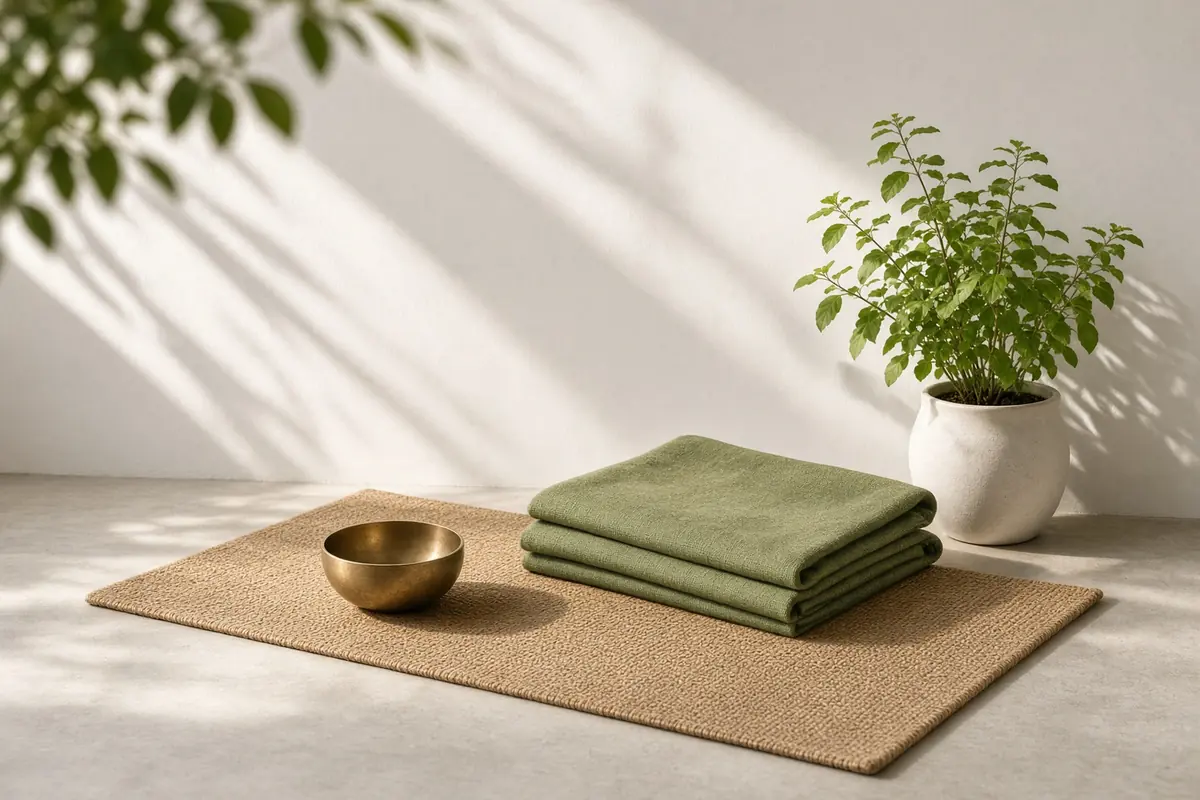
You don't need flexibility, special clothes or a studio to begin. You need a mat or folded blanket, twenty minutes and a willingness to go slowly.
Before you begin
- Choose a time when you feel comfortable moving; many people prefer not to practise immediately after a large meal.
- Wear comfortable clothes and work on a non-slip surface.
- Move within a comfortable range. Mild stretching is good; pain is a signal to stop.
- If you have high blood pressure, heart disease, a recent injury or surgery, back or neck problems, glaucoma, or are pregnant, check with your doctor and learn from a qualified teacher before trying new postures or breathing techniques.
Part 1: Settle in (2 minutes)
Sit cross-legged on a folded blanket, or on a chair with your feet flat on the floor. Lengthen your spine, relax your shoulders and close your eyes. Take ten slow breaths through the nose, noticing the air moving in and out. This simple pause signals the nervous system to shift out of rush mode.
Part 2: Gentle warm-up (4 minutes)
- Neck rolls: slowly drop the chin to the chest and roll the head in half circles from shoulder to shoulder, five times.
- Shoulder circles: roll the shoulders backwards ten times, then forwards ten times.
- Cat–cow: on hands and knees, breathe in as you let the belly drop and lift the gaze; breathe out as you round the back and tuck the chin. Repeat eight times, moving with the breath.
Part 3: Five foundational postures (8 minutes)
Hold each posture for five slow breaths, or less if you feel strain.
1. Tadasana (mountain pose). Stand with feet hip-width apart, weight even, arms by your sides. Lengthen through the crown of the head. It looks simple, but it teaches alignment and balance.
2. Vrikshasana (tree pose). From standing, place one foot against the inner calf or thigh (never on the knee). Bring the palms together at the chest. Use a wall for support if needed. Change sides.
3. Bhujangasana (cobra). Lie on your front, palms under the shoulders. As you breathe in, gently lift the chest, keeping the elbows bent and the lower ribs near the floor. Lower on the out-breath. Repeat three times.
4. Balasana (child's pose). Kneel, sit back on your heels and fold forward, resting the forehead on the floor or a cushion. Let the arms rest alongside you. This is a resting pose you can return to at any time.
5. Supta baddha konasana (reclined butterfly). Lie on your back, bring the soles of the feet together and let the knees fall open, supported by cushions if needed. Rest the hands on the belly and breathe.
Part 4: Pranayama (4 minutes)
Pranayama means extending or guiding the life-force through breath. Start with two gentle techniques.
Nadi shodhana (alternate-nostril breathing). Sit comfortably. Close the right nostril with the right thumb and breathe in slowly through the left. Close the left nostril with the ring finger, release the thumb and breathe out through the right. Breathe in through the right, close it, and breathe out through the left. That is one round. Practise five to ten rounds, keeping the breath smooth and quiet — never forced.
Bhramari (humming bee breath). Close your eyes, breathe in through the nose, and as you breathe out, make a soft, steady humming sound like a bee. Feel the vibration in the face and head. Repeat five to seven times. Many people find this especially calming before sleep.
Avoid breath-holding and forceful techniques such as kapalbhati and bhastrika until you have learned them from a teacher, and skip them entirely if you have high blood pressure, heart disease, or are pregnant.
Part 5: Relaxation (2 minutes)
Finish lying on your back in shavasana, arms slightly away from the body, palms up. Let the breath become natural. Move your attention slowly from the toes to the top of the head, softening each area. Before getting up, roll onto your right side and pause for a few breaths.
Making it a habit
Choose a duration you can maintain and increase gradually. Twenty minutes may be a manageable start, but it is not a guaranteed amount for a particular health result. Link your practice to an existing habit and keep your mat somewhere visible.
Yoga for your dosha
As you become familiar with the practice, you can adapt it:
- Vata benefits from slow, steady, grounding practice with long relaxation.
- Pitta benefits from a cooling, non-competitive practice and gentle forward bends.
- Kapha benefits from a more energetic pace, such as several rounds of sun salutations.
Yoga is a lifelong journey. Start small, stay curious, and enjoy the quiet it brings.
Related remedies
 Comfortable Paced Breathing: Counts Are OptionalTry a gentle breathing pause without forcing a four-six count, holding the breath or treating it as emergency care.
 Flossing Starter Routine for Cleaning Between TeethA once-daily beginner floss method using a C-shape around each tooth without snapping into the gums.
 Ten-Minute Worry Notebook Before BedA bounded writing routine that parks tomorrow's tasks without turning bedtime into prolonged problem solving.
Get All Ayurvedics updates
Occasional recipes, kitchen notes and site updates in English or Hindi. Email us from your subscribed address to request removal.