- exercise poor air quality
- indoor walking routine
- AQI exercise
- pollution fitness safety
Indoor Movement Plan for Poor Air-Quality Days
A low-equipment indoor walking and mobility plan when outdoor air pollution is high.
Important: this remedy is only a supportive home measure. Keep taking any medicine your doctor has prescribed, monitor your readings, and consult your doctor before adding anything new.
indoor exercise on poor air quality days: method, benefits and precautions
Moving activity indoors can be sensible when outdoor air quality is poor, but indoors is not automatically clean air. Smoke, incense, frying, poor ventilation and damp conditions can affect the room. Use local air-quality information and health advice rather than copying a foreign index threshold without checking its scale.
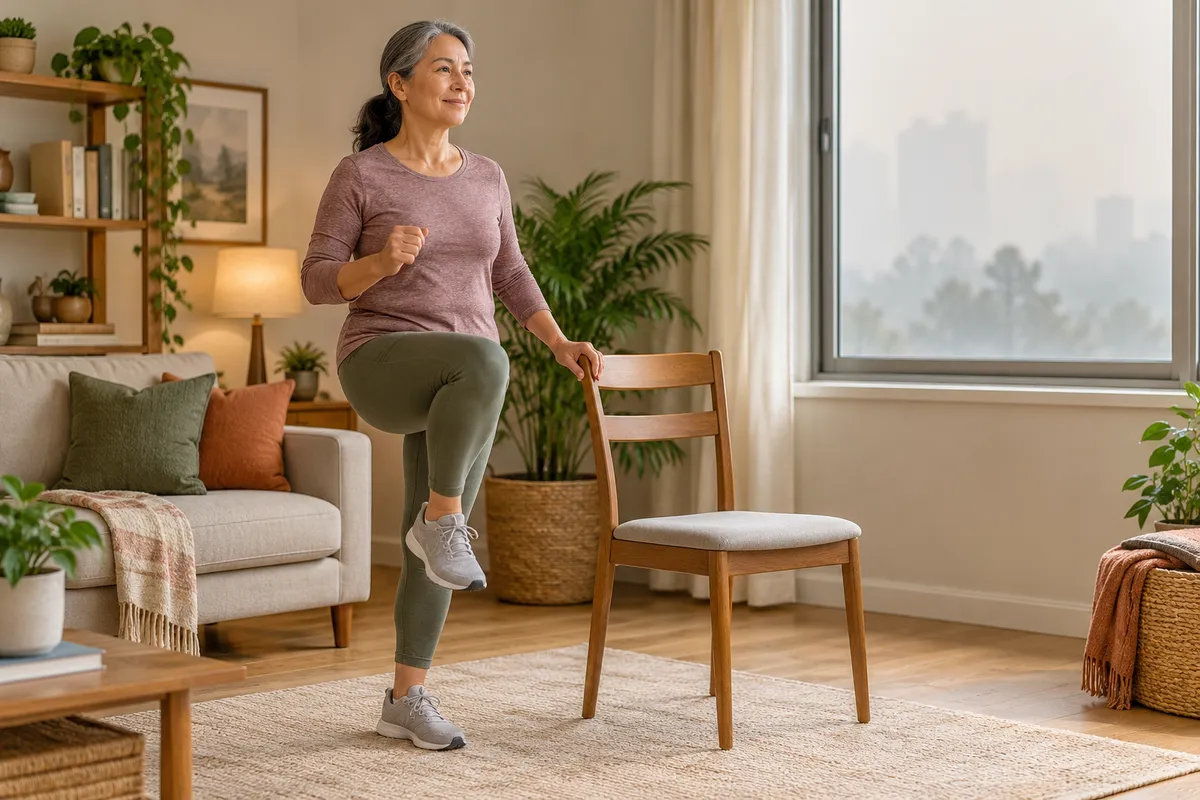
Choose a suitable space away from indoor pollution sources, with enough clear floor and stable support. Replace a planned demanding outdoor session with an easier familiar indoor activity when appropriate, rather than trying to reproduce the same intensity in a cramped room. Seated movement or ordinary light tasks may be more suitable than jumping or fast circuits.
Ventilation decisions depend on outdoor conditions; opening every window during heavy pollution may not improve the air. Use any filtration equipment according to its instructions and do not assume fragrance or visible mist purifies a room. Keep cables and equipment from creating trip risks.
Follow an asthma, heart or lung action plan and keep prescribed medicines available. Stop for wheeze, chest discomfort, dizziness or unusual breathlessness and seek the appropriate level of care. A lighter day or rest is a valid option when no suitable environment is available. Missing a workout is preferable to treating symptoms as a fitness challenge.
Ingredients
- A clear indoor area
- A stable chair
- Local air-quality information
How to prepare
- Check local air-quality advice and the actual indoor environment.
- Choose a clear space and easier familiar activity.
- Follow your action plan and stop for symptoms.
How to use
- Adapt activity or rest; no requirement to reproduce an outdoor workout indoors.
Helpful habits
- Avoid indoor smoke and incense.
- Check which air-quality scale is used.
- Fragrance and mist do not purify air.
Precautions
- Wheezing, chest tightness, blue lips or severe breathlessness needs urgent medical care.
- Ask a clinician first if you have allergies, are pregnant, have a long-term condition or take regular medicines.
- Seek urgent care for severe pain, breathing difficulty, fainting, repeated vomiting, bleeding or rapidly worsening symptoms.
Frequently asked questions
Is indoors always safer?
- No. Check indoor sources and conditions too.
Must I finish the planned workout?
- No. Reduce, change or skip it when conditions or symptoms require.
Prepared by: All Ayurvedics editorial team
No clinician review is recorded for this page. This is general information, not individual diagnosis or treatment advice.
Responsible site owner/editor: Manoj Singh. Editorial responsibility