Ayurveda for better sleep: a gentle evening plan
Nidra (sleep) is one of Ayurveda's three pillars of health. These simple evening habits help the body and mind wind down naturally.
Published 20 August 2026 · 3 min read
Prepared by: All Ayurvedics editorial team
No clinician review is recorded for this page. This is general information, not individual diagnosis or treatment advice.
Responsible site owner/editor: Manoj Singh. Editorial responsibility
Ayurveda describes three pillars that hold up a healthy life: ahara (food), nidra (sleep) and brahmacharya (wise use of energy). Of these, sleep is perhaps the one modern life neglects most. Late-night screens, irregular work hours and constant stimulation leave many of us tired but wired at bedtime.
The Ayurvedic approach to sleep is not about a single magic herb. It is about creating the conditions in which sleep comes naturally.
Why we sleep badly, the Ayurvedic view
Ayurveda describes disturbed sleep using the language of vata, pitta and kapha. These are traditional interpretations, not a way to diagnose the cause of insomnia. Sleep difficulties can have many causes, including medicines, stress and medical conditions.
Follow the natural clock
Some Ayurvedic routines describe the evening as a time to slow down. There is no universal 10 p.m. cutoff for sleep. Choose a bedtime that lets you get enough sleep and fits your work and family schedule.
Begin by choosing a regular bedtime and wake time and keeping them on weekends as well. Consistency is one of the most powerful sleep aids there is.
An evening routine in six steps
1. Eat an early, light dinner. Aim to finish two to three hours before bed. Heavy, spicy or fried dinners keep digestion busy and can disturb sleep. Khichdi, soups and cooked vegetables with roti are good choices.
2. Take a short walk. A slow ten-minute walk after dinner aids digestion and gently tires the body.
3. Dim the lights and screens. Bright light and blue screens tell the brain it is still daytime. In the last hour before bed, lower the lights and put phones away — ideally outside the bedroom.
4. Warm oil for the feet (padabhyanga). Massage a little warm sesame oil, coconut oil or ghee into the soles of your feet for a few minutes. Many people find this one of the most calming rituals in the whole of Ayurveda.
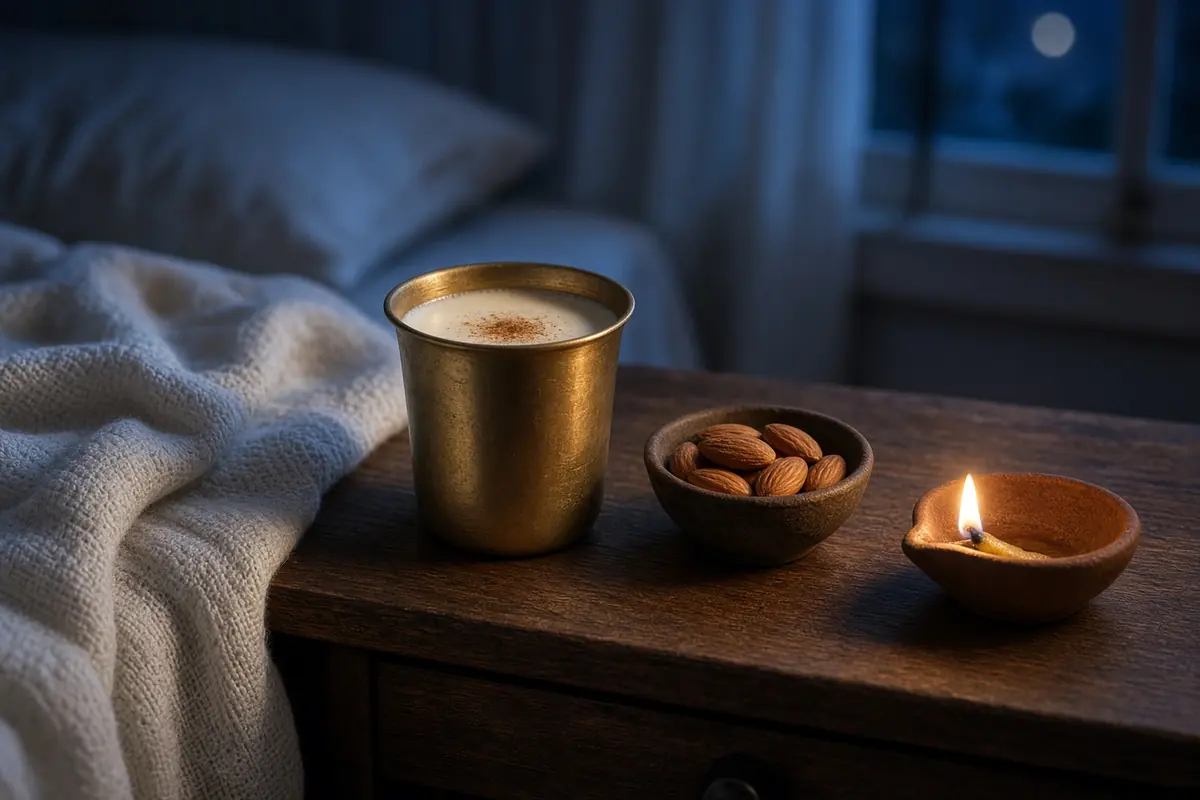
5. A warm, soothing drink. A small cup of warm milk with a pinch of cardamom or a tiny pinch of nutmeg is traditional. Those who avoid dairy can use a warm plant milk or a caffeine-free herbal tea.
6. Quiet the mind. Try a few minutes of slow breathing — for example, breathing in for a count of four and out for a count of six — or the humming breath called bhramari. Writing down tomorrow's to-do list can stop your mind from rehearsing it in bed.
Make the bedroom restful
- Keep it dark, quiet and slightly cool.
- Use the bed for sleep, not for work or long scrolling sessions.
- Natural fabrics and a clean, uncluttered space help the mind settle.
Daytime habits that help night-time sleep
Good sleep starts in the morning. Waking at the same time, getting natural daylight early in the day, exercising regularly (but not intensely late in the evening), and reducing tea and coffee after mid-afternoon all make a noticeable difference. Ayurveda generally discourages long daytime naps, except for the elderly, the unwell and in the hottest part of summer.
What about herbs?
Herbs such as ashwagandha, brahmi and jatamansi are traditionally used in Ayurveda for sleep and a calm mind. They are not suitable for everyone — for example, during pregnancy or with certain medications — and quality varies widely between products. If you would like to try them, please consult a qualified Ayurvedic practitioner and tell your doctor, particularly if you already take sleeping tablets, anti-anxiety medicine, thyroid medicine or blood pressure medicine.
When to see a doctor
Occasional poor sleep is normal. Please seek medical advice if:
- You have trouble sleeping most nights for more than a few weeks.
- You snore loudly, gasp or stop breathing in your sleep, or feel very sleepy during the day.
- Poor sleep comes with low mood, anxiety, or thoughts of self-harm.
These can be signs of conditions such as sleep apnoea, depression or thyroid problems that need proper treatment. Ayurvedic habits can support that treatment, but should not replace it.
Related remedies
 Evening Light-Dimming Routine for Better Sleep TimingA practical 45-minute evening light routine covering lamps, screens, safety and consistent sleep timing.
 Gentle Calf and Hamstring Release Before BedA short supported leg-stretch sequence that avoids bouncing, pain and nerve tension.
 Soaked Raisins for a Gentle Fibre AdditionA measured soaked-raisin serving that adds fibre and natural sugar, with diabetes, dental, choking and constipation precautions.
Get All Ayurvedics updates
Occasional recipes, kitchen notes and site updates in English or Hindi. Email us from your subscribed address to request removal.