Skin5 min
Coconut Oil on Damp Skin After the Bath
A few drops of coconut oil smoothed onto still-damp arms and legs after a lukewarm bath to hold in moisture in winter. Skip on acne-prone skin and if you are allergic.
Seal in the water
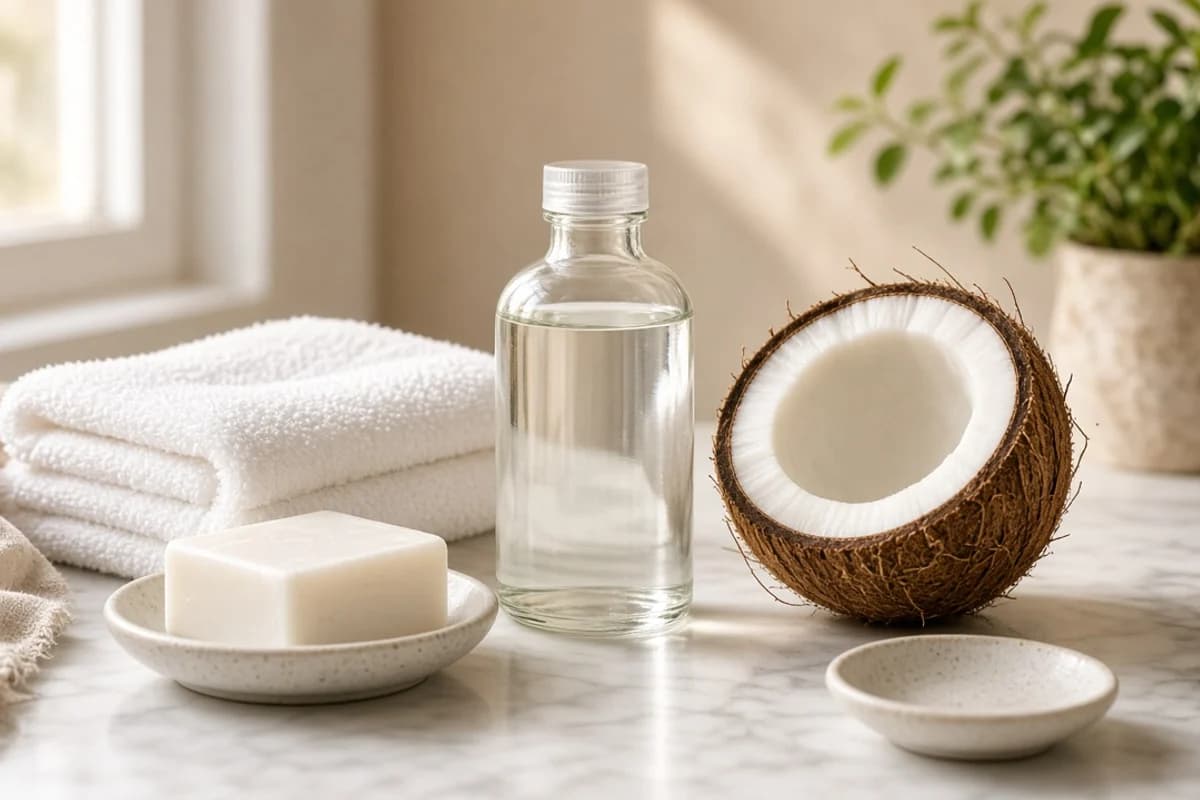
Dry winter skin loses moisture fastest right after a bath. Smoothing a few drops of coconut oil onto still-damp skin helps hold that water in. Pat the skin gently with a towel first, leaving it slightly damp.
Use only a thin layer; a few drops are enough for both arms. Coconut oil can clog pores on the face and chest in acne-prone people, so keep it to arms, legs and feet. This is a skin-comfort habit and not a treatment for eczema or any skin disease.
Ingredients
- 1 tsp pure coconut oil
- A soft cotton towel
How to prepare
- Warm the oil between your palms if it has set.
- Pat skin gently so it stays slightly damp.
How to use
- Smooth a thin layer onto arms, legs and elbows.
- Dress after a minute.
Helpful habits
- Keep a small bottle in the bathroom.
- Wash the towel often.
Precautions
- Do a patch test first, and skip if you are allergic to coconut.
- Avoid on acne-prone areas.
- A comfort habit, not a treatment.
Frequently asked questions
Will it feel greasy?
- Not if you use only a few drops on damp skin.
Can I use it on my face?
- Not if your skin is oily or acne-prone.
Is it good for kids?
- A thin layer is generally used for older children; patch test first.