- food symptom diary
- bloating triggers
- indigestion tracking
- food intolerance log
Food-and-Symptom Diary for Recurrent Bloating
A two-week log of meals, timing and symptoms designed to support—not replace—clinical assessment.
Important: this remedy is only a supportive home measure. Keep taking any medicine your doctor has prescribed, monitor your readings, and consult your doctor before adding anything new.
food symptom diary for bloating: method, benefits and precautions
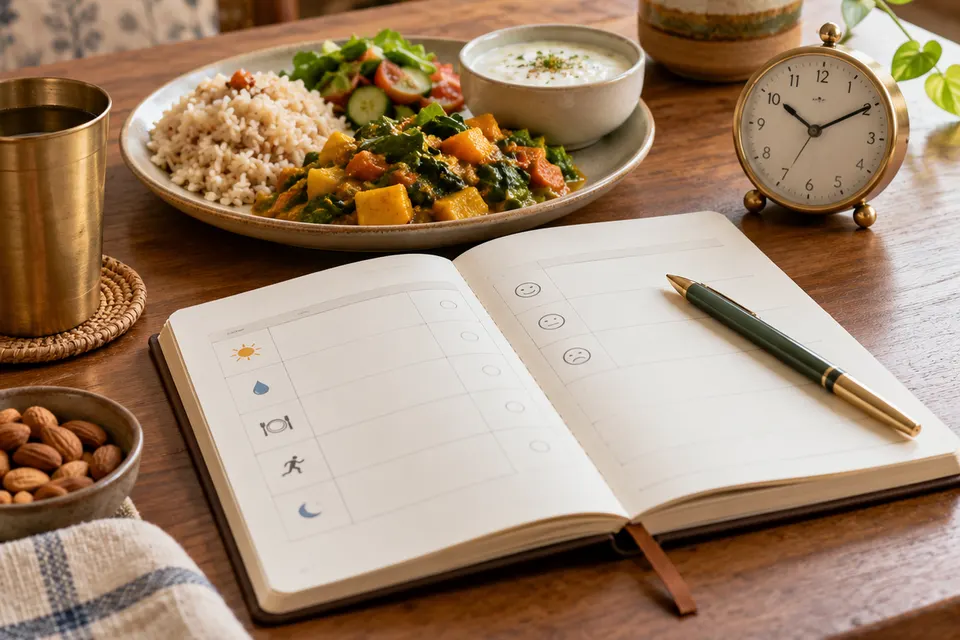
A food-and-symptom diary is a record for discussion, not an intolerance test. Write what happened before deciding what caused it. A useful entry includes the approximate meal time, ingredients you actually know, symptom onset and what the symptom felt like. Avoid replacing description with a diagnosis such as gluten reaction when that has not been established.
Keep the record brief enough to use. Note medicines, bowel changes and unusual stress or travel where relevant. Photographs of food can help memory, but do not need to be uploaded publicly; this is personal health information. A private notebook is sufficient.
Review several ordinary entries rather than blaming the last food eaten. Do not deliberately repeat a meal after allergic symptoms or undertake multiple eliminations to make the diary look conclusive. A clinician or dietitian can help interpret a pattern while protecting nutritional variety.
Stop diary experiments and seek care for severe pain, bleeding, fainting or other concerning illness. The value is more accurate communication and less reliance on memory. A two-week suggestion is an organisational example, not a waiting period before getting help.
Ingredients
- A notebook or private app
- Meal and symptom times
- Medicine and bowel notes
How to prepare
- Record meals without judging them.
- Add symptoms and their timing.
- Review patterns with a clinician or dietitian.
How to use
- Use a small portion or short session the first time.
- Change one thing at a time and note your response.
- Continue normal meals, hydration and prescribed treatment.
Helpful habits
- Describe symptoms before naming a cause.
- Keep health notes private.
- Record relevant medicine or schedule changes.
Precautions
- Do not continue a trigger challenge after allergic symptoms, bleeding or severe pain.
- Ask a clinician first if you have allergies, are pregnant, have a long-term condition or take regular medicines.
- Seek urgent care for severe pain, breathing difficulty, fainting, repeated vomiting, bleeding or rapidly worsening symptoms.
Frequently asked questions
Does a diary diagnose allergy?
- No, and it is not permission for a home allergy challenge.
Must I wait two weeks for help?
- No. Concerning symptoms need timely assessment.
Prepared by: All Ayurvedics editorial team
No clinician review is recorded for this page. This is general information, not individual diagnosis or treatment advice.
Responsible site owner/editor: Manoj Singh. Editorial responsibility