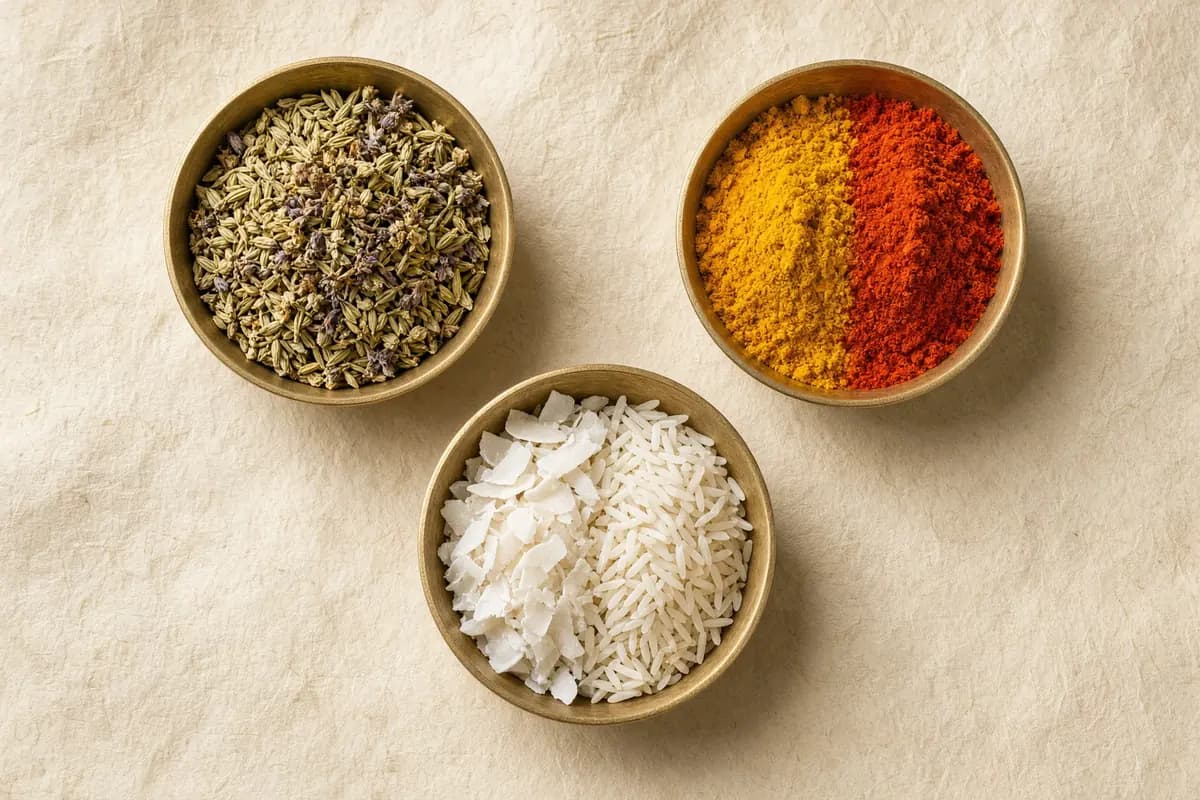
Agni: understanding your digestive fire
In Ayurveda, good health begins with strong, balanced digestion. Learn what agni is, the four types of digestive fire, and simple ways to keep it healthy.
Published 27 July 2026 · 4 min read
There is a saying in Ayurveda that a person is only as healthy as their digestion. The central idea behind it is agni — the digestive fire. Just as a kitchen fire transforms raw ingredients into a nourishing meal, agni transforms the food we eat into the tissues, energy and clarity of the body and mind.
When agni burns steadily, we feel light, energetic and clear-headed after meals. When it is weak or erratic, food is not properly digested, and Ayurveda says a sticky, heavy residue called ama begins to build up.
What is agni?
Agni is not just stomach acid or a single organ. It is the principle of transformation throughout the body. Ayurveda describes many agnis: the main digestive fire in the stomach and small intestine (jatharagni), fires that work at the level of each tissue, and fires that process the elements in food. For everyday purposes, though, when we talk about agni we mean our digestive power — how well we turn food into nourishment.
Four states of agni
Ayurveda describes four patterns of digestive fire, each linked to a dosha:
- Sama agni (balanced). Appetite comes at regular times, meals digest comfortably, bowel movements are regular and well-formed, energy is steady. This is the goal.
- Vishama agni (irregular), linked to vata. Appetite comes and goes. Sometimes digestion is fine; at other times there is gas, bloating, cramping or constipation.
- Tikshna agni (sharp), linked to pitta. Intense hunger, irritability if meals are late, a tendency to acidity, heartburn and loose stools.
- Manda agni (slow), linked to kapha. Low appetite, a heavy, sleepy feeling after meals, sluggish digestion and a tendency to gain weight easily.
Most people notice a mix of these at different times. Seasons, stress, travel and eating habits all push agni one way or another.
Signs of ama
Ayurveda considers ama — undigested residue — to be the root of many imbalances. Traditional signs include:
- A thick coating on the tongue, especially in the morning.
- Bad breath and a dull taste in the mouth.
- Feeling heavy, tired or foggy after meals.
- Loss of appetite and sluggish bowel movements.
These signs are general and can have many causes. If they are persistent or severe, a medical check-up is important.
Everyday habits that strengthen agni
The good news is that agni responds well to simple, consistent habits:
Eat at regular times. Agni loves routine. Eating at roughly the same times each day trains the body to be ready for food.
Eat when you are genuinely hungry. Real hunger — a light, clear feeling, not just boredom — is a sign that agni is ready. Eating again before the previous meal is digested is like piling wet wood on a small fire.
Make lunch your biggest meal. Agni follows the sun and is strongest around midday.
Favour warm, cooked food. Warm meals are easier to digest than cold or raw ones, especially for vata and kapha types and during the cooler months.
Don't drown the fire. Large amounts of iced water or cold drinks with meals are thought to dampen agni. Small sips of warm water are better.
Use digestive spices. Ginger, cumin, coriander, fennel, black pepper, ajwain and hing all support agni. A slice of fresh ginger with a pinch of salt and lemon before lunch is a classic appetiser.
Leave space. Stop eating when you are about three-quarters full. Ayurveda traditionally describes filling the stomach one-third with food, one-third with liquid, and leaving one-third empty.
Take a short walk after meals. A gentle stroll of about a hundred steps helps digestion; a heavy nap right after eating does not.
Eat mindfully. Stress, anger and rushing are said to disturb agni. Sit down, breathe, and give your meal your attention.
Simple supports for different patterns
- For irregular (vata) agni: regular meals, warm soups and stews, a little ghee, and the cumin–coriander–fennel tea sipped between meals.
- For sharp (pitta) agni: don't skip meals, reduce chillies, sour and fried foods, and favour cooling foods like cucumber, coriander, fennel and sweet fruits.
- For slow (kapha) agni: lighter meals, less sugar and dairy, more ginger and black pepper, and regular brisk exercise.
Gentle resets
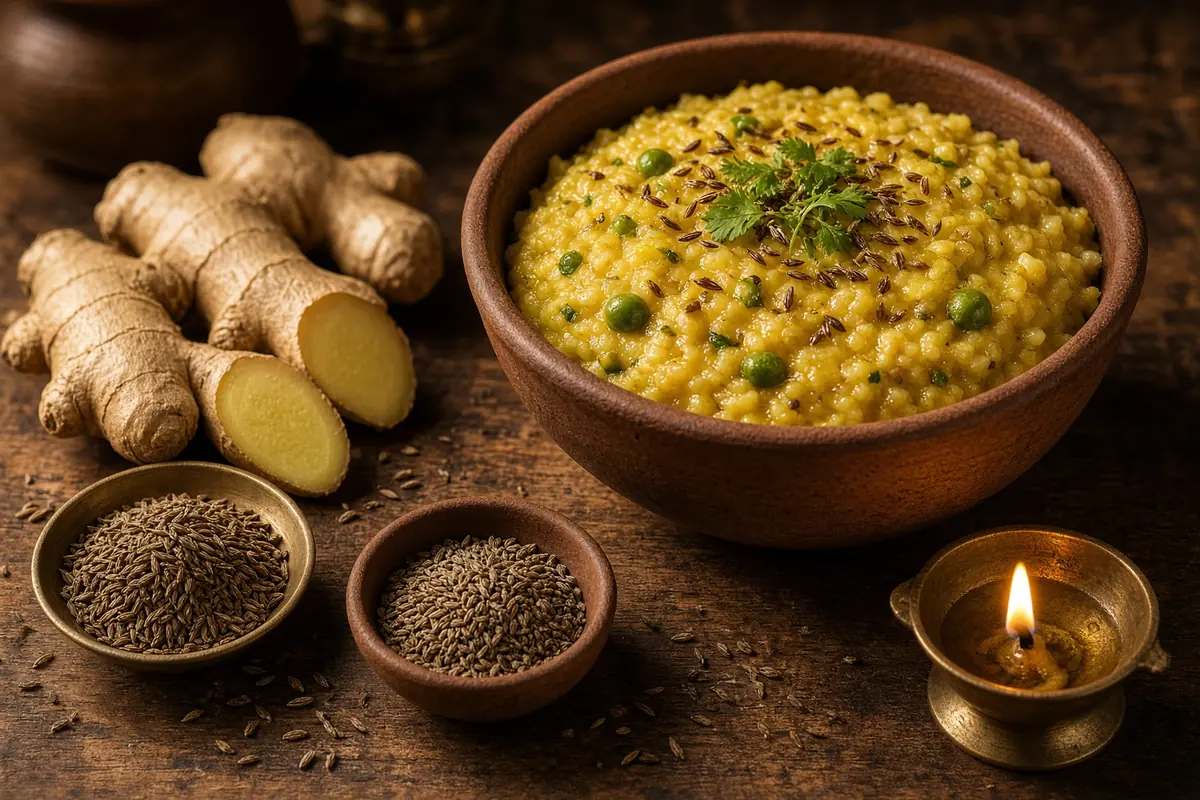
Ayurveda sometimes recommends a simple day of light eating to rest the digestive system — for example, a day of moong dal khichdi with a little ghee and cumin, along with warm water or herbal tea. This is not a crash diet or a fast, and it is not suitable for everyone. People with diabetes, low blood pressure, eating disorders, those who are pregnant or nursing, children and the elderly should not change their eating pattern without medical advice.
When digestion needs a doctor
Please don't try to manage these with home remedies alone: unexplained weight loss, difficulty swallowing, persistent vomiting, blood in the stool or black stools, severe or persistent abdominal pain, or a lasting change in bowel habits — especially after the age of 45. These need prompt medical assessment.
For everyday digestive comfort, though, a little attention to agni goes a very long way.
Related remedies
 Ginger–lemon appetiser before mealsA tiny bite of fresh ginger with lemon and rock salt, taken before lunch, is a classic way to wake up a sluggish appetite and support agni (digestive fire).
 Cumin–coriander–fennel (CCF) teaA mild, soothing seed tea sipped through the day. It is gentle enough for most people and is often used for bloating and a heavy feeling after meals.
 Ajwain with black salt for gasCarom seeds (ajwain) have a sharp, warming taste. A small pinch with black salt and warm water is a well-known kitchen measure for occasional gas and cramping after a heavy meal.
Get a weekly dose of Ayurveda
One seasonal tip, one remedy and one simple habit — every week, in English or Hindi. No spam, unsubscribe any time.