- takra recipe
- spiced buttermilk
- curd drink
- dairy preparation
Spiced Buttermilk (Takra): Recipe and Dairy Precautions
Make a smooth curd-based drink with measured water and cumin. Includes dilution, seasoning, refrigeration and the difference between allergy and intolerance.
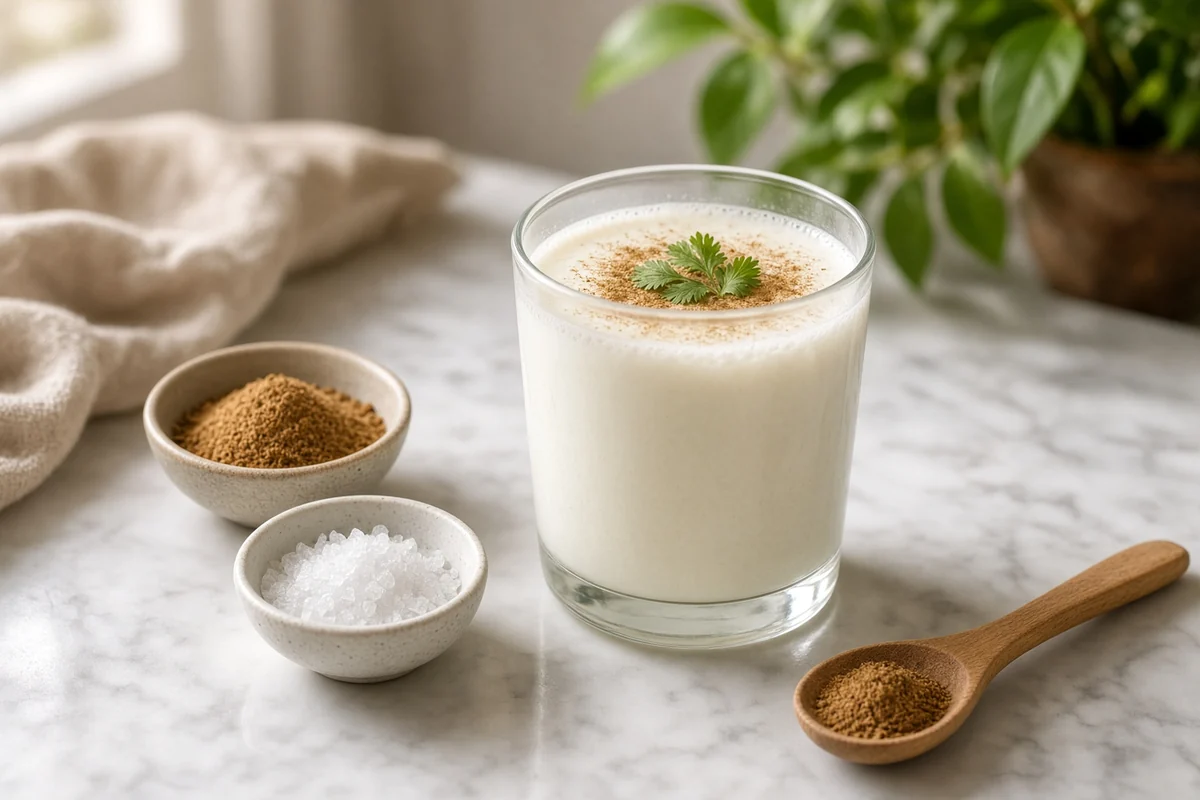
Making takra as an ordinary food preparation
Takra is a traditional curd-based preparation. Household versions differ in thickness, seasoning and whether butter has been removed, so a single modern recipe should not be presented as the only authentic form or as an individual Ayurvedic prescription. Here the aim is a small, freshly whisked, mildly seasoned drink made from plain curd. Its culinary usefulness comes from the tangy taste and adjustable texture.
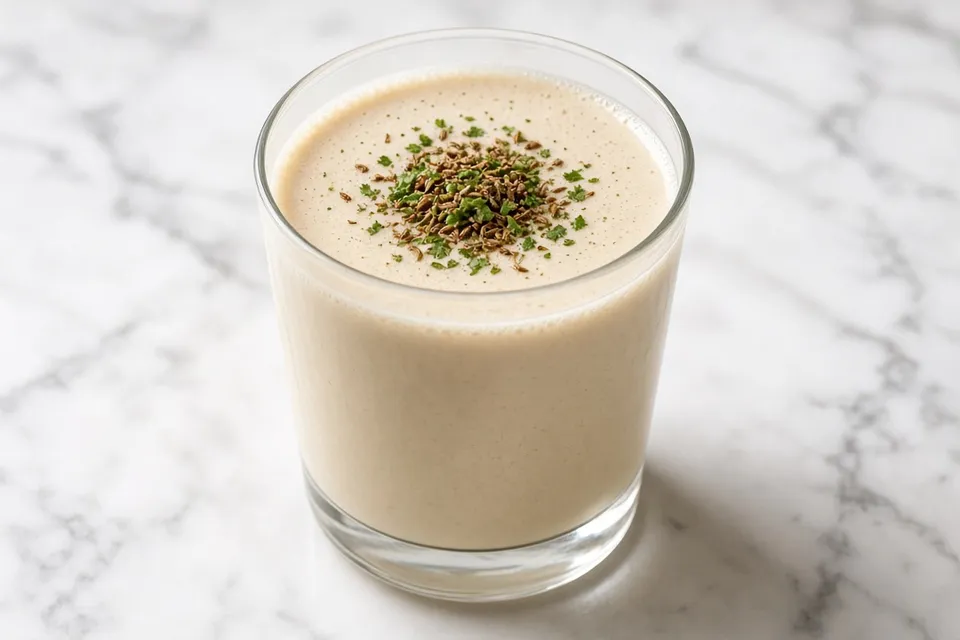
Choose plain curd rather than a sweetened flavoured product. Start by whisking the curd smooth without water; this breaks lumps more easily than trying to chase them around a full jug. Add drinking water gradually. Very thick strained curd and loose homemade curd need different dilution, so aim for an easily pourable consistency rather than automatically emptying all the water into the bowl.
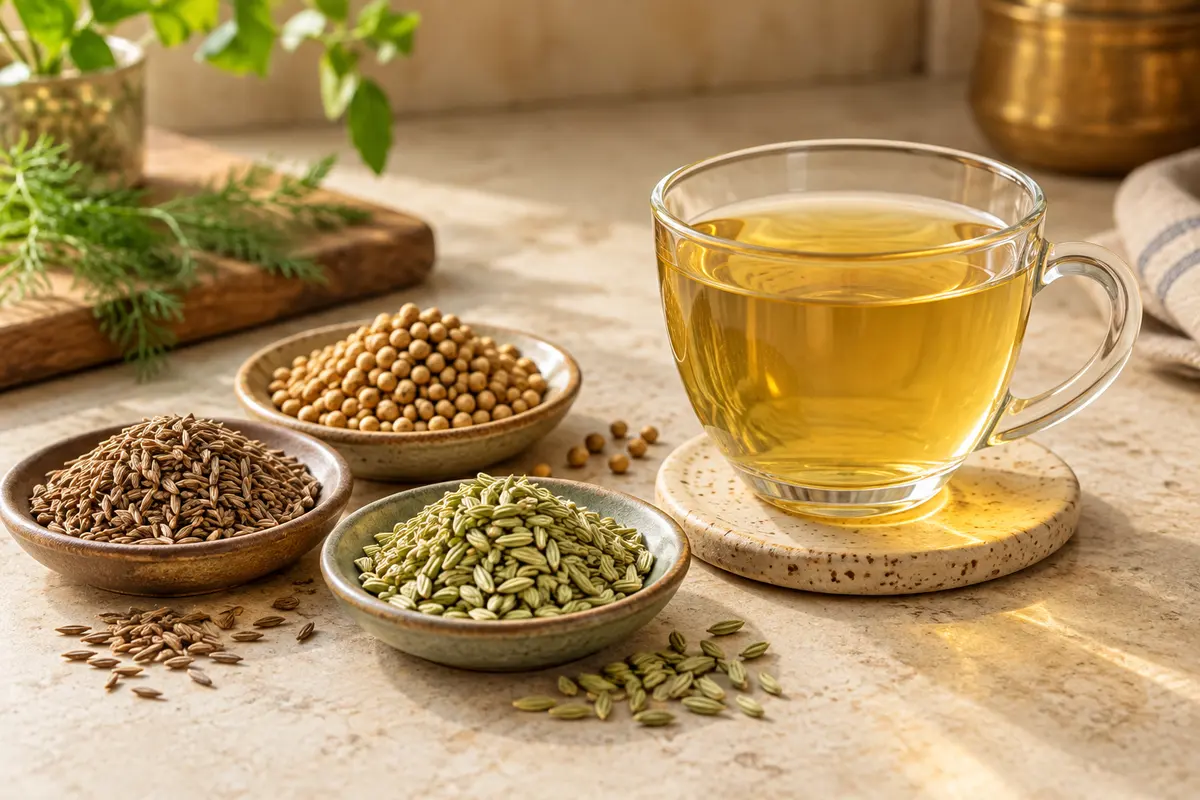
Taste before seasoning. If the curd is very sour, water makes it thinner but may not give the taste you want. Use fresher suitable curd rather than masking an unpleasant base with increasing salt and chilli. Roast and grind cumin separately if using it, allow it to cool and add a small amount. Whole gritty pieces can settle in the glass. Washed, finely chopped herbs are optional; large stems are awkward to drink.
The dairy source distinguishes milk allergy from lactose intolerance. Diluting curd does not remove milk proteins or turn the drink into a guaranteed lactose-free option. A dairy-free alternative is a different recipe, so label it clearly rather than assuming it has identical ingredients or nutrition. If dairy causes discomfort or your diet excludes it, choosing another drink is acceptable.
Keep the curd refrigerated and make only what you intend to serve. A jug of dairy drink should not be left on the table for prolonged sipping. Natural separation can occur, but appearance alone cannot establish whether a poorly stored drink is safe. This is a food guide, not treatment for diarrhoea, irritable bowel syndrome or dehydration. Clinical care should not be replaced because a drink carries the traditional name takra.
Ingredients
- ¼ cup fresh homemade curd (dahi)
- ¾ cup water
- ¼ teaspoon roasted cumin powder
- A pinch of rock salt; a few chopped coriander or mint leaves
How to prepare
- Whisk the plain curd until smooth in a clean bowl.
- Add the measured drinking water gradually, stirring until pourable.
- Mix in the roasted cumin; salt and washed chopped herbs are optional.
- Serve promptly and keep dairy refrigerated rather than leaving a jug standing.
How to use
- Serve a small portion with a meal if dairy is suitable for you.
- Choose the time to suit your meal; no compulsory daily schedule is established here.
- Count added salt and dairy within any personal dietary plan.
Helpful habits
- Whisk the curd first, then add water gradually.
- Taste the base before adding salt, chilli or cumin.
- Keep the drink chilled and use a clean serving spoon.
- Label any dairy-free adaptation as a different preparation.
Precautions
- Do not use this milk-based preparation if you have a milk allergy.
- Dilution does not make curd lactose-free. Follow individual advice if dairy causes symptoms.
- Do not use it as treatment for diarrhoea or dehydration or delay care because of persistent symptoms.
- Discard spoiled curd; extra spices cannot make it safe.
Frequently asked questions
Is takra identical to every packaged buttermilk?
- No. Ingredients, dilution and processing vary. Read the product label.
Does dilution remove lactose?
- No. Water changes concentration and texture; it does not make the drink reliably lactose-free.
Why are there lumps?
- Whisking the curd smooth before adding water usually gives a more even mixture.
Must everyone drink it after lunch?
- No. This is an optional food preparation, not a universal daily prescription.
Prepared by: All Ayurvedics editorial team
No clinician review is recorded for this page. This is general information, not individual diagnosis or treatment advice.
Responsible site owner/editor: Manoj Singh. Editorial responsibility