- ajwain water
- carom seed infusion
- ajwain preparation
- spice drink safety
Ajwain Water: Mild Infusion Recipe and Precautions
How to prepare a mild ajwain infusion, control its strong flavour and distinguish food use from concentrated extracts or unsupported treatment claims.
Important: this remedy is only a supportive home measure. Keep taking any medicine your doctor has prescribed, monitor your readings, and consult your doctor before adding anything new.
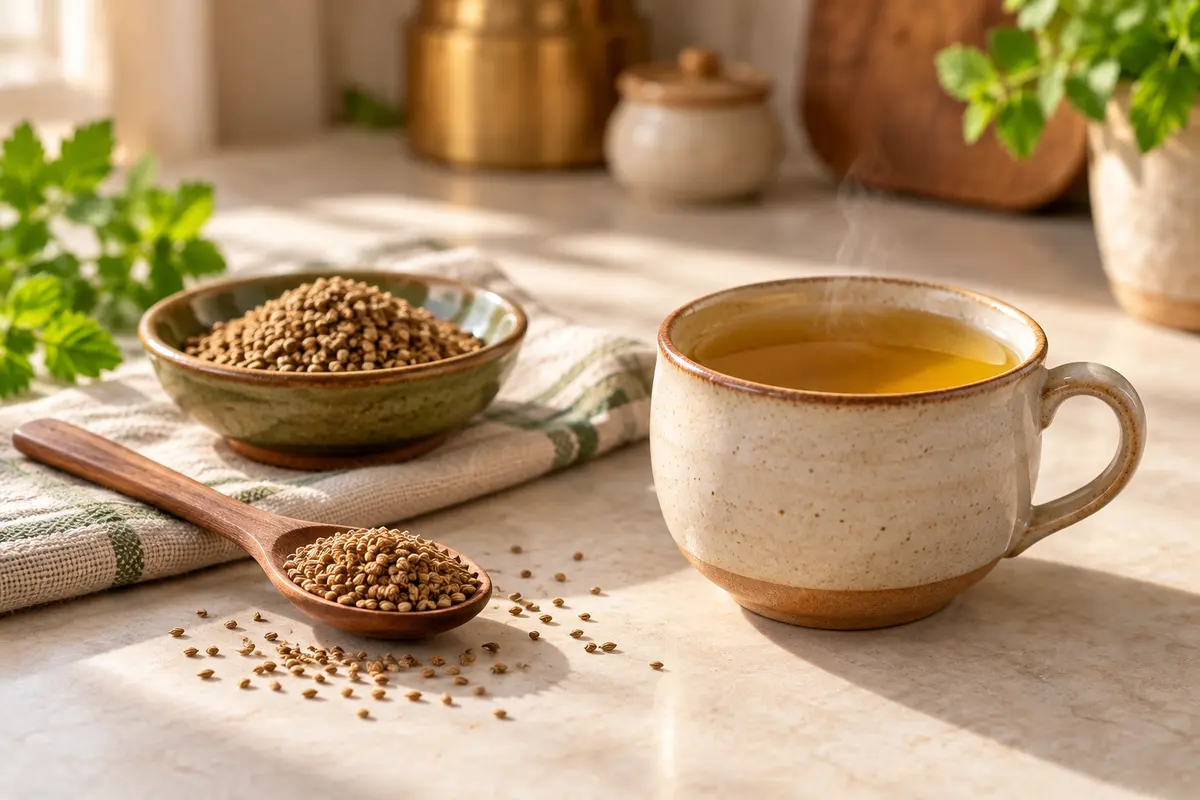
Ajwain water after meals
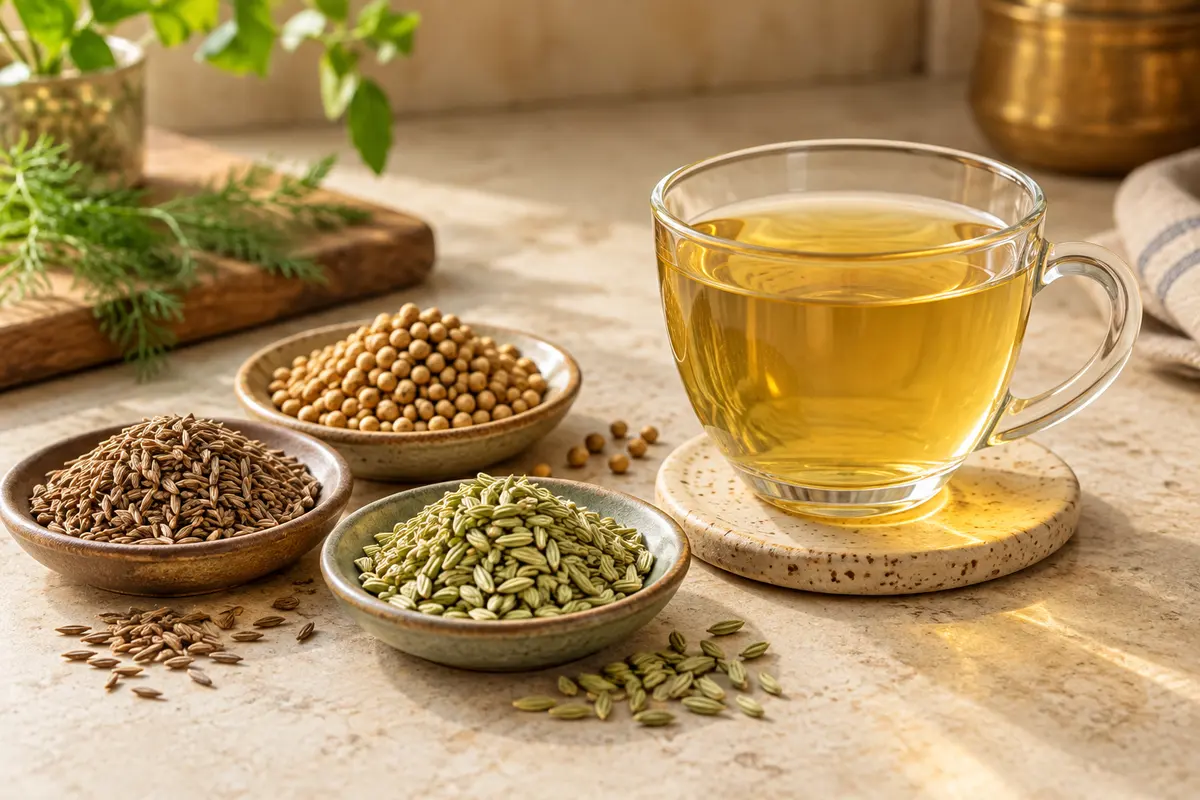
Ajwain, or carom seed, has a more forceful flavour than fennel or coriander. A small culinary quantity can scent a whole cup. The purpose of this guide is to help distinguish a mild kitchen infusion from the concentrated preparations often promoted online for gas, weight loss or a cleanse. We do not present the recipe as established treatment for any of those problems.
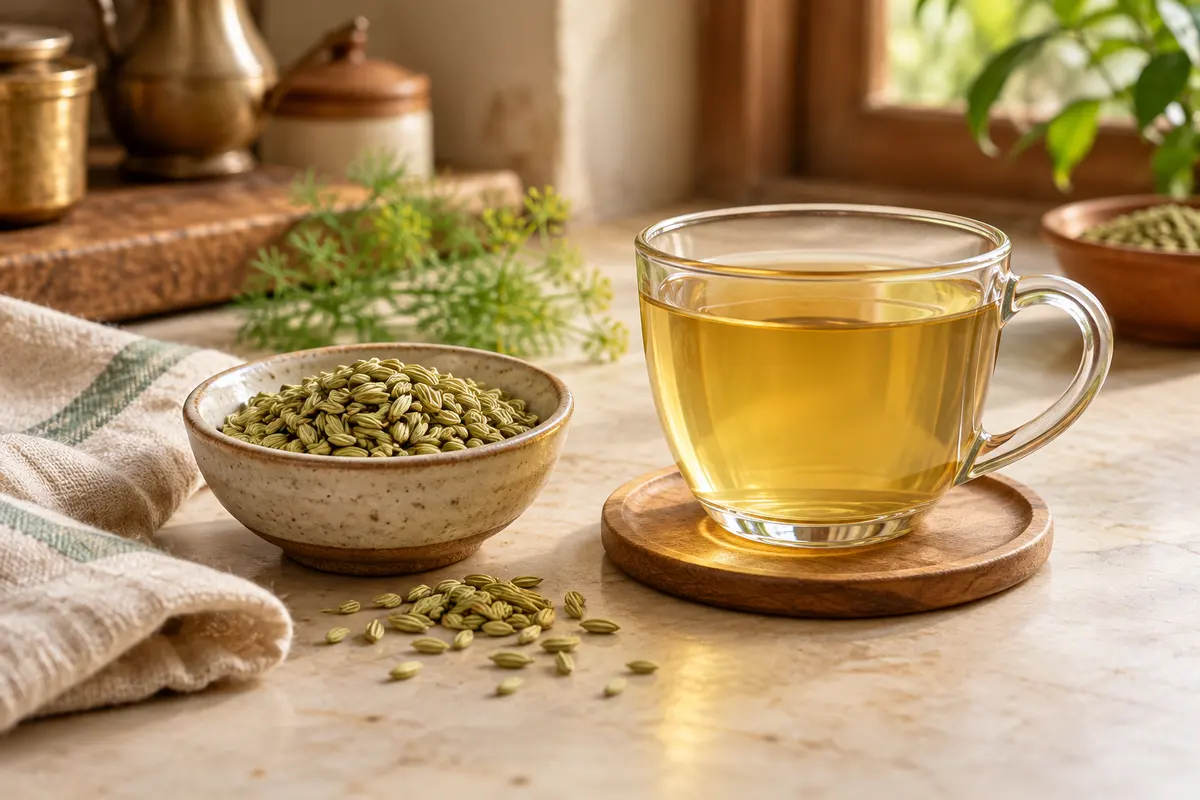
Use the measured quantity in the ingredients rather than a heaped spoon. Ajwain can look similar to other small seeds in an unlabelled jar, so buy a clearly identified food ingredient. If the smell is musty or the seeds have become damp, replace them. Do not add essential oil or an extract to make up for a weak-smelling old packet. Those products do not have the same concentration as seeds steeped in water.
During preparation, aim for a light aroma. Crushing finely and reducing the liquid for a long time makes a sharper cup. Strain through a fine kitchen sieve and let it cool before tasting. If it burns the mouth or feels unpleasant, stop rather than interpreting the sensation as evidence that the drink is working. Dilution may improve flavour; it does not establish safety for a person with an allergy or a relevant medical condition.
For repeatable cooking, note the seed measure and starting water amount. Measuring the final volume also reveals how much water your particular pan loses. This is useful kitchen information, not a way to calculate a therapeutic dose. There is no need to drink ajwain on an empty stomach, and this guide does not set a daily course. A milder beverage or no spice drink at all is acceptable.
Be cautious about advice to combine ajwain, black salt, lemon, chilli and multiple herbal powders whenever discomfort occurs. That makes it difficult to identify an ingredient that disagrees with you. The linked clinical information explains indigestion and care; it is not a clinical trial of ajwain water. Recurrent symptoms should not be covered up by progressively stronger preparations.
Ingredients
- ¼ teaspoon ajwain seeds
- 250 ml drinking water
How to prepare
- Lightly crush the seeds.
- Simmer in water for 3 minutes.
- Cover 2 minutes, strain and cool.
How to use
- Try only a small cup after food.
- Avoid on an empty stomach if it burns.
- Stop if symptoms increase.
Helpful habits
- Use a level measure; a heaped spoon changes a small recipe considerably.
- Label the seed jar rather than relying on appearance alone.
- Keep the drink separate from mixtures of black salt, chilli and herbal powders.
- A sharp or burning sensation is a reason to stop, not a success marker.
Precautions
- Avoid essential oil and concentrated extracts.
- Pregnancy, liver disease and medicine use need advice.
- Chest pain, breathlessness, black stool, repeated vomiting or severe pain needs urgent care.
Frequently asked questions
Should ajwain water taste very sharp?
- It has a strong aroma, but the drink need not be harsh. Use a mild food preparation and stop if it is uncomfortable.
Can I replace seeds with ajwain oil?
- No. The concentration differs, and this recipe does not give instructions for essential oil.
Is black salt necessary?
- No. It changes flavour and adds sodium; the infusion can be made without it.
Does a stronger brew remove gas faster?
- This guide does not establish that claim. Do not keep concentrating the drink to chase a medical effect.
Prepared by: All Ayurvedics editorial team
No clinician review is recorded for this page. This is general information, not individual diagnosis or treatment advice.
Responsible site owner/editor: Manoj Singh. Editorial responsibility