- monsoon food safety
- rainy season hygiene
- safe street food monsoon
- food poisoning prevention
Monsoon Food-Safety Routine for Home Kitchens
A practical rainy-season routine for safe water, produce washing, refrigeration and leftovers.
Important: this remedy is only a supportive home measure. Keep taking any medicine your doctor has prescribed, monitor your readings, and consult your doctor before adding anything new.
monsoon food safety tips: method, benefits and precautions
Rainy weather changes the practical conditions in a kitchen: damp packaging, unreliable water, pests or a power cut can matter more than whether a dish is labelled traditional. A monsoon food-safety routine is about handling and storage, not adding extra spice to disinfect food.
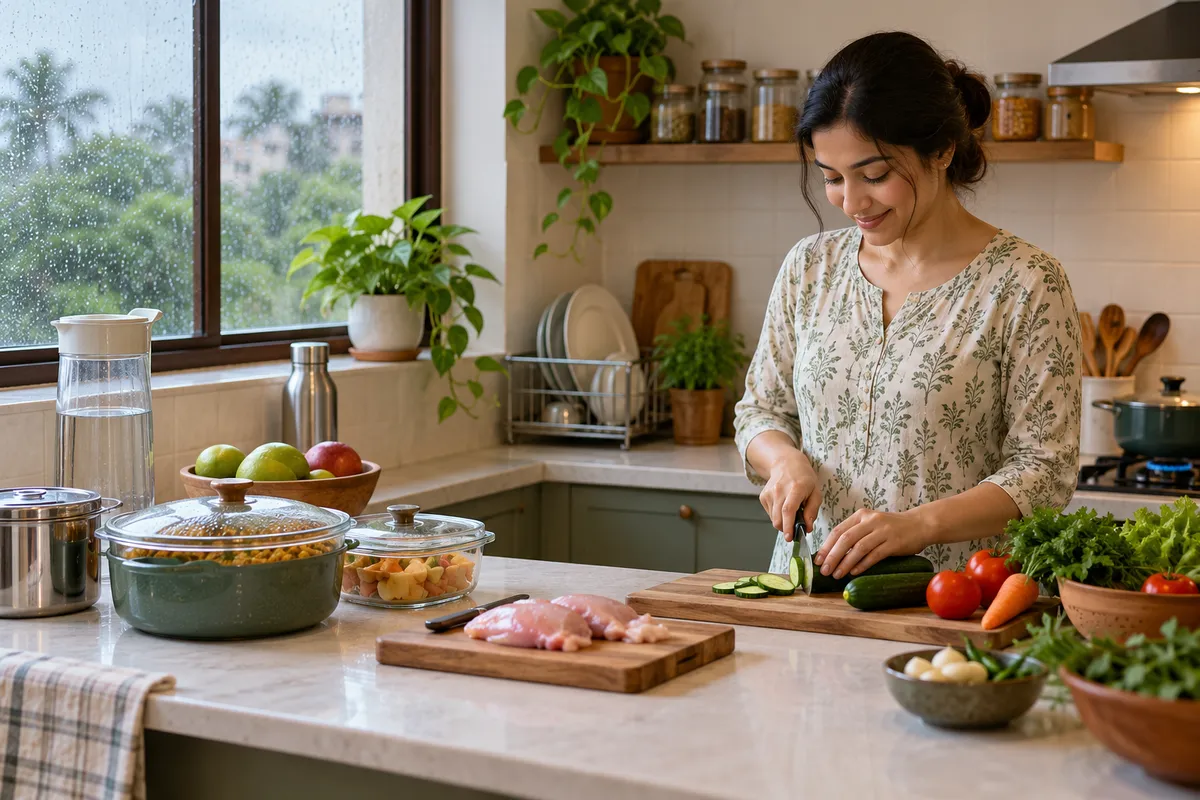
Check ingredients before preparing them. Keep produce washing separate from raw meat handling and use safe water. Dry and store utensils properly rather than leaving cloths and boards damp indefinitely. Food touched by floodwater or stored in compromised packaging should not be made acceptable by rinsing or reheating.
Plan cooking around refrigeration and electricity. Keep perishable food cold, avoid leaving cooked dishes out while waiting for the next meal, and follow food-specific cooking requirements. If a power interruption makes storage uncertain, use official safety advice rather than tasting food to decide. Smell is not a reliable test for every hazard.
When buying prepared food, look at handling, turnover and whether hot and cold foods are held appropriately. A covered stall is not automatically safe if the water or equipment is unsuitable. Illness with persistent vomiting, dehydration, blood or severe symptoms needs assessment. The useful protection is a consistent kitchen process, not a seasonal 'immunity' drink.
Ingredients
- Safe drinking and cooking water
- Separate raw and cooked utensils
- Working refrigerator and covered containers
How to prepare
- Check water, packaging and clean preparation areas.
- Separate raw and ready-to-eat food.
- Cook and store appropriately, including during power interruptions.
How to use
- Daily food-handling routine; spices, rinsing and reheating cannot rescue every unsafe food.
Helpful habits
- Floodwater contamination is serious.
- Keep cloths and boards clean and dry.
- Do not taste-test uncertain food.
Precautions
- Repeated vomiting, bloody diarrhoea, severe pain, little urine or marked weakness needs medical care.
- Ask a clinician first if you have allergies, are pregnant, have a long-term condition or take regular medicines.
- Seek urgent care for severe pain, breathing difficulty, fainting, repeated vomiting, bleeding or rapidly worsening symptoms.
Frequently asked questions
Does extra chilli disinfect food?
- No; do not rely on spice for safety.
Can smell prove safety after a power cut?
- No. Follow storage and official power-outage guidance.
Prepared by: All Ayurvedics editorial team
No clinician review is recorded for this page. This is general information, not individual diagnosis or treatment advice.
Responsible site owner/editor: Manoj Singh. Editorial responsibility