Oral care15 min
Homemade Neem and Clove Tooth Powder (Dant Manjan)
A traditional manjan of dried neem leaf powder, clove and a little rock salt, used occasionally for gum massage. How to make it gently.
Why neem is used this way
Neem is the bitter tree whose leaves, twigs and oil appear in Indian homes for skin, scalp and teeth. It is mostly used on the outside; eating neem is kept to small, occasional amounts.
Neem twigs (datun) and herbal manjan have been used for oral care in India for centuries, and some studies show neem has antibacterial effects on gum bacteria. Harsh, gritty powders can wear enamel, so keep it fine and use gently, alongside fluoride toothpaste.
Ingredients
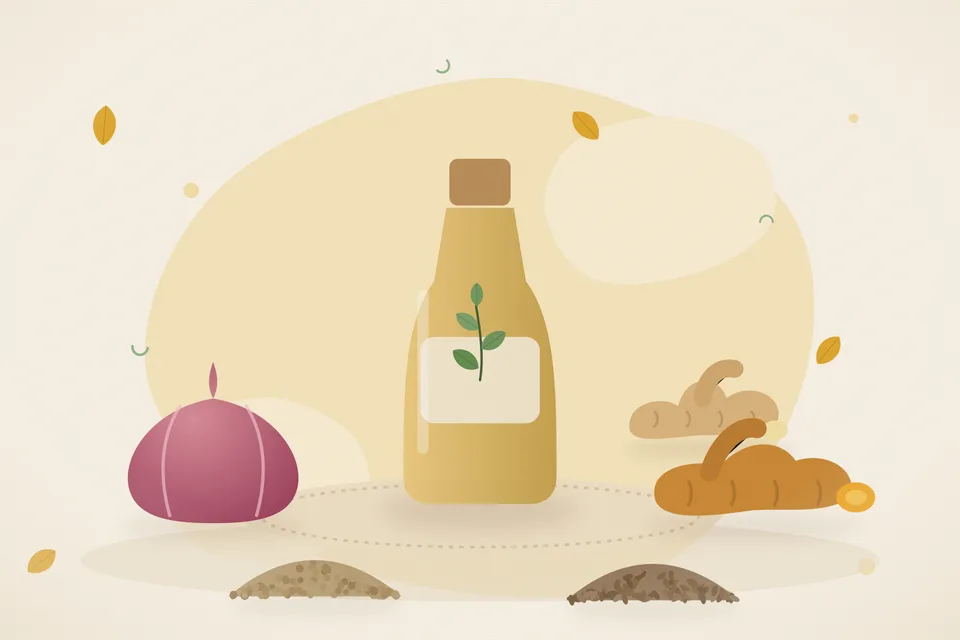
- 2 tbsp dried neem leaf powder
- ½ tsp clove powder
- ½ tsp fine rock salt
- A clean, dry jar
How to prepare
- Mix the powders and sieve to keep it very fine.
- Store in an airtight jar.
How to use
- Dab a pinch on a wet fingertip and massage gums gently for a minute, two or three times a week.
- Rinse well; keep using fluoride toothpaste for brushing.
Helpful habits
- Use fresh green leaves; dry, yellow ones have little smell left.
Precautions
- Avoid charcoal or coarse powders. Do not swallow. See a dentist for bleeding or swollen gums.
- Never swallow neem oil, and never give it to children.
- Avoid eating neem in pregnancy or when trying to conceive.
- Keep brushing twice a day; see a dentist for pain, swelling or an ulcer lasting over two weeks.
- If you take regular medicines or have a long-term condition, check with your doctor first.
Frequently asked questions
Can it replace toothpaste?
- No; fluoride toothpaste protects against cavities.
Is a neem datun better?
- Datun is fine if you chew gently; replace daily.
Can neem be used every day?
- On the skin and scalp, a few times a week is usual; eating it daily is not advised.