Shilajit resin vs capsule vs powder: which form should you choose?
An honest comparison of shilajit resin, capsules, powder and gummies — processing, dosing, convenience and what to check on each label.
Published 26 September 2026 · 3 min read
Prepared by: All Ayurvedics editorial team
No clinician review is recorded for this page. This is general information, not individual diagnosis or treatment advice.
Responsible site owner/editor: Manoj Singh. Editorial responsibility
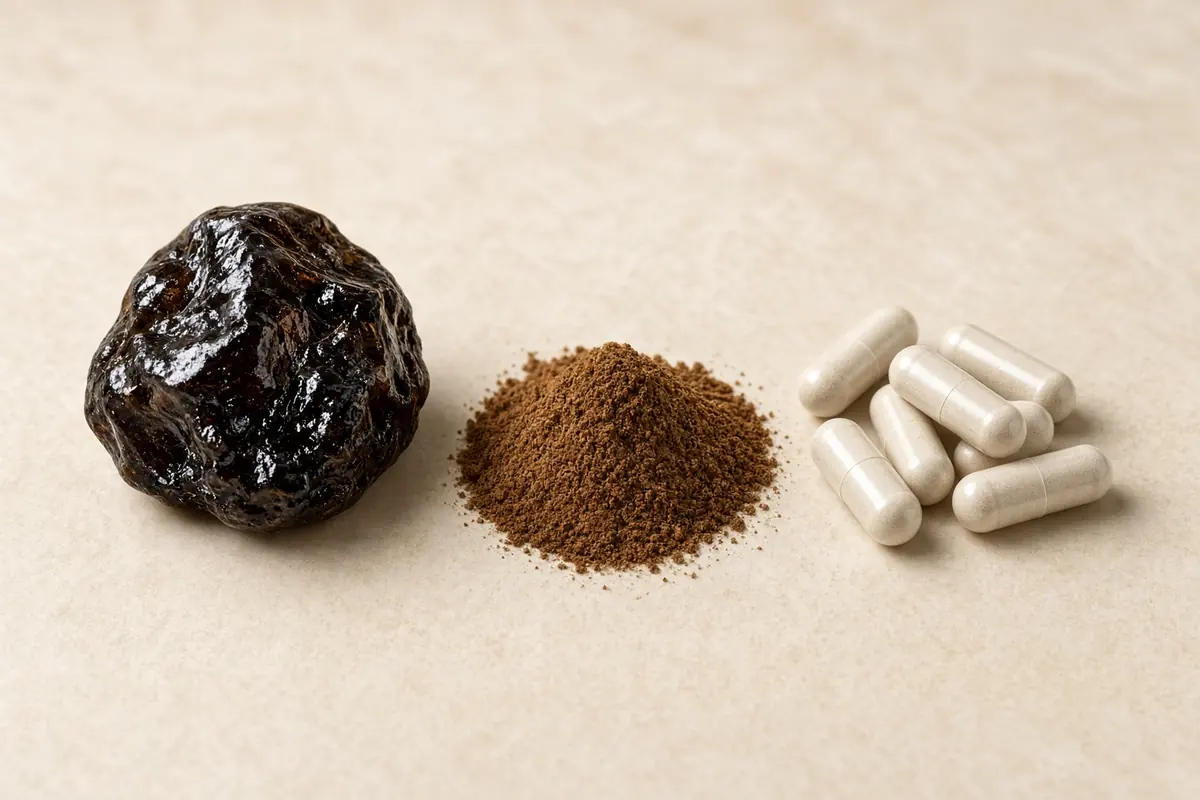
Shilajit is sold in several forms: resin, capsules or tablets, powder and, more recently, gummies. None of them is "best" for everyone. The right choice depends on what matters to you: how processed it is, how convenient it is, and how easy it is to check.
Shilajit resin
Resin is the semi-solid form. Processing differs by manufacturer; the form alone does not tell you how a batch was purified or tested.
- Pros: similar to the traditional form; often has a short ingredient list (check the label).
- Cons: sticky and harder to measure accurately without a suitable scale; strong earthy taste; texture changes with the weather.
- Suits: people who want the traditional form and don't mind a 1-minute routine.
Shilajit capsules and tablets
These usually contain a dried shilajit extract, sometimes mixed with other herbs and fillers.
- Pros: convenient and portable; fixed dose; no taste.
- Cons: you can't see or test the shilajit inside; strength and other ingredients vary by brand; more processing.
- Suits: people who travel a lot or dislike the taste. Check the amount of shilajit per capsule and the full ingredient list.
Shilajit powder
Powder is dried and ground shilajit extract.
- Pros: easy to mix into drinks.
- Cons: absorbs moisture and clumps; easier to mix with other powders, so the label matters even more.
- Suits: people who prefer mixing with drinks, and trust the brand.
Shilajit gummies
Gummies are a newer, sweetened form.
- Pros: pleasant taste, easy to take.
- Cons: added sugar and other ingredients; shilajit content varies; not a traditional form.
- Suits: only if the label clearly shows the amount of shilajit and you are fine with the sugar.
Quick comparison
- Processing: varies by manufacturer; ask how the product was purified
- Most convenient: capsules
- Purity: no form can be verified by a home appearance test
- Fixed dose: capsules and gummies
- Fewest extra ingredients: usually resin — always read the label
What to check whatever form you buy
Whatever the form, look for the manufacturer's licence number, address, batch number, dates, net quantity, dose and cautions. See how to identify original shilajit.
Why we chose resin
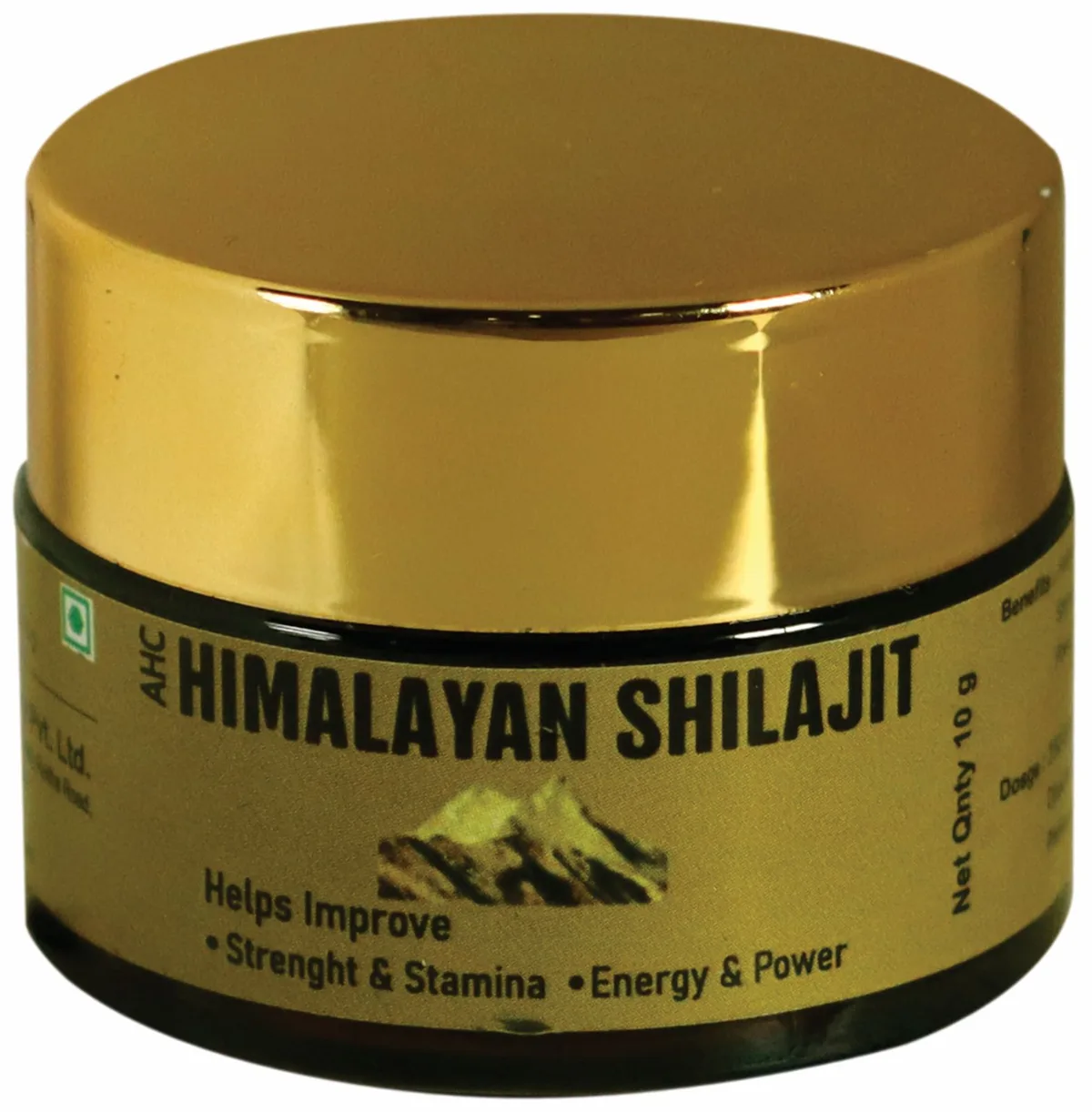
We sell Adamya Herbals Himalayan Shilajit Resin, 10 g in the traditional semi-solid form. It costs ₹399 (MRP ₹799) before any delivery charge, and its label states 250–500 mg a day. The form does not prove purity; ask for batch documentation. See how to take shilajit resin or order here.
Doctor's note
The form does not change who should be careful. Children under 12, pregnant and breastfeeding women, and anyone with a heart condition, gout or high uric acid, iron overload, a chronic illness or on regular medicines should consult a doctor first. Don't combine several shilajit products at once. More in our shilajit guide.
Frequently asked questions
Which is better: shilajit resin or capsules?
- Neither is best for everyone. Capsules may be more convenient, while resin is semi-solid. Neither form proves purity. Check the label and batch documentation for either.
Is shilajit powder as good as resin?
- Powder is a dried extract. It is easy to mix but harder to verify and can clump with moisture. Resin is closer to the traditional form. Read the label carefully for either.
Are shilajit gummies a good option?
- Gummies contain added sugar and other ingredients, and shilajit content varies. Check how much shilajit each gummy contains before buying.
Can I take shilajit resin and capsules together?
- It is best not to combine several shilajit products, as it becomes easy to exceed the dose. Stick to one product at its label dose.
Shilajit guides
Traditional benefits, label directions, batch checks, forms, precautions and price — in plain language.
- Shilajit benefits: what Ayurveda traditionally uses it forWhat shilajit is, the benefits Ayurveda traditionally describes — strength, stamina, energy and vitality — and the honest limits of what a supplement can do.
- How to take shilajit resin: dose, timing and the right wayA step-by-step guide to taking shilajit resin — how much, when, with water or milk, how long to continue, and the common mistakes to avoid.
- Original shilajit: how to check labels and batch reportsWhy home tests cannot prove shilajit purity, and which label details and batch documents to ask for instead.
- Shilajit side effects: precautions and who should avoid itPossible side effects of shilajit, who should not take it or should check with a doctor first, and simple ways to use it more safely.
- Shilajit price in India: how to compare and what to look forHow to compare shilajit prices fairly — per gram and per day — why very cheap shilajit is a warning sign, and what our 10 g resin costs.
Related remedies
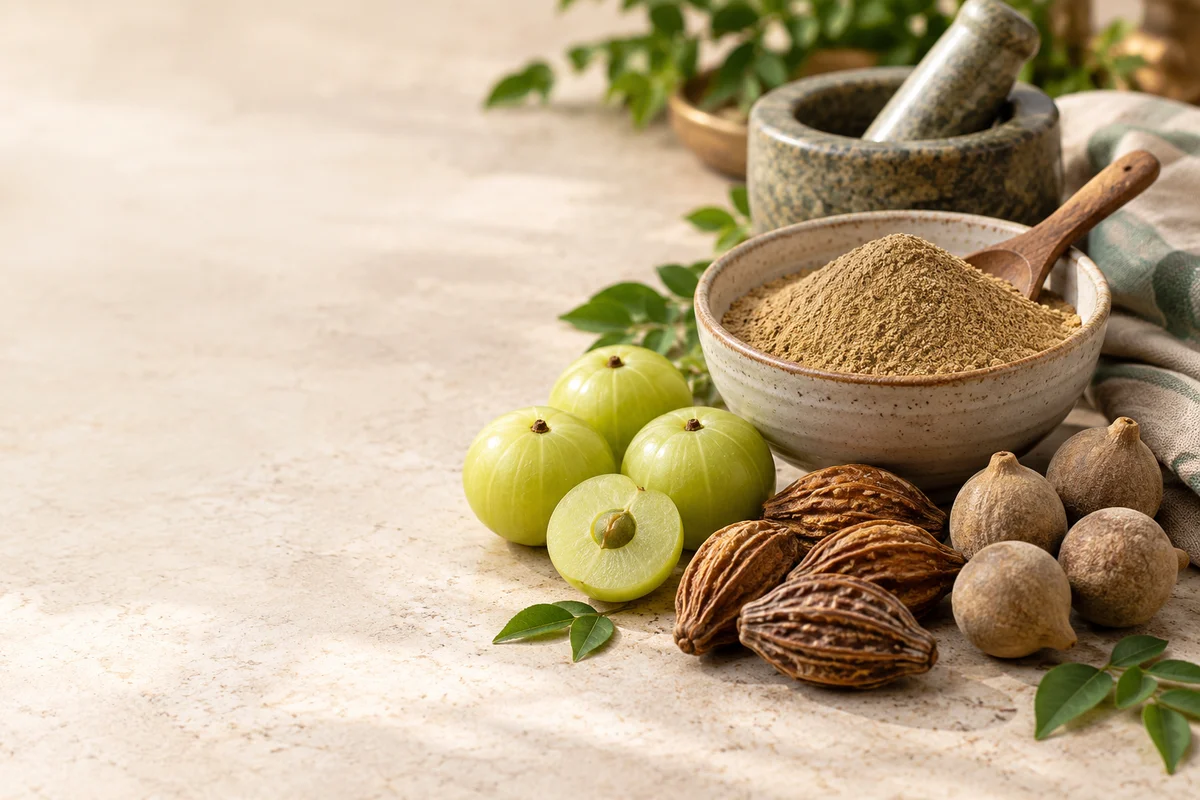 Triphala: Benefits, Traditional Uses and Home PreparationTriphala is a traditional Ayurvedic blend of amla, harad and baheda. Explore its uses, what research can and cannot establish, and how the powder is mixed at home. The recipe quantities describe a batch, not a daily dose.
 Turmeric Milk: Traditional Uses, Benefits, Recipe and SafetyA guide to preparing haldi doodh, choosing suitable ingredients and understanding the difference between a kitchen spice and a concentrated supplement.
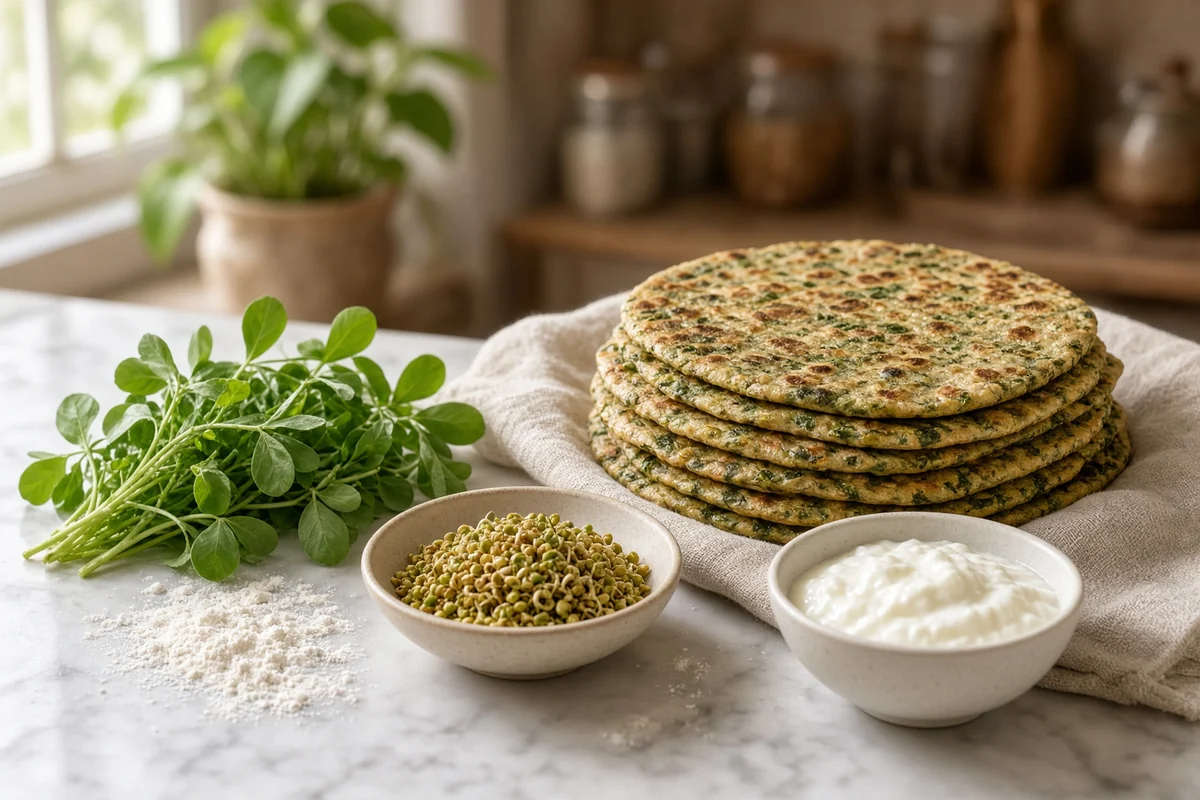 Methi Benefits and Uses: How to Include Fenugreek in Everyday FoodA practical guide to using fresh methi, methi seeds and kasuri methi in home cooking, with a moong dal recipe and clear limits on medicinal claims.
Related products
Get All Ayurvedics updates
Occasional recipes, kitchen notes and site updates in English or Hindi. Email us from your subscribed address to request removal.