Triphala: Benefits, Traditional Uses and Home Preparation
Triphala is a traditional Ayurvedic blend of amla, harad and baheda. Explore its uses, what research can and cannot establish, and how the powder is mixed at home. The recipe quantities describe a batch, not a daily dose.
Important: this remedy is only a supportive home measure. Keep taking any medicine your doctor has prescribed, monitor your readings, and consult your doctor before adding anything new.
What is Triphala, and what are its possible benefits?
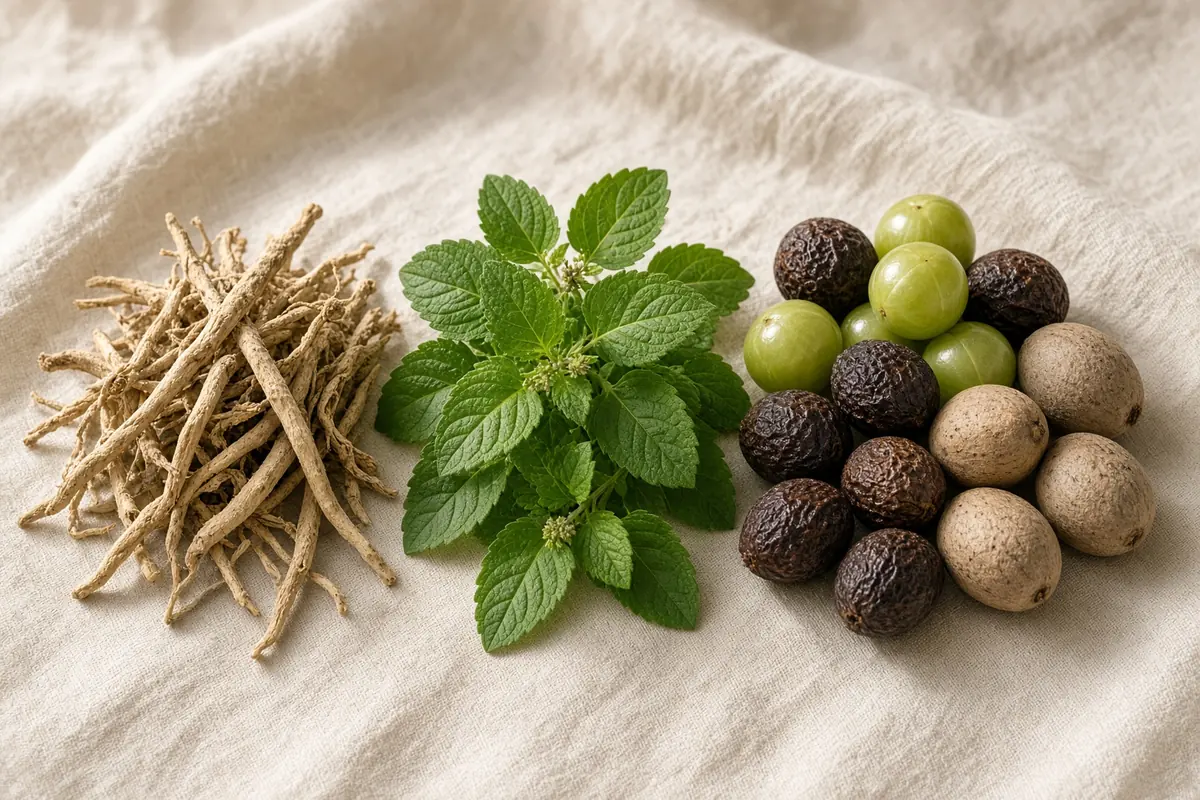
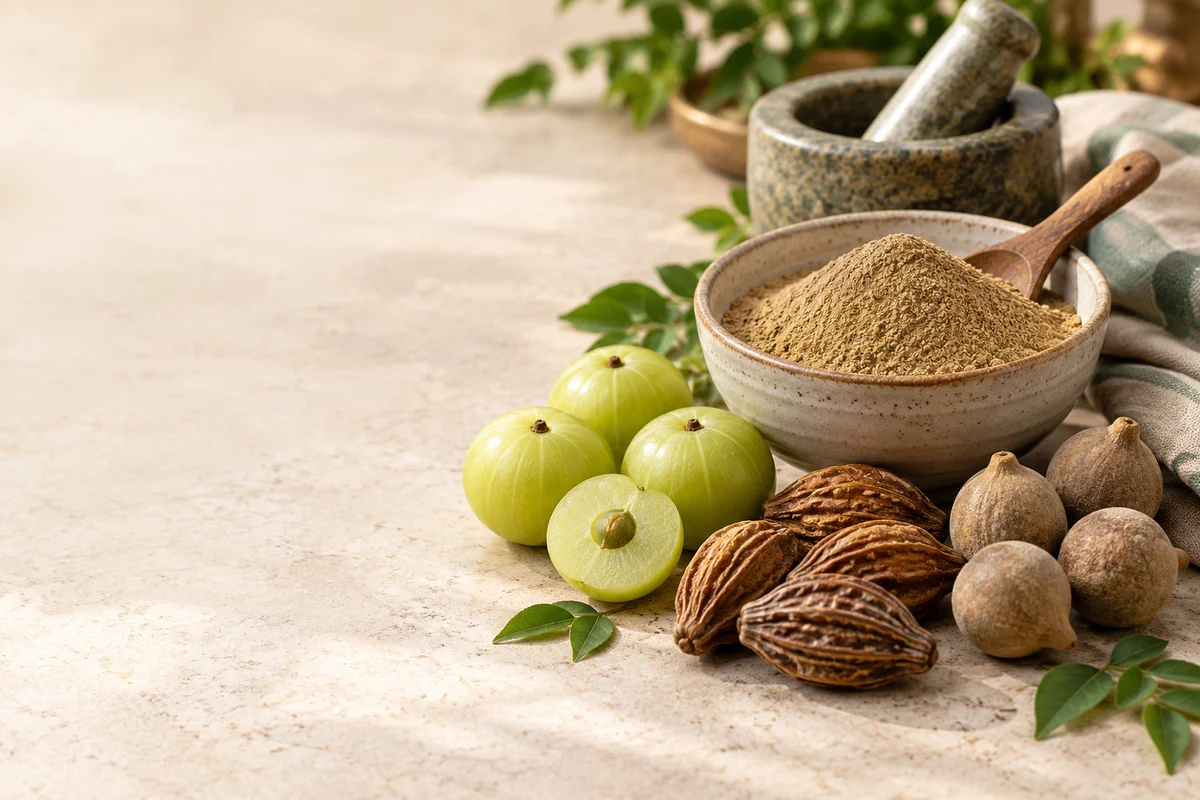
Triphala means three fruits. It combines amalaki (amla, Phyllanthus emblica), haritaki (harad, Terminalia chebula) and bibhitaki (baheda, Terminalia bellirica). A commonly described formulation uses equal weights of the dried fruit powders. A whole fruit, its powder and a concentrated extract are not interchangeable.
Bowel regularity: Triphala is traditionally used for constipation and digestive care. Human research is limited. Some constipation studies tested blends that also contained senna and psyllium, so their results cannot establish the effect of homemade Triphala alone. Persistent constipation needs assessment rather than repeated dose increases.
Oral care: small studies of formulated Triphala mouth rinses suggest possible benefits for plaque and gum health. A homemade powder mixed with water is not equivalent to the studied products. It does not replace brushing, flossing or dental treatment.
Antioxidant compounds: laboratory research identifies plant compounds with antioxidant activity. This does not establish that taking the blend prevents disease or produces a particular clinical benefit. Claims of detoxification, guaranteed weight loss or cures for diabetes or cancer are not supported by adequate clinical evidence.
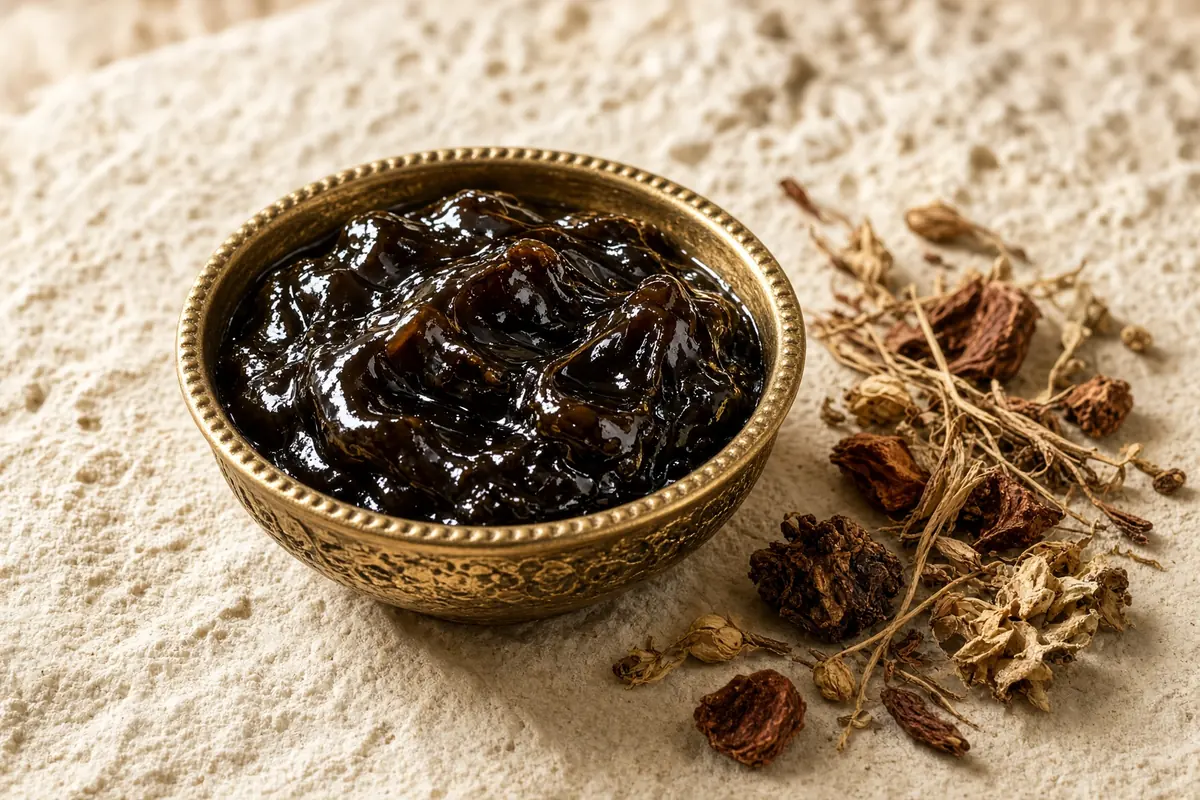
Home preparation shows how the powders are blended; it cannot verify contamination, purity or shelf life. The image illustrates the ingredients and powder, rather than documenting a tested batch. Prefer traceable ingredients, keep their original labels and ask a qualified professional whether use is suitable for you.
Ingredients
- 20 g correctly identified dried amla fruit powder
- 20 g correctly identified dried harad fruit powder
- 20 g correctly identified dried baheda fruit powder
- A weighing scale, clean dry bowl, spoon and airtight storage container
- These ingredients make a 60 g batch; they are not a daily serving.
How to prepare
- Obtain the three fruit powders separately from a reputable supplier. Check ingredient identity, batch details and expiry information; avoid unidentified loose powders.
- Inspect each powder. Do not use damp, mouldy, insect-infested or unusually smelling material.
- Clean and completely dry the bowl, spoon, weighing equipment and container before mixing.
- Weigh 20 g of each powder separately. Use equal weights, not equal spoonfuls, because powders can have different densities.
- Break up dry lumps and mix thoroughly until the three powders are evenly combined. Do not add water to the stored blend.
- Transfer to an airtight container away from moisture and heat. Record the ingredients, mixing date and original batch details. Home mixing does not establish a new expiry date.
- If starting from whole fruit, use correctly identified, thoroughly dried, deseeded fruit material. Grind each fruit separately before weighing and mixing; preparation time will be longer than the ten-minute powder-mixing method.
How to use
- There is no single dose suitable for every person or preparation. Powder, tablets and extracts can differ substantially.
- For a packaged product, follow its label and obtain professional advice. Ask a qualified practitioner before taking a homemade blend; do not estimate a medicinal amount from the batch recipe.
- Do not increase the amount because constipation continues, and do not replace prescribed treatment with Triphala.
Helpful habits
- Keep the original ingredient labels so a clinician or pharmacist can check exactly what the blend contains.
- Use a dry spoon and check the mixture before use. Discard it if it becomes damp, mouldy or smells unusual.
- A tested, labelled product provides better traceability than an unidentified homemade mixture.
Precautions
- Triphala may cause digestive side effects and may interact with medicines. Ask a clinician or pharmacist before use if you take regular medication.
- Seek professional advice in pregnancy, while breastfeeding and before use in children; safety is not adequately established.
- Never put homemade Triphala mixtures into the eyes. They are not sterile eye medicines.
- Constipation accompanied by bleeding, severe abdominal pain, vomiting or unexplained weight loss needs medical assessment. Persistent or recurrent symptoms should also be checked.
- Equal-parts blending does not prove that ingredients are pure or free from contaminants, or that the mixture is safe for everyone.
Frequently asked questions
What are the three ingredients of Triphala?
- Amla (amalaki), harad (haritaki) and baheda (bibhitaki). A common preparation combines equal weights of their dried fruit powders.
How do I make a small batch at home?
- Mix 20 g of each correctly identified dried fruit powder using clean, dry equipment. This makes 60 g of powder; it does not specify a daily dose.
Does Triphala help constipation?
- It is traditionally used for bowel regularity, but human evidence is limited. Trials of mixtures containing other laxatives do not establish the effect of homemade Triphala alone.
Can I take Triphala every day?
- Do not assume daily use is appropriate. Suitability, amount and duration depend on your health, medicines and the actual preparation. Obtain professional advice.
Can Triphala cure disease or guarantee weight loss?
- There is insufficient clinical evidence for those claims. It should not replace diagnosis, prescribed medicines or a balanced diet.