How to take shilajit resin: dose, timing and the right way
A step-by-step guide to taking shilajit resin — how much, when, with water or milk, how long to continue, and the common mistakes to avoid.
Published 26 September 2026 · 3 min read
Shilajit resin is simple to use once you know the basics. The key is a small amount, taken regularly, not a big spoonful. Here is the method most labels and Ayurvedic practitioners follow.
How much shilajit to take (dose)
The usual label dose for shilajit resin is 250–500 mg a day, or as directed by your healthcare professional. You don't need a scale:
- About 250 mg is roughly the size of a grain of rice.
- About 500 mg is roughly the size of a pea.
Start with the rice-grain size for the first week and see how you feel. Never go above the dose on your label.
Step by step: how to take shilajit resin
- Take the resin out with a clean, dry spoon or the spatula in the pack. Moisture spoils the resin.
- Add it to a cup of warm (not boiling) water or milk.
- Stir for a minute until it dissolves completely. The drink turns golden-brown to dark brown.
- Drink it once a day.
If the resin is too hard (common in winter), warm the closed jar in your hands for a minute. If it is too soft (in summer), keep it in a cooler spot.
Shilajit with milk or water?
Both are traditional. Warm milk is the classic Ayurvedic pairing for rasayanas and softens the strong, earthy taste. Warm water is lighter and suits people who avoid dairy. You can add a little honey once the drink has cooled to warm, not hot. Choose whatever you will stick with.
When to take shilajit: best time of day
Most people take shilajit in the morning, with or after a light breakfast. Many find this fits a daily routine best. If shilajit makes your stomach uneasy on an empty stomach, take it after food.
How many days should you take shilajit?
Ayurvedic practitioners usually suggest rasayanas as a course with breaks, not endlessly. There is no single rule. Ask your practitioner how long is right for you, and stop if it does not suit you. A 10 g jar lasts roughly 3 to 6 weeks at 250–500 mg a day.
Mistakes to avoid
- Taking too much. More is not better. Stay within 250–500 mg.
- Using a wet spoon. Water gets into the jar and spoils the resin.
- Dissolving in boiling liquid. Warm is enough.
- Mixing with many other supplements without advice.
- Buying unlabelled resin. See how to identify original shilajit.
Our resin
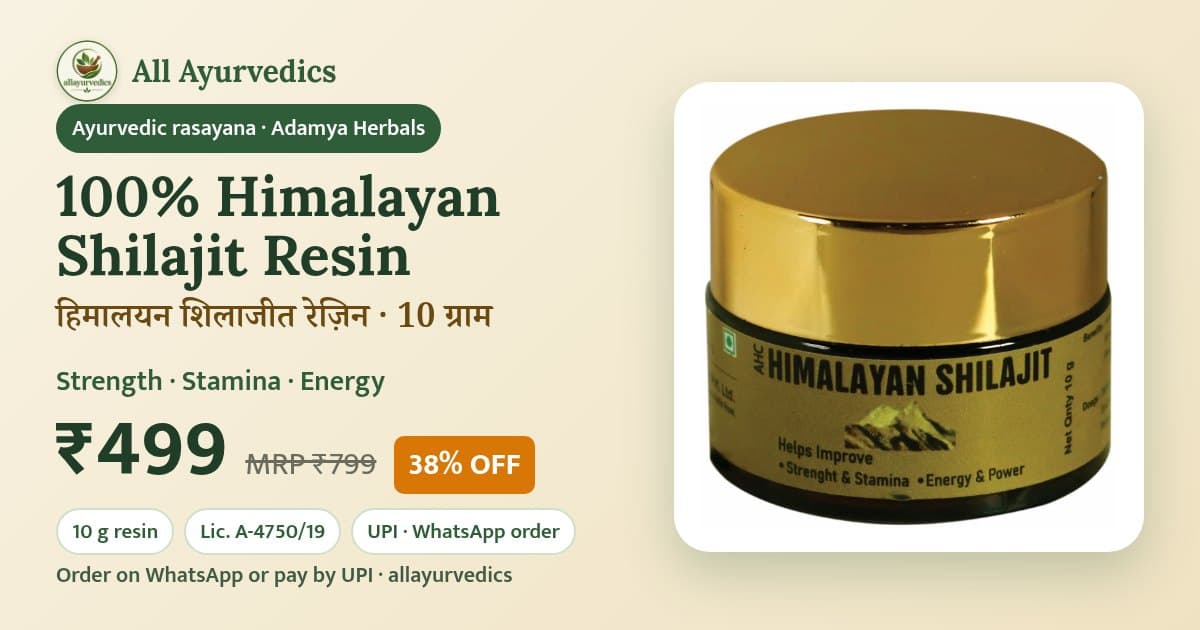
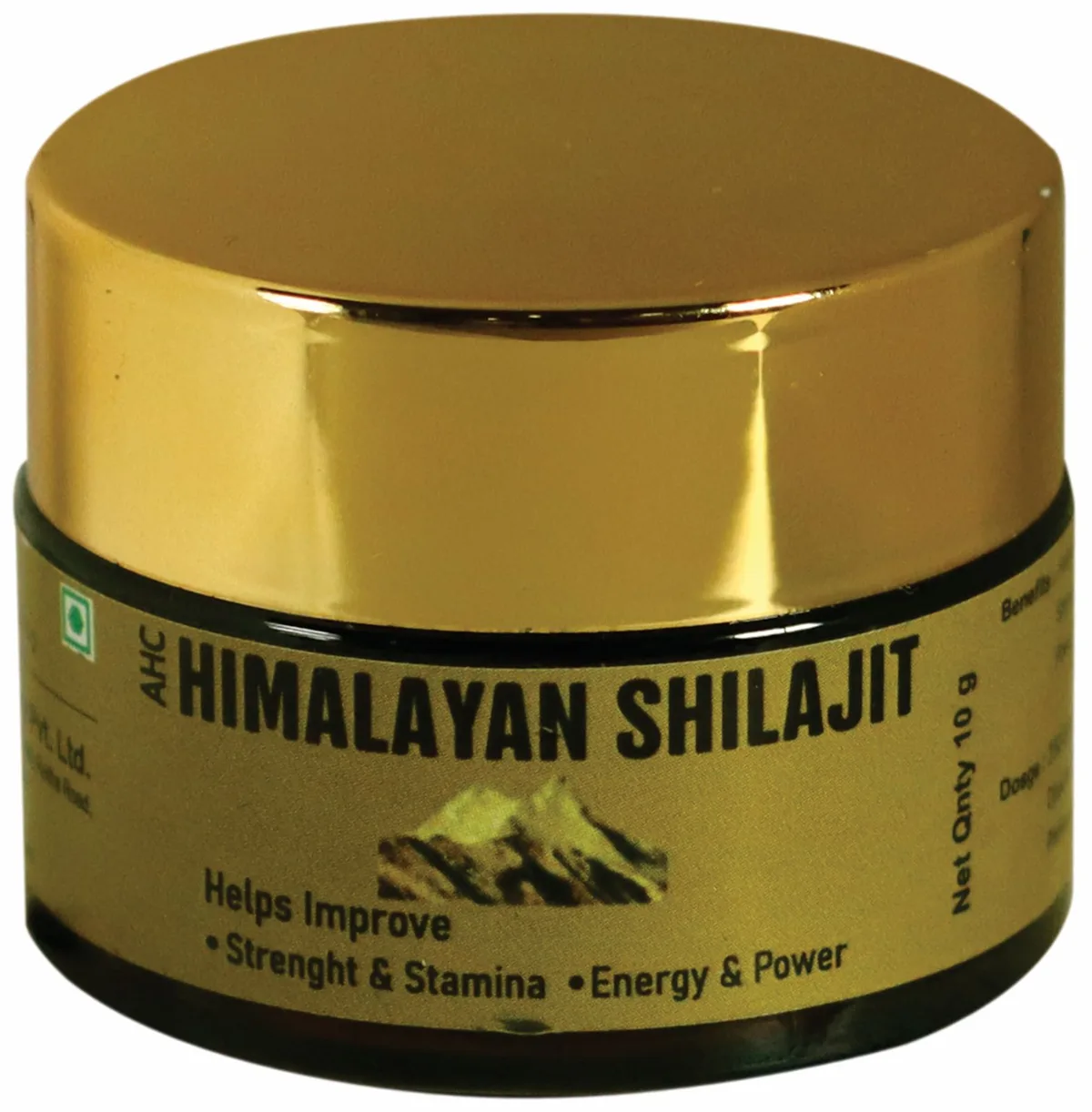
Adamya Herbals Himalayan Shilajit Resin, 10 g is ₹399 (MRP ₹799), with the label dose of 250–500 mg a day printed on the jar. Order it here with UPI or WhatsApp.
Doctor's note
Do not give shilajit to children under 12. Pregnant or breastfeeding women should not take it without medical advice. If you have a heart condition, gout or high uric acid, iron overload or a chronic illness, or take regular medicines, check with your doctor first. Stop if you notice stomach upset, rash or anything unusual. See shilajit side effects and our full shilajit guide.
Frequently asked questions
How much shilajit resin should I take per day?
- The usual label dose is 250–500 mg a day — about a rice-grain to pea-sized piece — or as directed by your healthcare professional. Start with the smaller amount.
Can I take shilajit with milk?
- Yes. Dissolving shilajit in warm milk is a traditional Ayurvedic way to take it. Warm water works too if you avoid dairy.
What is the best time to take shilajit?
- Most people take it once a day in the morning, with or after a light breakfast. Take it after food if it upsets your stomach.
How many days should I take shilajit?
- Ayurveda usually uses rasayanas as a course with breaks. There is no fixed rule, so ask your practitioner how long suits you. A 10 g jar lasts about 3–6 weeks at the label dose.
Can I chew shilajit resin directly?
- It is traditionally dissolved in a warm drink, which is easier to measure and gentler on taste. Follow the method on your label.
Shilajit guides
Benefits, how to take it, pure vs fake, forms, side effects and price — in plain language.
- Shilajit benefits: what Ayurveda traditionally uses it forWhat shilajit is, the benefits Ayurveda traditionally describes — strength, stamina, energy and vitality — and the honest limits of what a supplement can do.
- How to identify original (pure) shilajit: home checks and label checksSimple home checks for pure shilajit resin, why they are only rough guides, and the label and seller checks that matter most.
- Shilajit resin vs capsule vs powder: which form should you choose?An honest comparison of shilajit resin, capsules, powder and gummies — processing, dosing, convenience and what to check on each label.
- Shilajit side effects: precautions and who should avoid itPossible side effects of shilajit, who should not take it or should check with a doctor first, and simple ways to use it more safely.
- Shilajit price in India: how to compare and what to look forHow to compare shilajit prices fairly — per gram and per day — why very cheap shilajit is a warning sign, and what our 10 g resin costs.
Related remedies
 Desi ghee: making it at home and enjoying it in the right amountGhee is central to Ayurvedic cooking and healing — used for tempering, as a carrier for herbs, for oil massage and for dry skin and lips. Homemade ghee from malai is easy and aromatic. The key is balance: a teaspoon or two a day suits most people, not ladlefuls.
 Giloy (guduchi): how it's used, a simple kadha and who should avoid itGiloy, the heart-leaved climber called guduchi or amrita in Ayurveda, became a household name during the pandemic. Traditionally it's used for recurring fevers, low immunity and digestion. Here's how to use it sensibly in a mild decoction, and why it isn't for everyone.
 Moringa (sahjan): cooking the leaves, pods and flowers for everyday nutritionThe drumstick tree growing in so many Indian backyards is a nutrition powerhouse. Its leaves are rich in iron, calcium, vitamin A and protein, and its pods are a favourite in sambar. The best way to benefit is simply to cook it as food, regularly.
Related products
Get a weekly dose of Ayurveda
One seasonal tip, one remedy and one simple habit — every week, in English or Hindi. No spam, unsubscribe any time.