Oral care1 min
A New Toothbrush Every Three Months
Replacing the toothbrush on a calendar and after illness, and keeping it dry. The simplest oral-care remedy, not a kitchen mix.
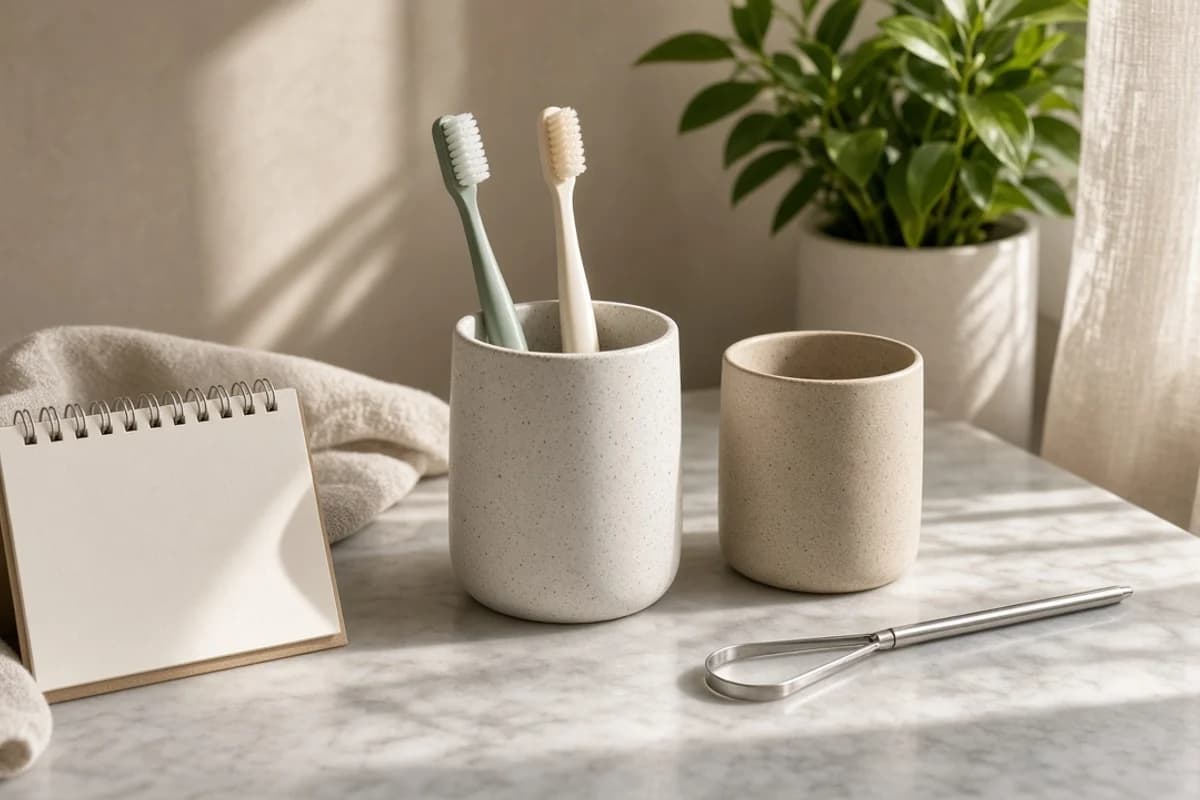
The simplest oral-care step of all
A worn toothbrush with splayed bristles cleans less well, and a damp one can hold germs. Dentists generally suggest changing a brush about every three months, or sooner if the bristles bend, and after a cold, flu or mouth infection. It costs very little and does more than most home mixes.
Choose a soft-bristled brush, rinse it after use, stand it upright to dry and keep it apart from others. Do not cover it in a closed box while wet. Change it on a fixed date, such as the first of every season. Bleeding gums or tooth pain need a dentist, not only a new brush.
Ingredients
- A new soft-bristled toothbrush
- A calendar mark or phone reminder
- An open holder to stand it upright
How to prepare
- Mark a replacement date every three months.
- Set an open holder in the bathroom.
How to use
- Replace the brush on the date, and after a cold or mouth infection.
- Rinse after use and let it dry upright.
Helpful habits
- Pick a soft brush.
- Keep brushes apart so they do not touch.
Precautions
- Bleeding gums or tooth pain need a dentist.
- Do not store a wet brush in a closed box.
- A hygiene habit, not a treatment.
Frequently asked questions
Why every three months?
- Bristles wear and spread, and clean less well.
Should I change it after being ill?
- Yes, it is a good habit.
Does an electric brush need changing?
- The head does, about every three months.