Herbs & foods10 min
Tulsi (holy basil): daily leaves, tulsi tea and a calm mind
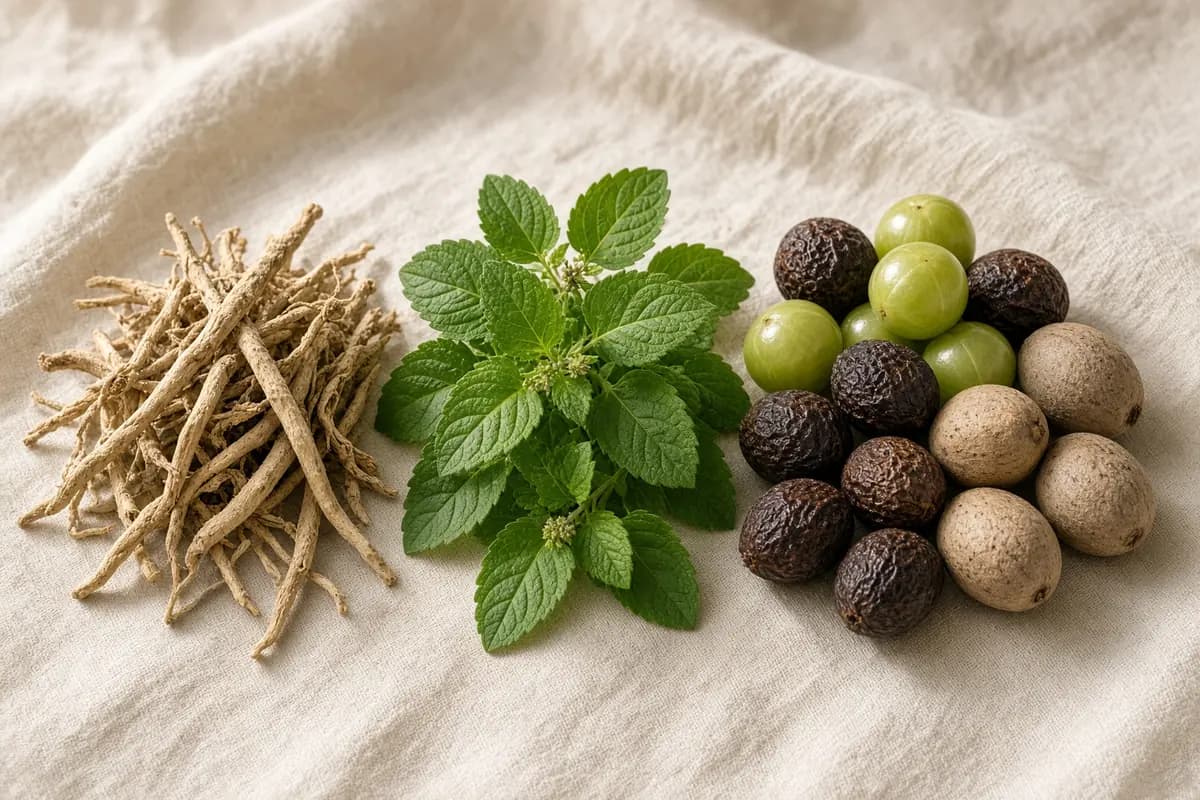
Almost every Indian home has a tulsi plant in the courtyard. Beyond its religious place, holy basil is a gentle adaptogen traditionally used for colds, cough, stress and digestion. A few fresh leaves or a cup of tulsi tea is the easiest way to enjoy it.

The Ayurvedic view
Ayurveda describes tulsi as pungent, bitter and warming, excellent for kapha and vata, and a herb that ‘opens the chest’ — useful for colds, coughs and breathlessness. It's also considered sattvic, bringing clarity and calm. Modern studies on holy basil point to adaptogenic and anti-inflammatory effects, supporting its traditional use for stress. There are two common types: green Rama tulsi and purple Shyama (Krishna) tulsi.
Ingredients
- 8–10 fresh tulsi leaves
- 1½ cups water
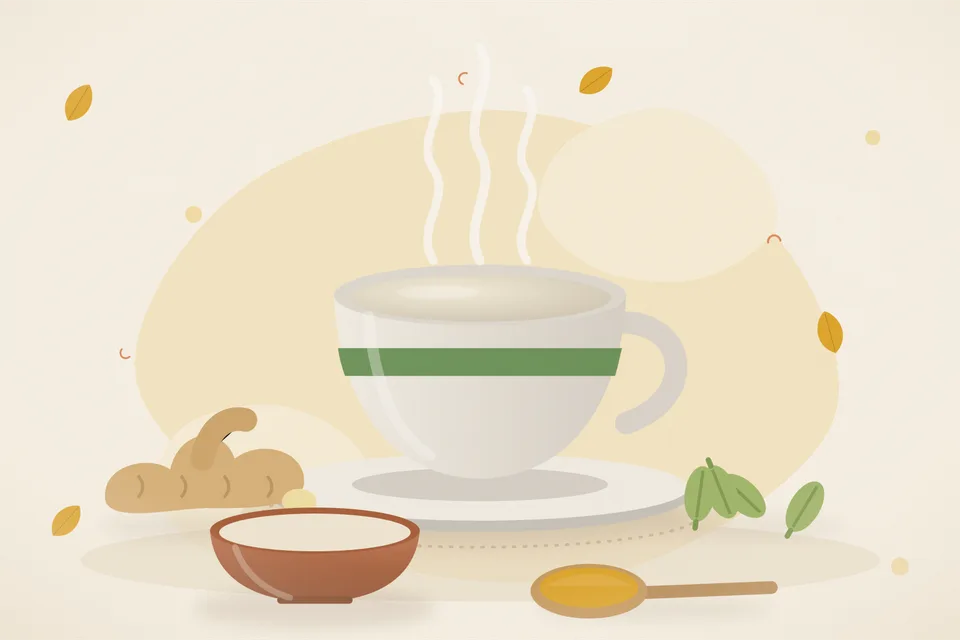
- A slice of ginger or a crushed cardamom (optional)
- A little honey or jaggery (optional)
How to prepare
- Bring the water to a boil, add tulsi and ginger, cover and simmer on low heat for 5 minutes.
- Strain; add honey when the tea is warm, not hot.
How to use
- Drink one cup of tulsi tea in the morning or evening as a caffeine-free alternative to regular tea.
- Add a few leaves to your regular chai or kadha during the monsoon and winter.
- Some people simply rinse and chew 2–3 leaves in the morning; swallow them rather than grinding them against the teeth for long.
Helpful habits
- Pinch off flower spikes (manjari) to keep the plant bushy.
- Tulsi grows best in morning sun with moderate watering.
Precautions
- Tulsi in food amounts is safe for most people. Avoid concentrated tulsi supplements during pregnancy or while trying to conceive.
- Tulsi may lower blood sugar and may slow blood clotting — check with your doctor if you take diabetes medicines or blood thinners, or before surgery.
- Skip honey for children under one year old.
- A cough lasting more than two to three weeks or breathlessness needs a doctor's check.