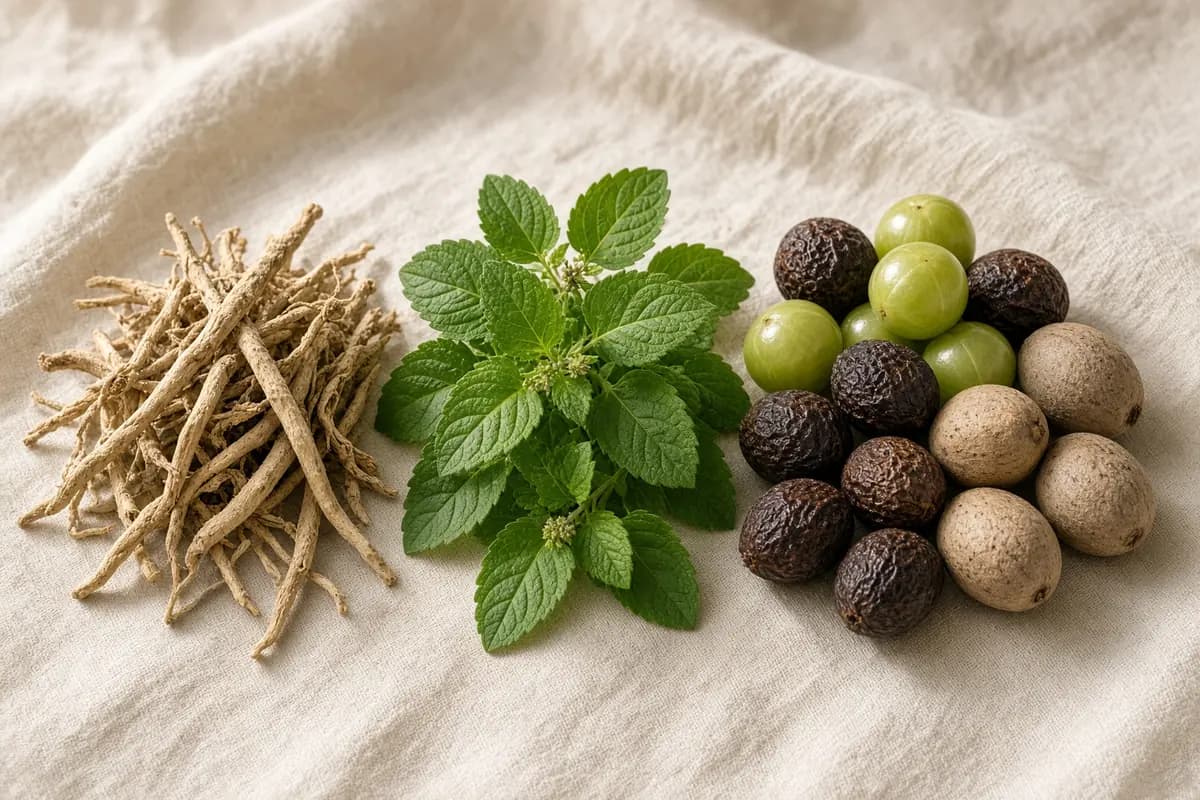
Benefits of harad (haritaki): the 'king of medicines' for digestion and regularity
Harad, or haritaki, is one of the three fruits in triphala and is revered in Ayurveda as the 'king of medicines'. The benefits of harad are traditionally linked to digestion and regular bowel movements, oral health and overall rejuvenation — a small pinch at bedtime has been a household practice for generations.

Benefits of harad: why Ayurveda reveres it
Haritaki (Terminalia chebula) contains tannins, chebulinic acid and other polyphenols with antioxidant and antimicrobial activity in lab studies. It has a gentle laxative effect in larger doses and is astringent in smaller ones. Some studies support its use in mouthwashes for gum health.
Ayurveda describes harad as having five of the six tastes (all except salty), balancing all three doshas, and especially calming vata. It is a rasayana, traditionally taken with different carriers in each season — with jaggery in monsoon, with ghee in autumn, and so on.
Ingredients
- Harad powder (haritaki churna) from a trusted brand
- Warm water
How to prepare
- Mix ¼–½ teaspoon harad powder in half a cup of warm water.
How to use
- For occasional constipation, take ¼–½ teaspoon with warm water at bedtime for a few days.
- For digestion, a pinch of roasted harad powder after meals.
- For the mouth, gargle with a weak, cooled harad decoction.
- Use short courses and take a break; long-term use only with an Ayurvedic doctor's guidance.
Helpful habits
- Start with the smallest dose to see how your body responds.
- Choose products tested for heavy metals.
- Drink plenty of water and eat fibre alongside.
Precautions
- Avoid in pregnancy and breastfeeding, and don't give to children, unless advised by a doctor.
- Avoid if you are weak, dehydrated, or have diarrhoea.
- It may affect blood sugar and absorption of medicines — take medicines at least 2 hours apart and continue prescribed treatment.
- See a doctor for constipation lasting over 2 weeks, blood in stools, weight loss or severe abdominal pain.
Frequently asked questions
What is the best time to take harad?
- At bedtime with warm water for regularity, or after meals for digestion, in small doses.
Is harad the same as triphala?
- No. Harad is one of the three fruits in triphala, along with amla and baheda.
Can harad be taken daily?
- Short courses are common; long-term daily use should be guided by an Ayurvedic practitioner.