Skin20 min
Warm soak and homemade ghee–beeswax balm for cracked heels
Cracked heels (bivaai) are a winter and summer headache in India, thanks to dry air, bare feet and open sandals. A warm soak, gentle scrub and a thick homemade balm under socks overnight make a real difference.
The Ayurvedic view
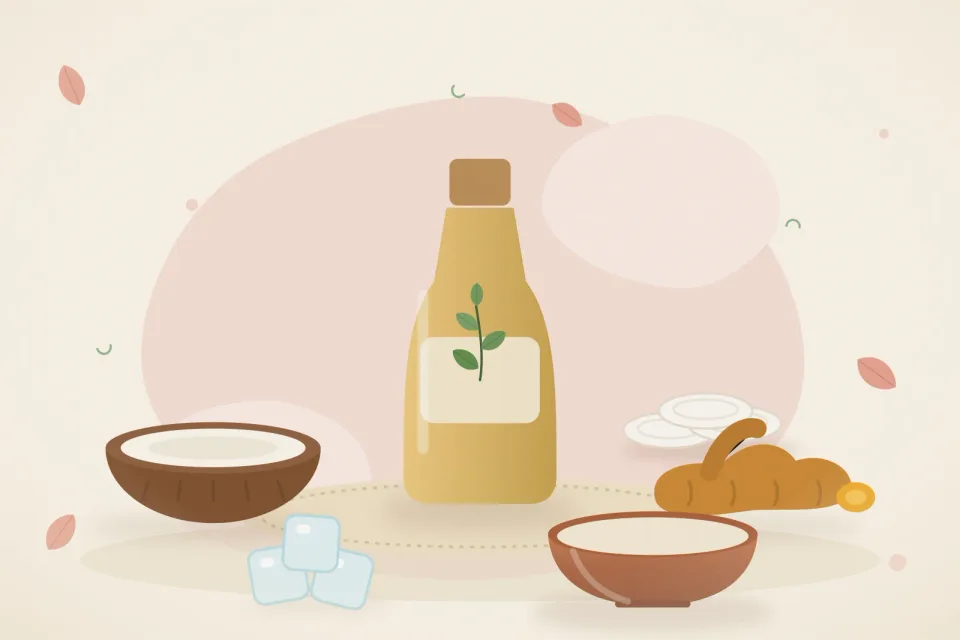
In Ayurveda, cracks in the heels (padadari) are a sign of aggravated vata — dryness settling where the skin is thickest and bears the most pressure. The classical answer is oiling the feet: padabhyanga. A balm made from ghee or coconut oil with a little beeswax stays on the skin longer than oil alone, sealing in moisture while the cracks heal.
Ingredients
- 1 tablespoon beeswax (or a small piece of plain paraffin wax/candle wax without colour or fragrance)
- 3 tablespoons ghee or coconut oil
- A pinch of turmeric (optional)
- A tub of warm water with a spoon of salt; a pumice stone
How to prepare
- Melt the wax and ghee/oil together in a small steel bowl over hot water. Stir in turmeric, pour into a clean jar and let it set.
- Fill a tub with comfortably warm water and dissolve the salt.
How to use
- At night, soak feet for 10–15 minutes, then gently rub the heels with a pumice stone — don't scrape hard.
- Dry thoroughly and apply a thick layer of balm to the heels and cracks.
- Wear cotton socks overnight. Repeat nightly for a week, then two or three times a week.
Helpful habits
- Wear closed or cushioned footwear when possible, and avoid standing barefoot on cold floors for long.
- Drink enough water and include healthy fats like ghee and sesame in your diet.
Precautions
- People with diabetes should not soak or scrape their feet without advice, should check feet daily and see a doctor for any crack, cut or infection.
- Don't use pumice or balm on bleeding, deeply fissured or infected heels (pus, swelling, redness) — see a doctor.
- Test the melted wax temperature before use; let it cool completely before applying.