- clean humidifier
- humidifier bedroom safety
- dry air congestion
- humidifier mould prevention
Bedroom Humidifier Cleaning for Safer Use
A daily empty-rinse-dry routine and manufacturer-led deep cleaning to reduce mineral and microbial spread.
Important: this remedy is only a supportive home measure. Keep taking any medicine your doctor has prescribed, monitor your readings, and consult your doctor before adding anything new.
how to clean a humidifier: method, benefits and precautions
A humidifier adds moisture; it is not an air purifier or a treatment for a respiratory infection. A bedroom with condensation, damp patches or mould may need less moisture, not another appliance. Before using one, decide whether the room actually needs humidification and whether you can maintain the device properly.
Keep the manufacturer's instructions for water type, cleaning, replacement parts and safe placement. Set the unit where it cannot be knocked over, with electrical connections dry and the mist away from bedding and walls. Do not add essential oils, disinfectants or medicines unless the device is specifically designed and instructed for that use.
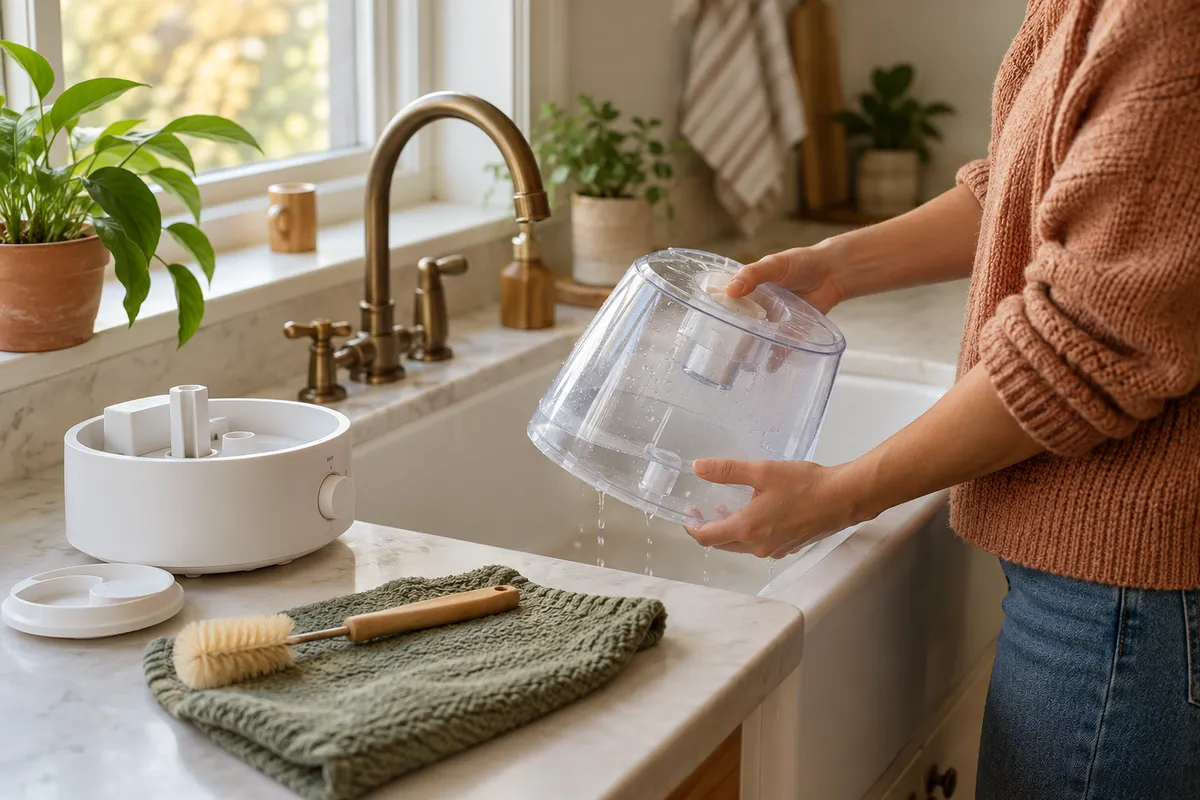
Empty, dry and refill portable tanks as directed rather than continually topping up old water. Clean on the recommended schedule, unplugging first and following cleaner dilution and rinsing instructions. Never mix cleaning chemicals. A tank that looks clear is not a reason to abandon maintenance, and a damaged or inaccessible part may mean the device should not be used.
Avoid over-humidifying; monitor the room as well as the tank. Stop using the device and seek advice if respiratory symptoms seem linked to it. Wheezing or breathing difficulty needs assessment rather than a higher mist setting. If upkeep is impractical, not running the humidifier is a reasonable decision.
Ingredients
- The manufacturer's manual
- Recommended water type
- Clean brush and labelled cleaning product
How to prepare
- Check whether the room needs moisture and read the manual.
- Place safely and use only specified water or additives.
- Empty, dry and clean on schedule; never mix cleaners.
How to use
- Use only with maintenance and room monitoring; stop if it appears to worsen symptoms.
Helpful habits
- Mist is not purified air.
- Do not just top up old water.
- Condensation is a reason to reassess.
Precautions
- Never mix cleaning chemicals; stop use for musty odour, visible mould or worsening asthma symptoms.
- Ask a clinician first if you have allergies, are pregnant, have a long-term condition or take regular medicines.
- Seek urgent care for severe pain, breathing difficulty, fainting, repeated vomiting, bleeding or rapidly worsening symptoms.
Frequently asked questions
Can I add essential oils?
- Only if the specific device explicitly permits that use; do not improvise.
Will more mist treat wheeze?
- No. Breathing symptoms need appropriate assessment.
Prepared by: All Ayurvedics editorial team
No clinician review is recorded for this page. This is general information, not individual diagnosis or treatment advice.
Responsible site owner/editor: Manoj Singh. Editorial responsibility