Jamun, guava and amla: choosing fruit wisely with diabetes
People with diabetes are often told to avoid fruit altogether — but whole seasonal fruits like jamun, guava, amla, papaya and apple, in sensible portions, can be part of a healthy diet. The trick is portion, timing and pairing.
Important: this remedy is only a supportive home measure. Keep taking any medicine your doctor has prescribed, monitor your readings, and consult your doctor before adding anything new.
The Ayurvedic view
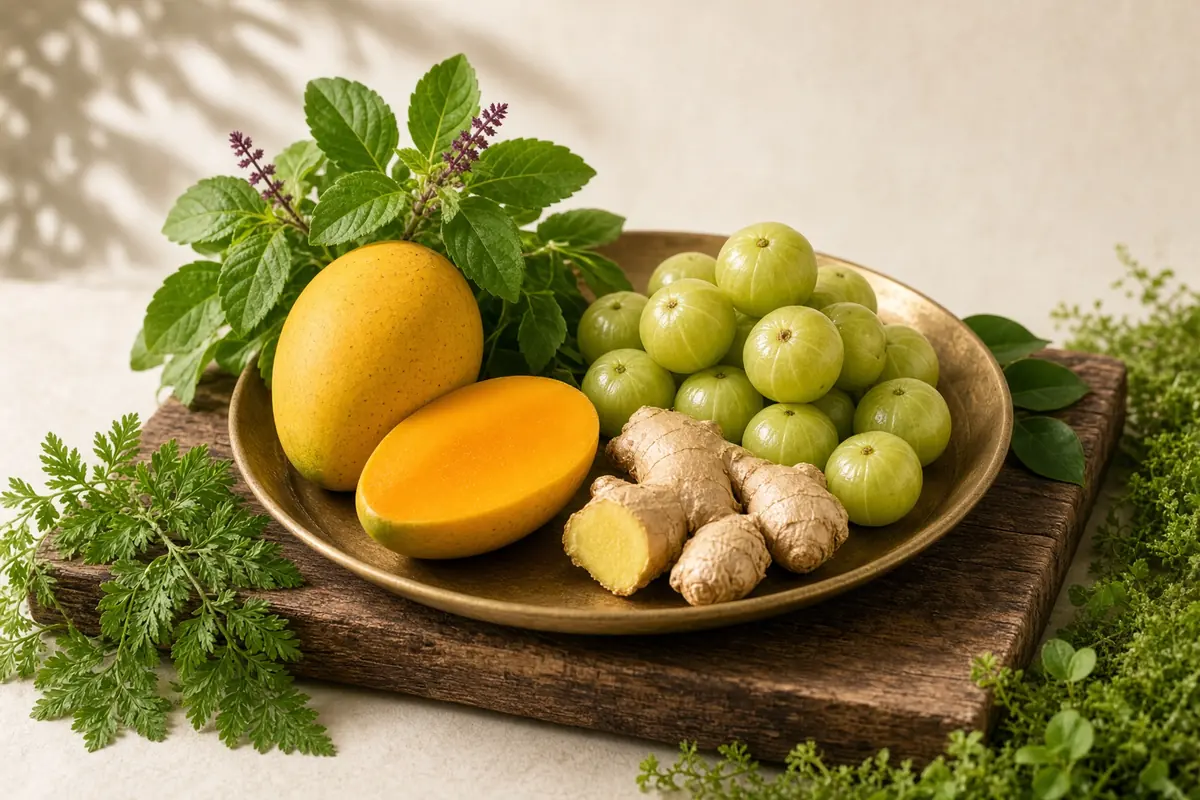
Jamun (Indian blackberry) has a special place in Ayurvedic tradition for prameha, and its astringent, slightly sweet taste is considered balancing. Guava and amla are high in fibre and vitamin C. Whole fruit is very different from juice: fibre slows the release of sugar. Modern guidance suggests one or two small servings of whole fruit a day for most people with diabetes, adjusted to their sugar levels.
Ingredients
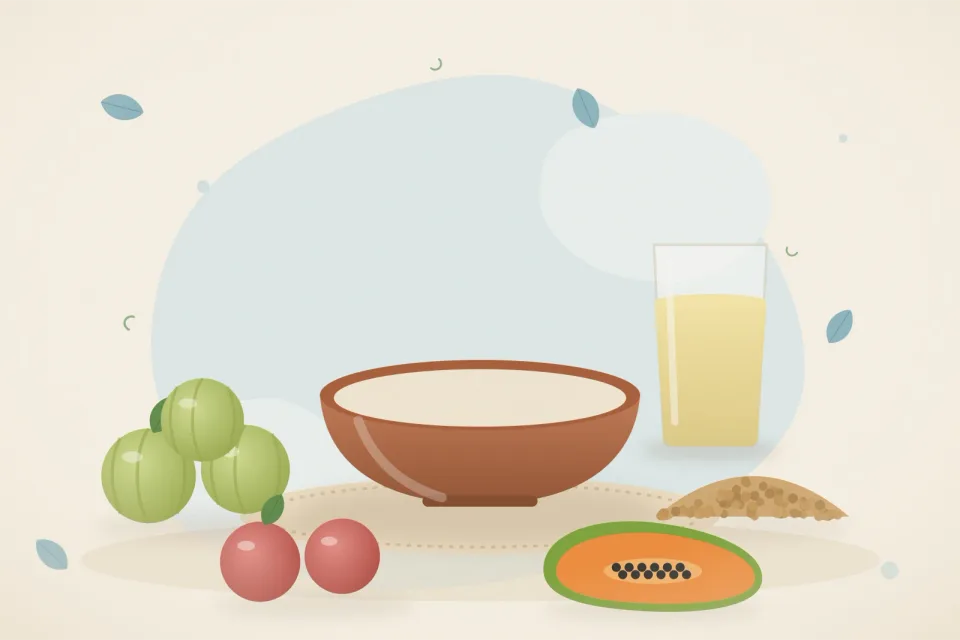
- One portion of fruit, roughly the size of your fist: 10–12 jamuns, 1 small guava, 2 amlas, 1 small apple, or 1 cup papaya cubes
- A handful of roasted chana or a few nuts to pair (optional)
How to prepare
- Wash fruit well. Eat guava and apple with the peel for extra fibre.
How to use
- Eat fruit as a mid-morning or mid-afternoon snack, not immediately after a large meal.
- Pair it with a few nuts or roasted chana to slow sugar absorption.
- Check your blood sugar 2 hours after trying a new fruit to see how you respond.
Helpful habits
- Avoid fruit juices, milkshakes with added sugar, canned fruit in syrup and dried fruit in large amounts.
- Mango, chikoo, banana and grapes are fine occasionally in small portions if your sugars are controlled.
Precautions
- Continue your diabetes medicines as prescribed. Jamun seed powder and other ‘anti-diabetic’ products can add to medicine effects — use only with your doctor's advice.
- People with kidney disease may need to limit potassium-rich fruits; ask your doctor or dietitian.
- Watch for signs of low blood sugar if you are on insulin or sulfonylurea tablets.