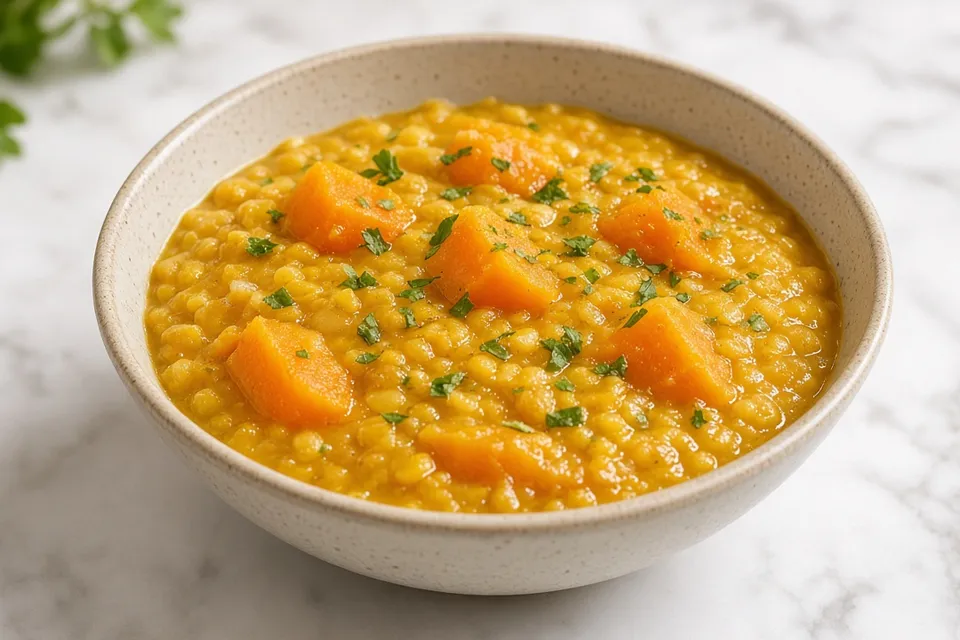
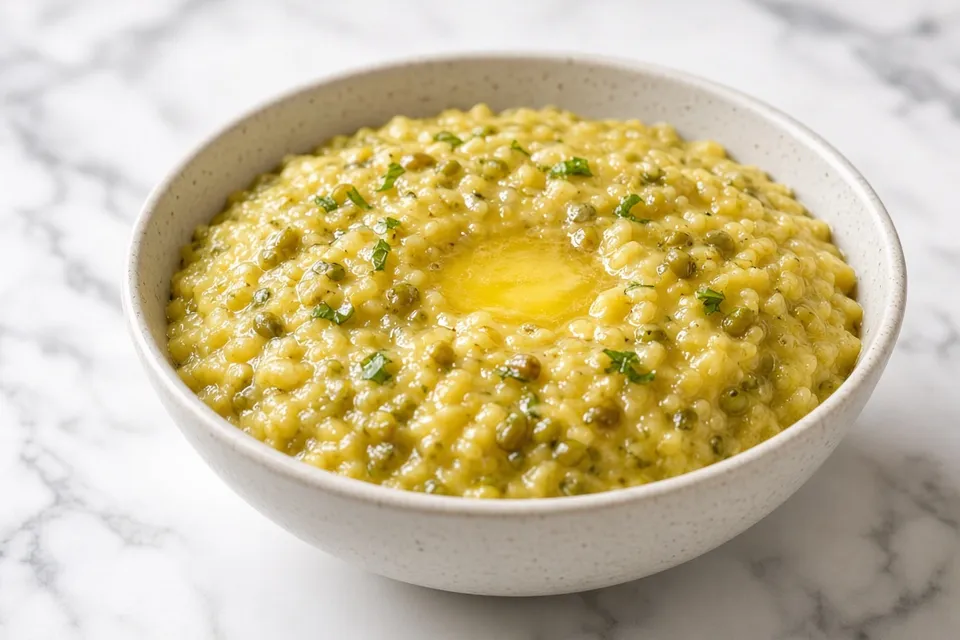
- moong dal soup
- yellow moong
- soft dal preparation
- dal soup texture
Moong-Dal Soup as a Light Protein Option
A thoroughly cooked thin moong-dal soup with portion progression, storage and kidney-diet guidance.
Important: this remedy is only a supportive home measure. Keep taking any medicine your doctor has prescribed, monitor your readings, and consult your doctor before adding anything new.
moong dal soup: uses, limits and a safe method
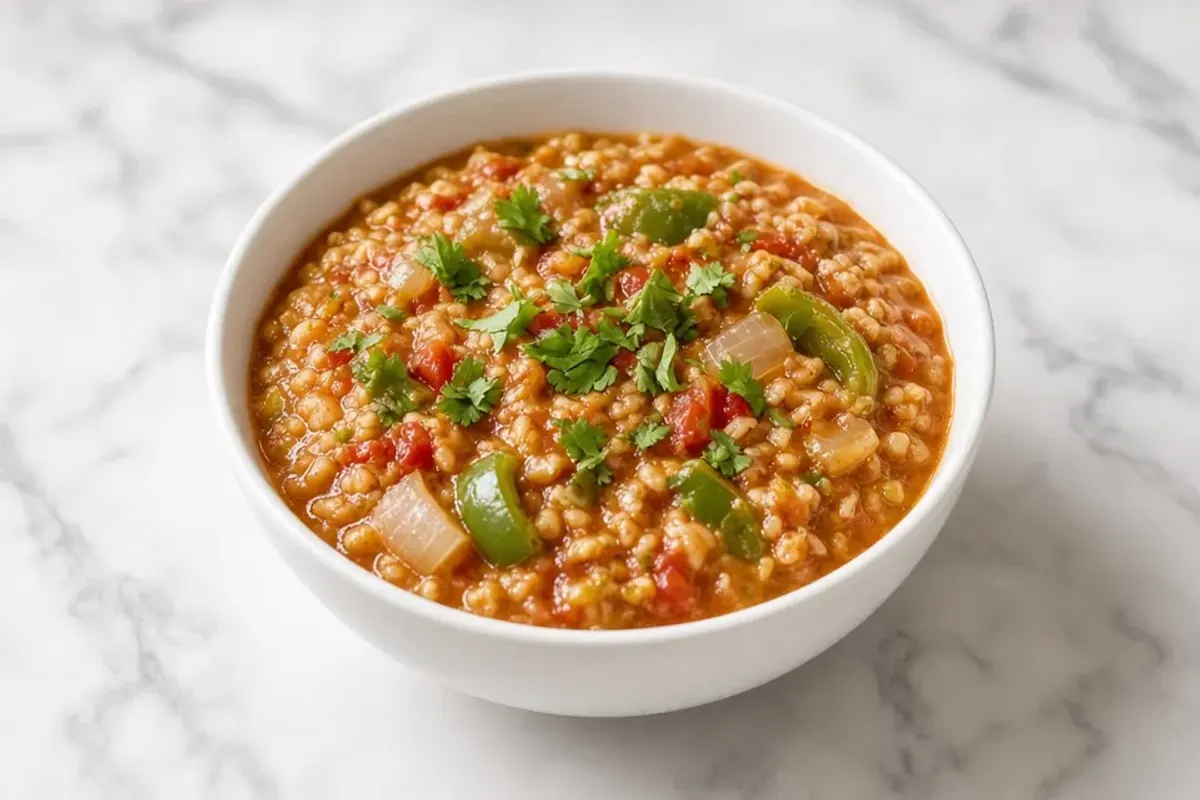
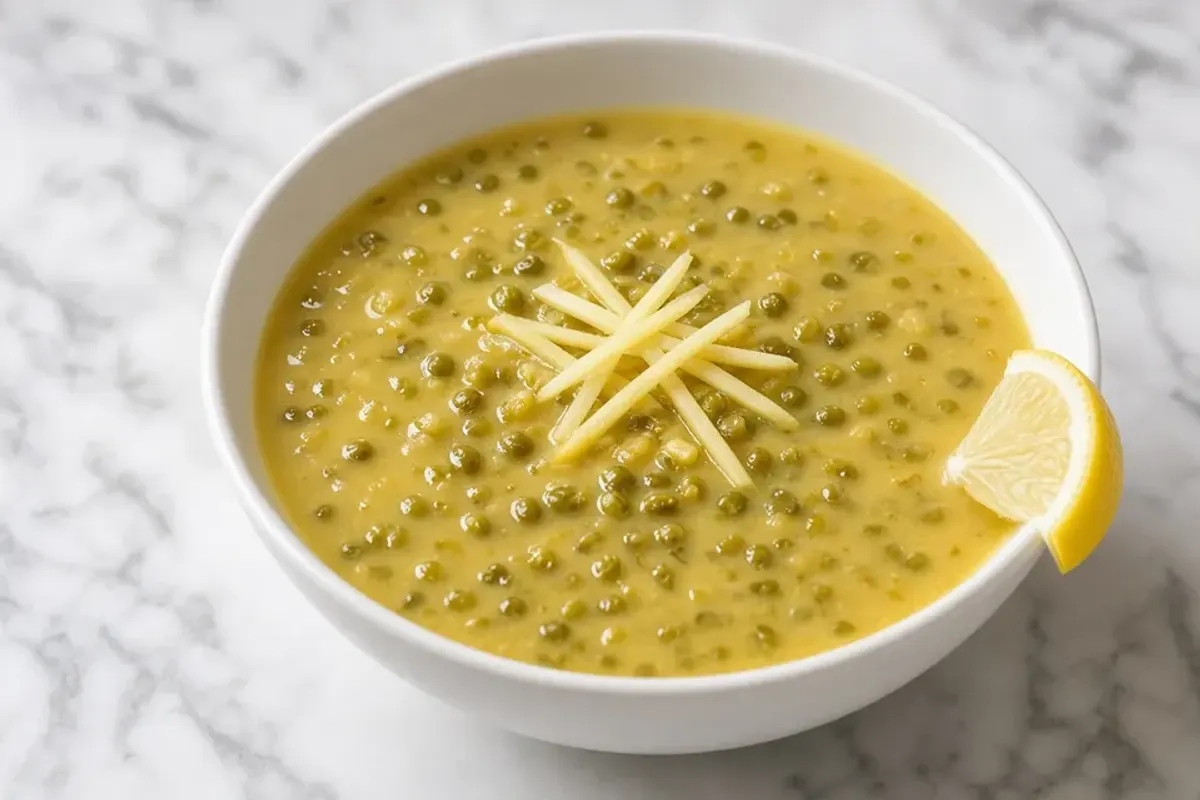
Moong-dal soup is a loose preparation of fully cooked split yellow moong. Keeping the cooked dal in the bowl makes it different from drinking only strained dal water. The grain-containing version has more substance and a more useful place in an ordinary meal. Thinness is a texture choice, not proof that a dish is better for every stomach or medical condition.
Use split yellow moong for the method below. Whole green moong includes skin and behaves differently, so do not expect the same smooth result with identical timing. Check the dry dal for debris, rinse and cook with the measured water. A larger pan or stronger heat loses water faster; if the base begins to dry while the dal remains firm, add hot drinking water and continue cooking rather than increasing the heat.
Test several pieces with a spoon. The cooked dal should mash easily, not have a hard centre hidden in a thick liquid. A whisk can break down fully softened dal without needing an electric blender. If blending, follow the appliance's hot-food guidance. After whisking, adjust the liquid gradually and stir before serving so that the dal does not all settle into the last bowl.
Choose seasonings that suit the meal. A little cumin and turmeric give a different result from a heavily fried chilli tempering. If someone finds the flavour strong, set aside a plain portion before seasoning the shared pot. Diluting an over-seasoned whole batch also dilutes the dal, so it may be more practical to season individual portions at the table.
Serve a modest bowl as part of the day’s food. A small amount of dal in a great deal of water should not be called a high-protein meal without a reliable calculation. Individual protein, fluid or mineral restrictions require personal advice, and this page does not specify a kidney-disease diet. Cool and refrigerate leftovers promptly. The guide's role is to help you cook and portion a familiar food; it is not a claim that moong soup cures weakness, infection or digestive disease.
Ingredients
- ¼ cup split yellow moong
- 2 cups water
- Pinch turmeric and cumin
How to prepare
- Check and rinse split yellow moong; place with the measured water in a suitable pan.
- Cook gently until several pieces mash easily and no firm centre remains; add hot water if it dries early.
- Whisk the softened dal, then adjust thickness gradually.
- Stir before dividing into bowls, season mildly and cool leftovers promptly for refrigeration.
How to use
- Follow the method and portion shown above.
- Try one new measure at a time so any reaction is easier to identify.
- Continue normal meals, hydration, sleep and prescribed care.
Helpful habits
- Use split yellow moong for the smooth texture described.
- Check multiple pieces, not only the liquid's thickness.
- Reserve a plain portion before adding a strong tempering.
- Stir before serving so the dal is distributed evenly.
Precautions
- Legumes may cause gas; increase gradually.
- Avoid with legume allergy.
- Kidney disease may require tailored protein, potassium or fluid advice.
Frequently asked questions
Is strained dal water the same meal?
- No. Removing the dal changes what is eaten. This recipe keeps the softened food in the bowl.
Can I substitute whole moong?
- It has skin and different cooking behaviour; adjust the method rather than assuming the same time.
Do I need a blender?
- Fully softened dal can often be broken down with a whisk.
Is it suitable for every kidney diet?
- No universal suitability is established. Follow your own clinical dietary advice.
Prepared by: All Ayurvedics editorial team
No clinician review is recorded for this page. This is general information, not individual diagnosis or treatment advice.
Responsible site owner/editor: Manoj Singh. Editorial responsibility