Diabetes support25 min
Rajgira (Amaranth) Roti as an Occasional Swap
Rajgira flour mixed with a little wheat or potato for a soft roti, eaten once in a while in place of the usual. A swap, not a treatment.
A different grain once in a while
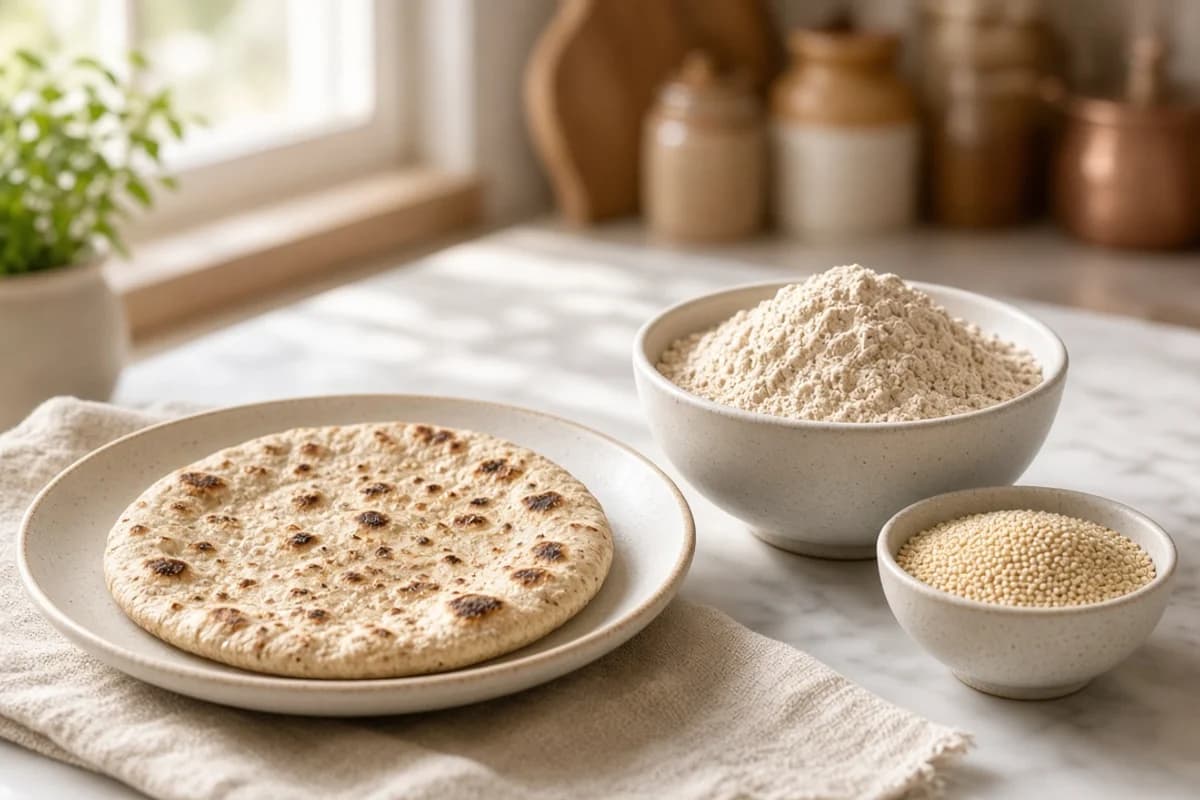
Rajgira, or amaranth, is a tiny seed ground into flour, widely eaten on fasting days and sold as a gluten-free option. It has more protein than many grains and a nutty taste. It is a way to vary your grains, not a treatment for blood sugar or weight.
Rajgira flour has no gluten, so the roti is delicate. Mix it with a little wheat flour or boiled potato, and roll between sheets. Eat it freshly made. If you have kidney problems or are on a set diet, ask your doctor about amounts.
Ingredients
- 1 cup rajgira flour
- 2 tablespoons wheat flour or half a boiled potato
- Warm water and salt
How to prepare
- Mix rajgira flour with wheat flour or mashed potato, salt and warm water into a soft dough.
- Roll between two sheets of paper or plastic and cook on a hot tawa.
How to use
- Eat one roti with a vegetable and curd.
- Have it once in a while rather than daily.
Helpful habits
- Roll it between sheets so it does not stick.
- Eat warm, since it dries fast.
Precautions
- Ask a doctor about amounts if you have kidney problems or a set diet.
- A swap, not a treatment for blood sugar or weight.
- Eat freshly made.
Frequently asked questions
Is rajgira gluten-free?
- The seed is naturally gluten-free, but check the packaging for cross-contamination.
Can I use only rajgira flour?
- It is hard to roll alone. A little wheat or potato helps.
Is rajgira good for diabetes?
- It is a swap that can fit a plan, but not a treatment.