Everyday wellness10 min
A Monsoon Kitchen Kit: Ginger, Tulsi and Ajwain
Ayurveda's ritucharya advises lighter food and warming spices in the monsoon. How to keep ginger, tulsi and ajwain handy for everyday monsoon meals and drinks.
Why ginger is used this way
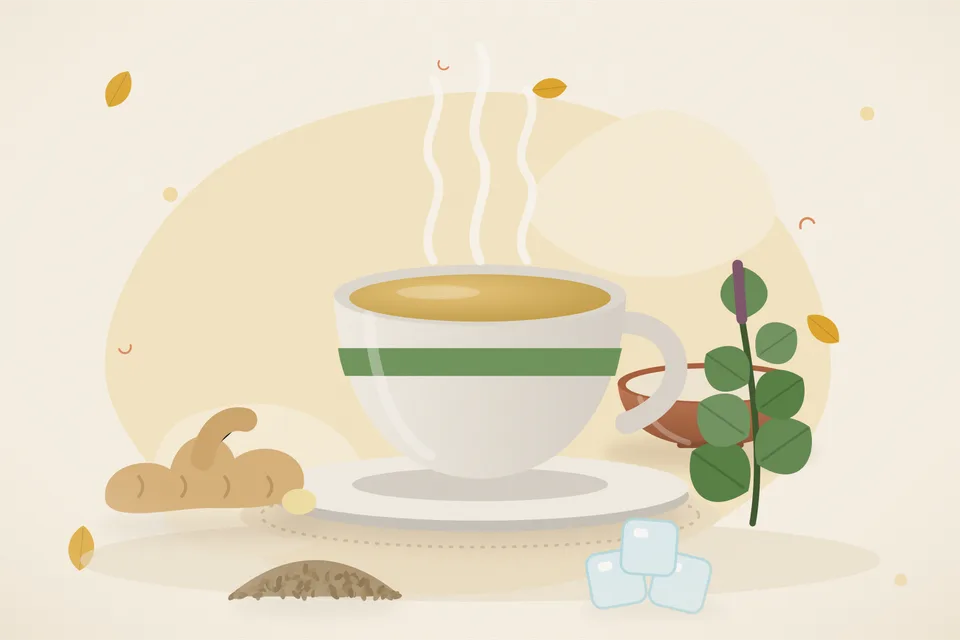
Ginger is used fresh (adrak) or dried (sonth) in Indian homes. Ayurveda calls dry ginger a universal medicine for digestion and cold days, and studies support ginger for nausea.
In Ayurveda, digestion (agni) is considered weakest during the monsoon. Ritucharya, seasonal routine, suggests warm, freshly cooked, lighter food with digestive spices. Ginger, tulsi and ajwain are easy to keep at hand and use daily.
Ingredients
- Fresh ginger
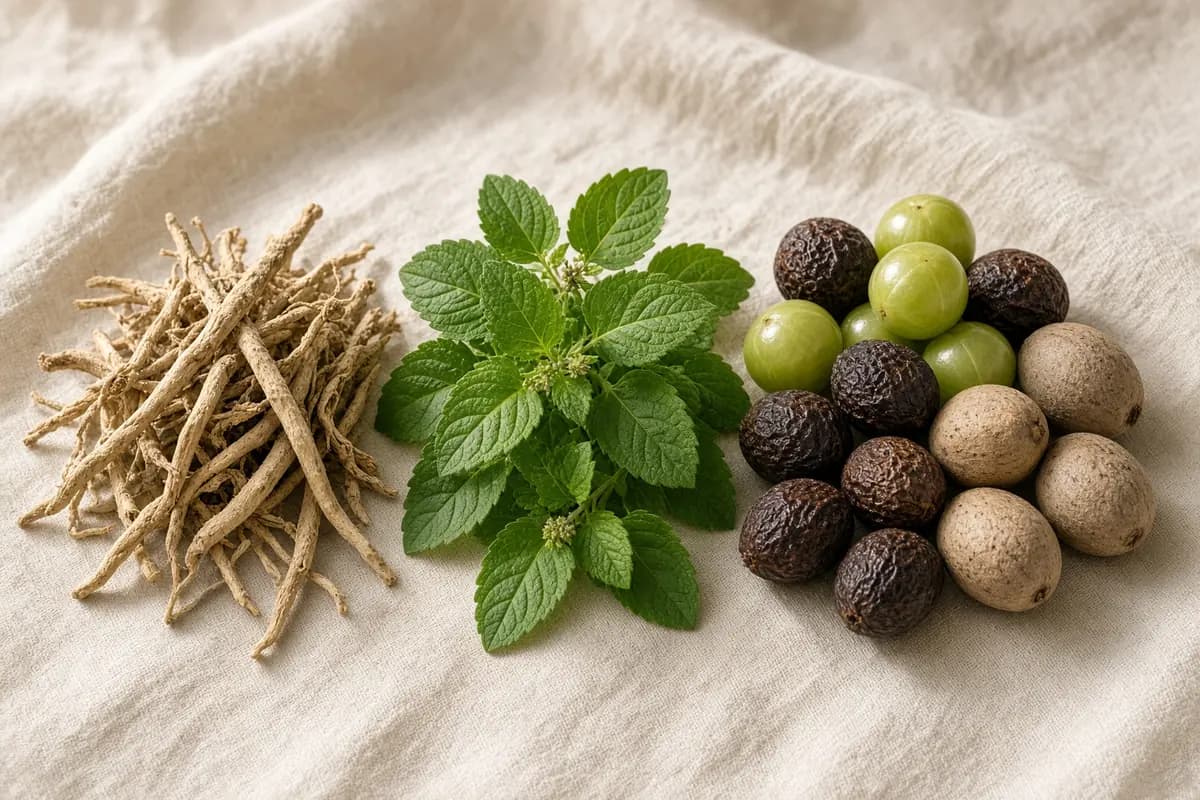
- A tulsi plant or dried tulsi
- Ajwain
- Clean boiled water
How to prepare
- Keep a small jar of ajwain and a knob of ginger by the stove.
- Grow a tulsi plant on a sunny window.
How to use
- Add ginger and ajwain to dals and parathas; sip ginger-tulsi tea once a day.
- Drink boiled, cooled water and eat freshly cooked meals.
Helpful habits
- Dry ginger (sonth) is stronger than fresh; use about a third as much.
Precautions
- Ginger and ajwain are warming; reduce with acidity. Fever with body ache in the monsoon needs testing for dengue or malaria.
- Large amounts can cause heartburn; check with a doctor if you take blood thinners.
- A home remedy, not a treatment. See a doctor if symptoms last more than a few days or get worse.
Frequently asked questions
Why avoid raw salads in the monsoon?
- Contaminated water raises the risk of stomach infections; wash well or cook.
Can children have ginger-tulsi tea?
- A weak, small cup is fine for older children.
Fresh ginger or sonth?
- Fresh is milder and juicier; sonth is stronger and more warming.