Eye care5 min
A Few Saffron Strands in Food: What Studies Say About Eyes
Small studies have looked at saffron for age-related eye changes. What they found, and how to enjoy a few strands in milk or rice as part of a healthy diet.

Using saffron sensibly at home
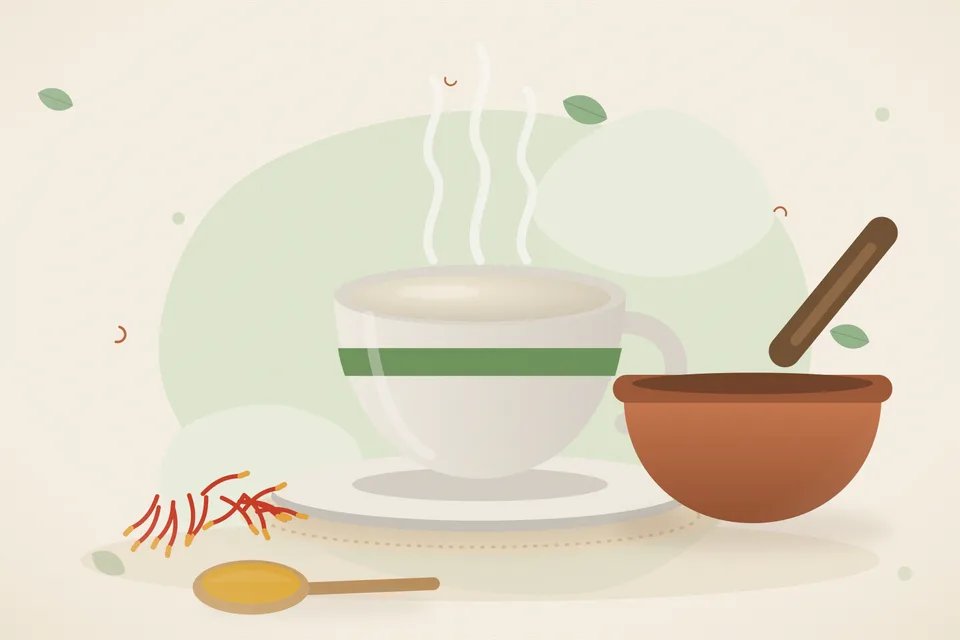
Kesar (saffron) is the dried stigma of the crocus flower, used a few strands at a time in milk, sweets and ubtan. Small studies suggest a mild mood benefit; it is costly and often faked.
Saffron contains antioxidants such as crocin and safranal. A few small trials of saffron supplements in people with early age-related macular degeneration reported modest improvements in some vision tests. These used standardised doses, and results need confirmation. A few strands in food is a pleasant, safe habit.
Ingredients
- 3 to 4 saffron strands
- Warm milk, kheer or rice
How to prepare
- Soak strands in a spoon of warm milk for 10 minutes.
- Stir into milk or a rice dish.
How to use
- Enjoy a few times a week as part of a varied diet.
- Wear sunglasses outdoors and do not smoke.
Helpful habits
- Real saffron releases colour slowly in warm milk; fake strands bleed red at once.
Precautions
- Do not take high-dose saffron supplements in pregnancy. AMD needs an eye specialist's care.
- Use only a few strands; large amounts are unsafe, especially in pregnancy.
- Never put homemade liquids or herbs inside the eye. See an eye doctor for pain, redness or vision change.
- If you take regular medicines or have a long-term condition, check with your doctor first.
Frequently asked questions
Should I take saffron capsules for my eyes?
- Only if your eye doctor agrees.
How do I know saffron is real?
- Real strands colour milk slowly and stay red.
How many strands are enough?
- Three to five strands per cup.