- stewed prunes
- prune compote
- dried plum preparation
- constipation food choices
Stewed Prunes for Occasional Constipation
A small stewed-prune serving for occasional constipation, with fibre, sorbitol, hydration, portion and warning-sign guidance.
Important: this remedy is only a supportive home measure. Keep taking any medicine your doctor has prescribed, monitor your readings, and consult your doctor before adding anything new.
How prunes may support bowel regularity
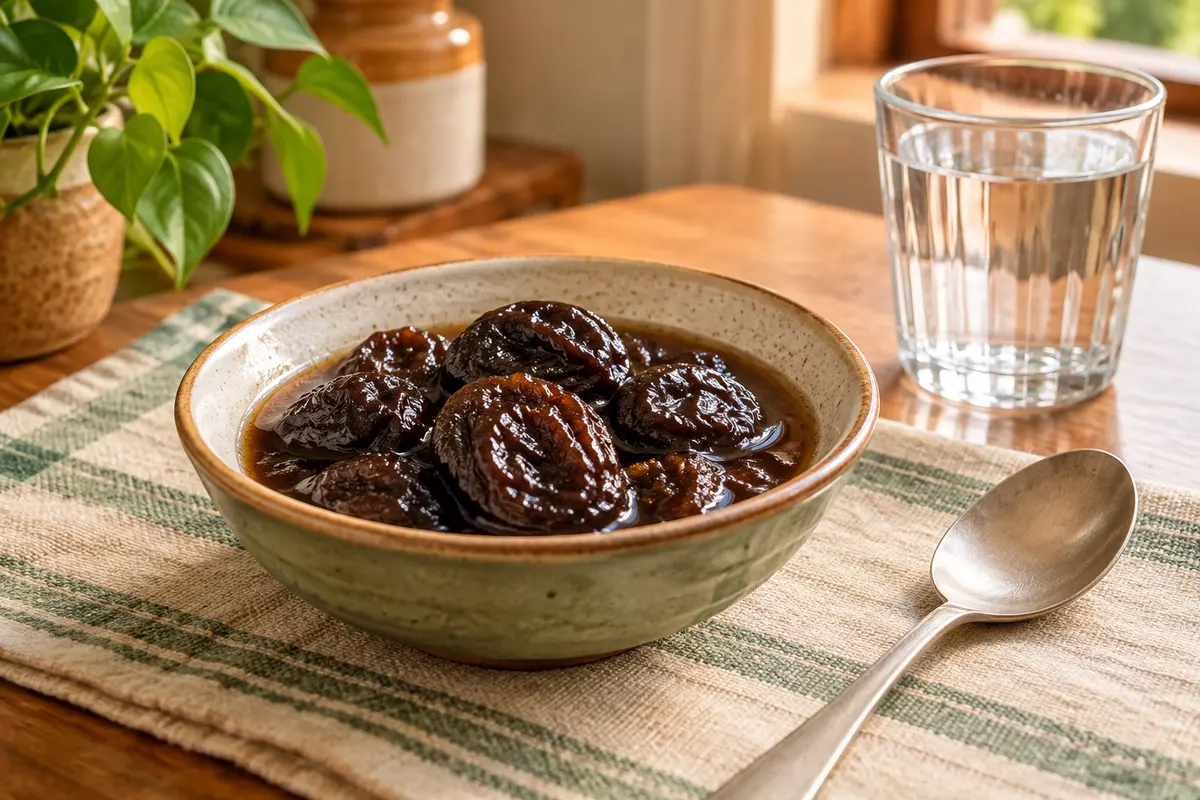
Prunes are dried plums. Gentle stewing softens them into a spoonable fruit preparation that can be eaten alone or mixed into breakfast. This page uses the familiar search term constipation to discuss a food option, but it does not set a laxative dose or promise a bowel movement by a particular time. The result is still fruit, not a medicine with a standardised strength.
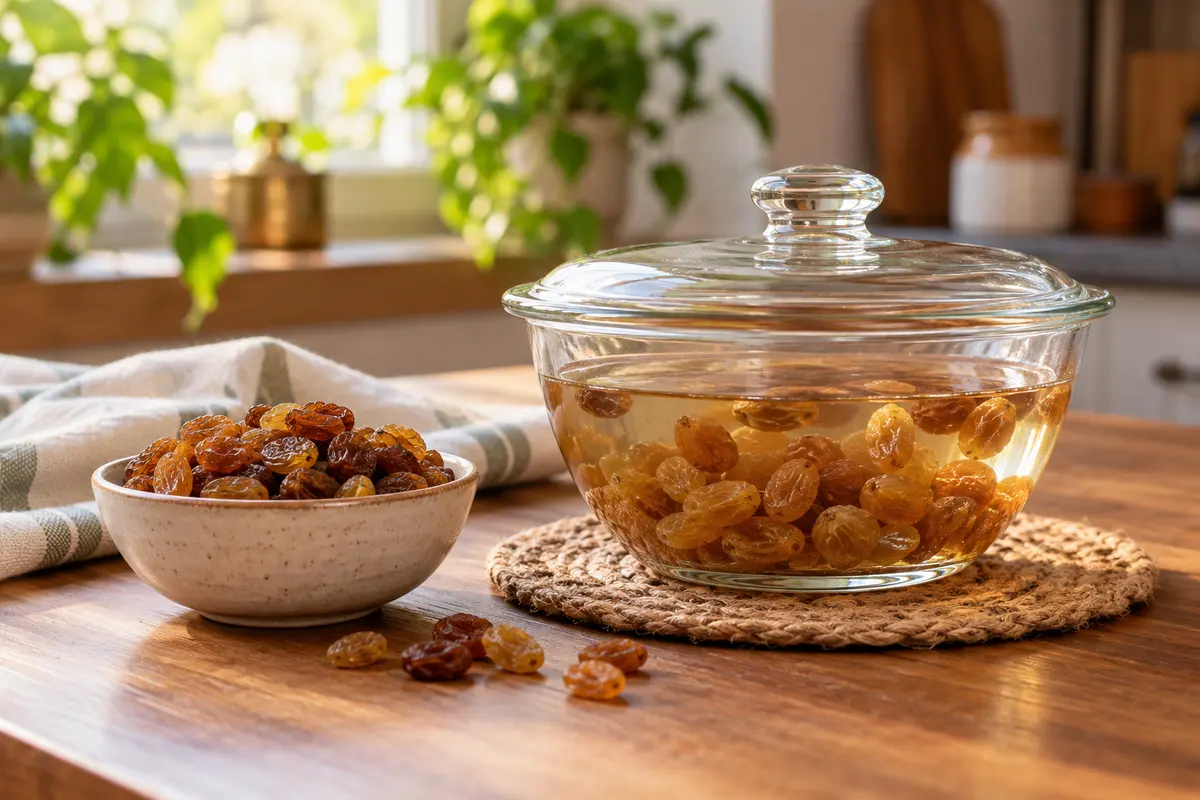
Check whether the packet says pitted. Even with pitted fruit, look for an occasional hard fragment before serving. Put the measured prunes in a small pan with the recipe water. Bring to a gentle simmer and watch the texture: older or drier fruit may need longer than softer fruit from a newly opened packet. Add a little more water if the pan becomes dry before the fruit softens. Do not judge doneness solely by the clock.
For whole pieces, stop when a spoon can press into the fruit easily. For a rough compote, mash with a fork and mix in enough cooking liquid to reach the texture you want. There is usually no need to begin with extra sugar. If a whole bowl is too intense, spread a modest amount across plain porridge. Keeping fruit and its liquid together is a different food preparation from drinking a strained prune drink.
The cited NIDDK advice concerns dietary fibre and constipation care generally. It does not certify this particular compote or specify how much a reader should take. If you already use a treatment plan, avoid replacing it with escalating bowls of prunes. More is not automatically more comfortable, and abdominal symptoms should not be treated as a reason to keep increasing fruit.
Cool leftovers promptly, cover and refrigerate according to food-storage guidance. Use a clean spoon to serve; repeatedly eating from the storage container is less hygienic. A pitted label also does not make whole soft fruit suitable for every swallowing ability. Serve a texture appropriate to the person, and seek advice when symptoms continue or include bleeding, vomiting or significant pain.
Ingredients
- 4 to 5 pitted prunes
- ¾ cup drinking water
How to prepare
- Check that pits are removed.
- Simmer gently for 10 minutes.
- Cool and serve a small portion.
- Refrigerate leftovers promptly.
How to use
- Start with 2 to 3 softened prunes.
- Wait and observe.
- Maintain ordinary meals and fluids.
Helpful habits
- Check pitted fruit for occasional hard fragments.
- Use softness under a spoon as well as cooking time to judge the fruit.
- Mash with cooking liquid for compote rather than boiling the pan dry.
- Taste before adding sugar; dried plums already have sweetness.
Precautions
- Excess may cause diarrhoea or cramps.
- Account for carbohydrate in diabetes.
- Bleeding, black stool, vomiting, severe pain or inability to pass gas needs care.
Frequently asked questions
Are prunes and fresh plums interchangeable here?
- Not directly. Dried fruit needs rehydration; fresh plums have a different water content and cooking behaviour.
Must I blend the cooked fruit?
- No. Whole soft pieces or a fork-mashed compote are options, depending on the needed texture.
Is a larger bowl more effective?
- Do not use this recipe to escalate a laxative dose. It is a food option and tolerance differs.
Why did the pan run dry?
- The heat may be too high or the pan too wide. Lower the heat and add water before the fruit catches.
Prepared by: All Ayurvedics editorial team
No clinician review is recorded for this page. This is general information, not individual diagnosis or treatment advice.
Responsible site owner/editor: Manoj Singh. Editorial responsibility