Oral care15 min
Coconut Oil Pulling Followed by a Triphala Rinse
A morning routine of five to ten minutes of coconut oil pulling (gandusha) followed by a mild triphala water rinse, as an add-on to brushing.
The Ayurvedic view of triphala
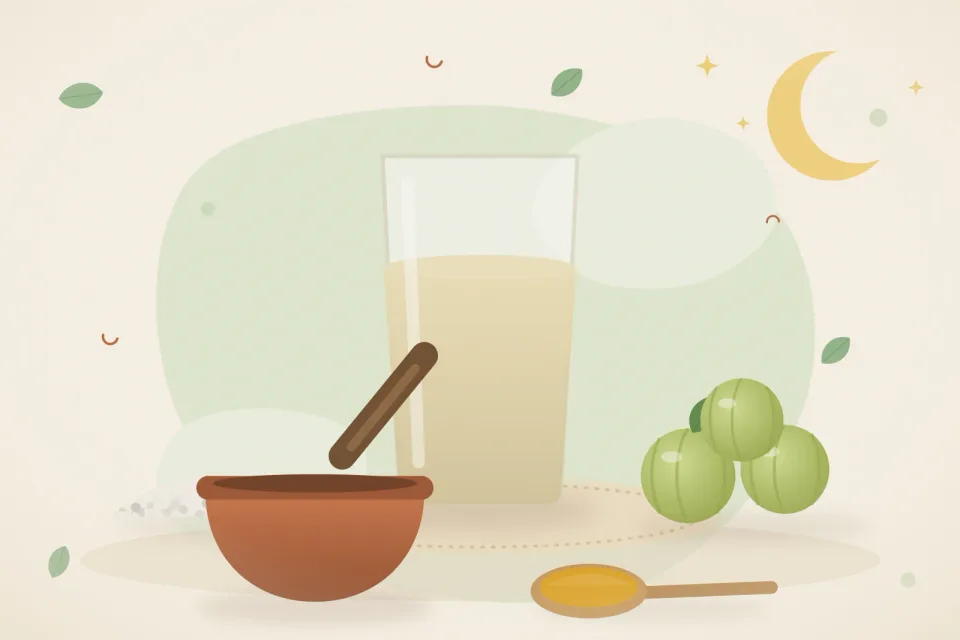
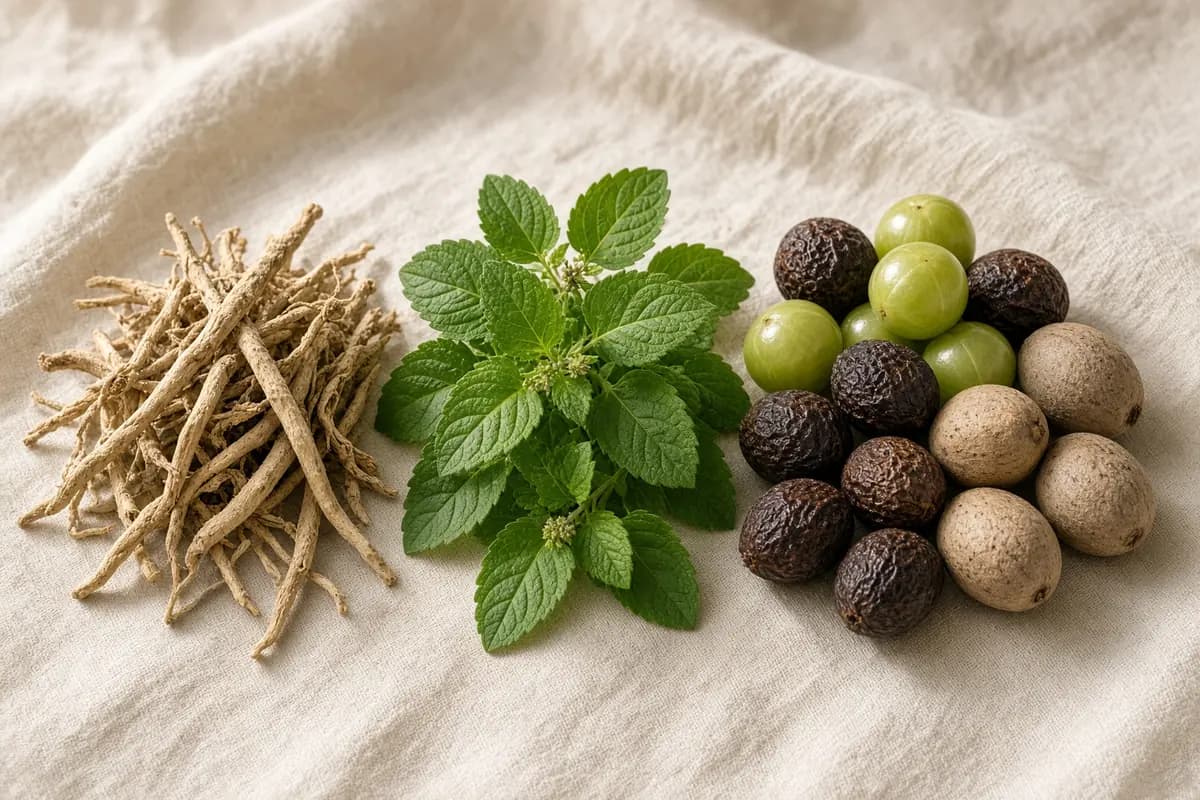
Triphala is a classic blend of three dried fruits: amla, haritaki and bibhitaki. It is best known as a gentle bowel and digestion support, taken in small amounts.
Oil pulling is an Ayurvedic practice, and small studies suggest it may reduce plaque and bad breath slightly. Triphala rinses have also shown modest effects on plaque in small trials. Neither replaces brushing, flossing and dental visits.
Ingredients
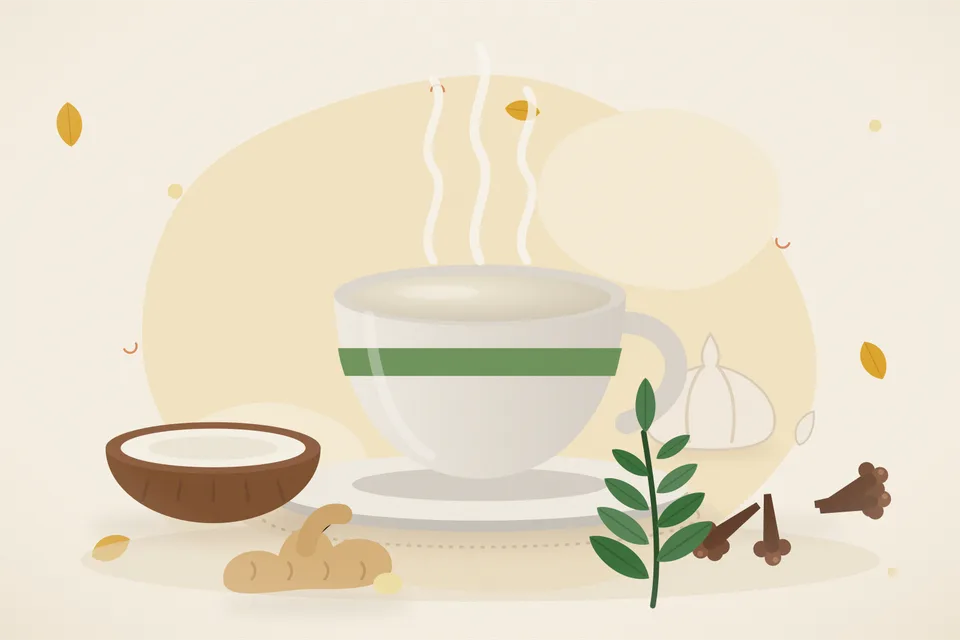
- 1 tbsp coconut oil
- ½ tsp triphala churna
- 1 cup warm water
How to prepare
- Soak triphala in warm water for 15 minutes; strain.
- Melt the coconut oil if solid.
How to use
- Swish the oil gently for five to ten minutes and spit into the bin, not the sink.
- Rinse with triphala water, then brush as usual.
Helpful habits
- Store in an airtight jar away from steam; it clumps in moist air.
Precautions
- Do not swallow the oil. Not for young children, who may choke.
- It can loosen stools; avoid during diarrhoea and in pregnancy.
- Keep brushing twice a day; see a dentist for pain, swelling or an ulcer lasting over two weeks.
- A home remedy, not a treatment. See a doctor if symptoms last more than a few days or get worse.
Frequently asked questions
Why not spit oil into the sink?
- Coconut oil solidifies and can block drains.
How often?
- A few mornings a week is enough.
Does triphala cause dependence?
- There is little evidence, but it is still best used in short spells, not forever.