- tulsi tea recipe
- holy basil leaves
- herbal infusion
- tulsi preparation
Tulsi Tea as a Caffeine-Free Comfort Drink
A mild tulsi infusion with honest evidence limits, herb-quality guidance and important medicine precautions.
Important: this remedy is only a supportive home measure. Keep taking any medicine your doctor has prescribed, monitor your readings, and consult your doctor before adding anything new.
tulsi tea recipe: uses, limits and a safe method
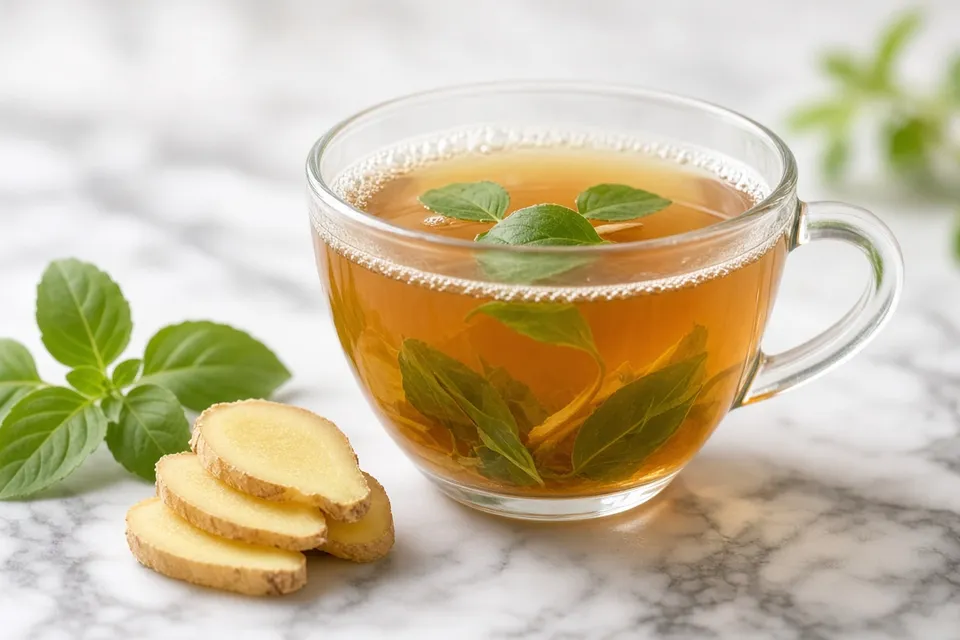
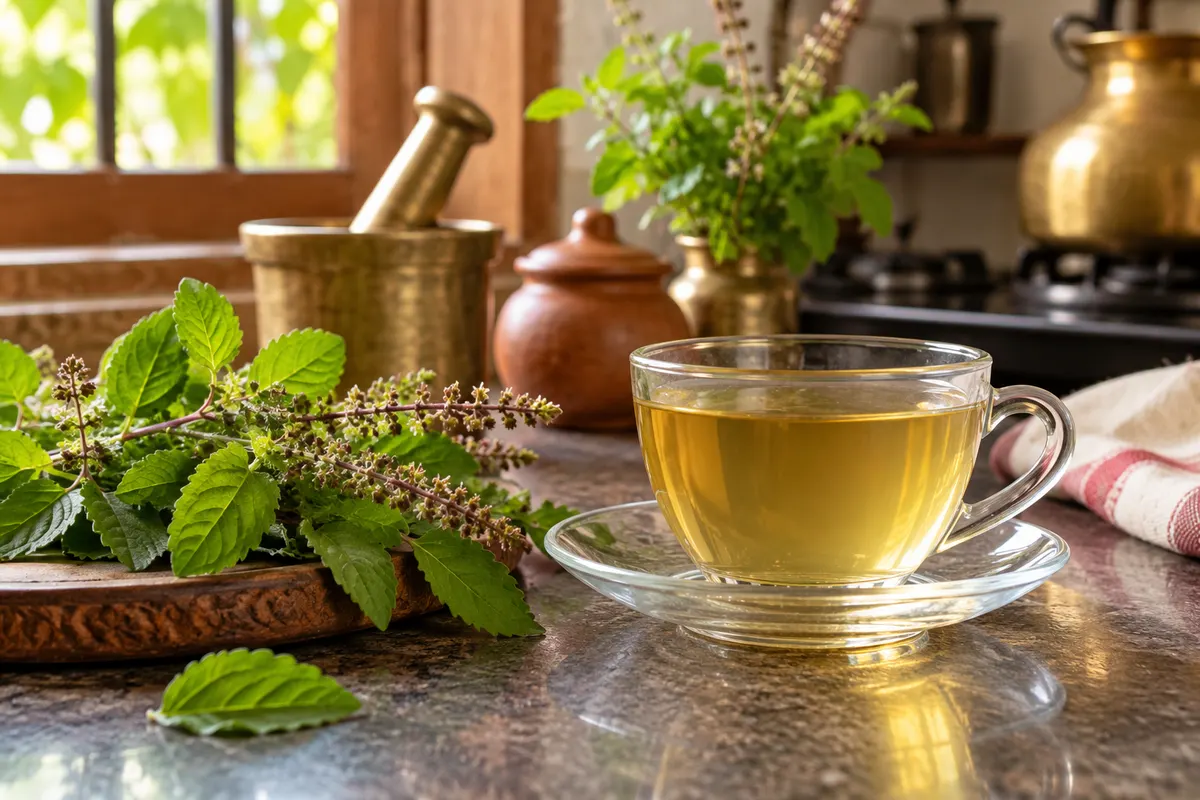
Tulsi tea is an infusion of identified edible holy basil leaves. Its clove-like, peppery scent makes it different from green tea or an ordinary sweet basil garnish. A cup made only with leaves and water contains no added tea leaves. If you include black tea, a packaged blend or another herb, read the ingredients rather than assuming every product called tulsi tea is identical.
Start with a plant or food packet whose identity you know. A familiar household name is not enough to identify an unfamiliar leaf collected outdoors. Choose sound leaves, remove visibly damaged pieces and rinse fresh leaves under running water. The FDA source explains produce handling; rinsing is a hygiene step, not a guarantee that an unknown or pesticide-contaminated plant becomes suitable to drink. Food-grade dried leaf avoids the need to harvest a plant yourself.
For the small recipe below, cover the leaves with hot water, keep the cup covered while steeping and then strain. A cover helps retain the aroma. Taste a cooled sip before adding anything. A longer steep can make the flavour more intense, but this is not a way to calculate medical strength. Fresh and dried leaves also differ in density, so the listed alternatives are kitchen starting points rather than equivalent medicinal doses.
Keep the first cup simple. Adding ginger, pepper, cinnamon, honey and several powders at once makes it difficult to know which flavour you enjoyed or which ingredient disagreed with you. If the drink feels harsh, use less leaf in a future batch or choose another beverage. There is no requirement to continue through discomfort or complete a fixed number of days.
Tulsi has a place in traditional practice, but this page does not establish treatment for infections, asthma, diabetes or anxiety. The NCCIH source discusses Ayurveda's evidence limits in general; it does not verify this recipe or its portion. Herbal treatment decisions during pregnancy, breastfeeding or regular medicine use need individual advice. A pleasantly warm drink may be enjoyable, but breathing difficulty, illness that persists or worsening symptoms should not be managed by repeatedly making a stronger tea.
Ingredients
- 4–5 identified fresh tulsi leaves or 1 teaspoon dried leaf
- 250 ml hot water
How to prepare
- Rinse fresh leaves.
- Cover with hot water for 5 minutes.
- Strain and drink warm without excessive sweetener.
How to use
- Follow the method and portion shown above.
- Try one new measure at a time so any reaction is easier to identify.
- Continue normal meals, hydration, sleep and prescribed care.
Helpful habits
- Use identified food-grade leaves, not an unfamiliar plant gathered outdoors.
- Keep the cup covered during the short steep to retain aroma.
- Taste the plain infusion before adding other herbs or sweeteners.
- Record whether you used fresh or dried leaf if you want to repeat the same flavour.
Precautions
- Do not use an unidentified or contaminated plant.
- Ask a clinician or pharmacist before using tulsi as a regular herbal treatment, especially during pregnancy, breastfeeding or medicine use.
- Stop if it causes a rash, mouth irritation or other new symptoms.
- Do not replace asthma, infection or other prescribed care with tea; breathing difficulty needs urgent help.
Frequently asked questions
Is dried leaf the same as fresh leaf?
- The flavour and density differ. Use the appropriate small recipe option rather than treating equal volumes as medical equivalents.
Can I pick any basil plant?
- No. Use a correctly identified edible plant or a labelled food product.
Does a longer steep make it more effective?
- It can strengthen flavour, but no therapeutic strength is established here.
Does the cited source test this tulsi recipe?
- No. The sources cover general evidence limits and food handling, not a clinical trial of this cup.
Prepared by: All Ayurvedics editorial team
No clinician review is recorded for this page. This is general information, not individual diagnosis or treatment advice.
Responsible site owner/editor: Manoj Singh. Editorial responsibility