- chair knee exercises
- knee extension exercise
- gentle knee strengthening
- senior mobility
Chair Knee-Extension Routine for Gentle Strength
A supported seated knee-extension sequence with range, repetition and swollen-joint precautions.
Important: this remedy is only a supportive home measure. Keep taking any medicine your doctor has prescribed, monitor your readings, and consult your doctor before adding anything new.
chair knee extension exercise: method, benefits and precautions
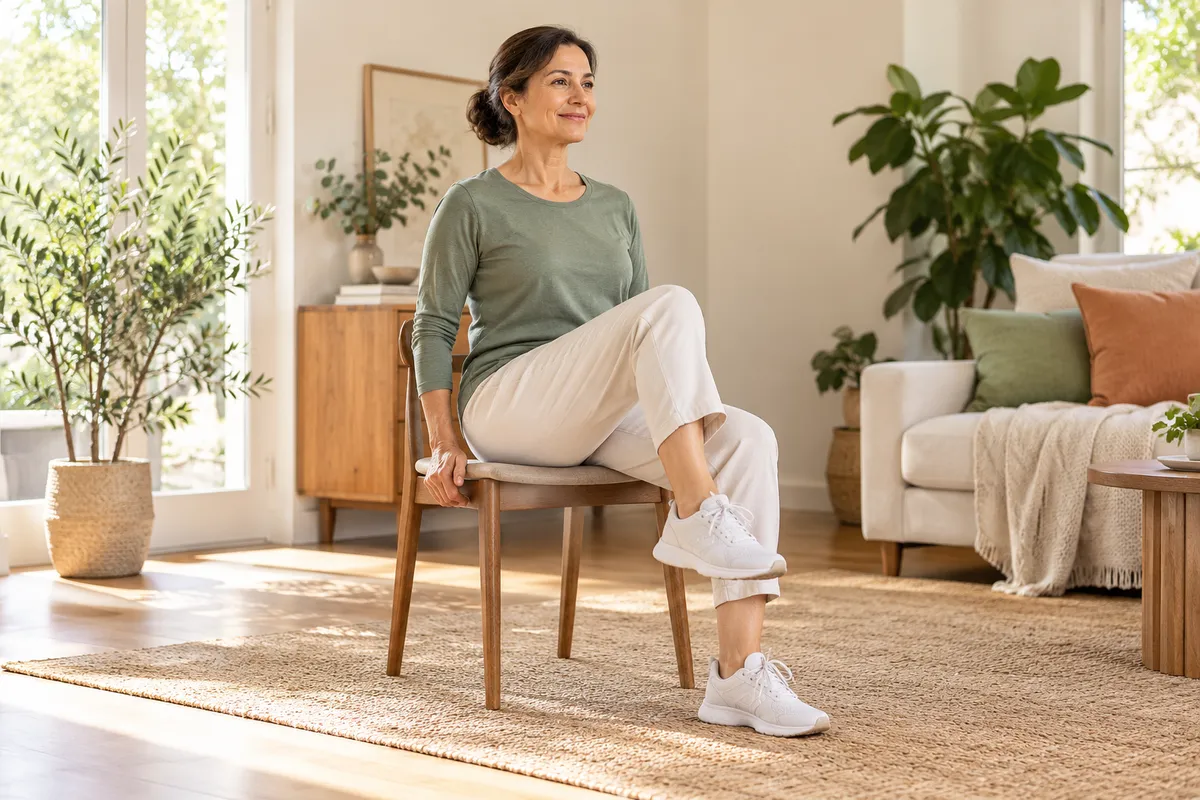
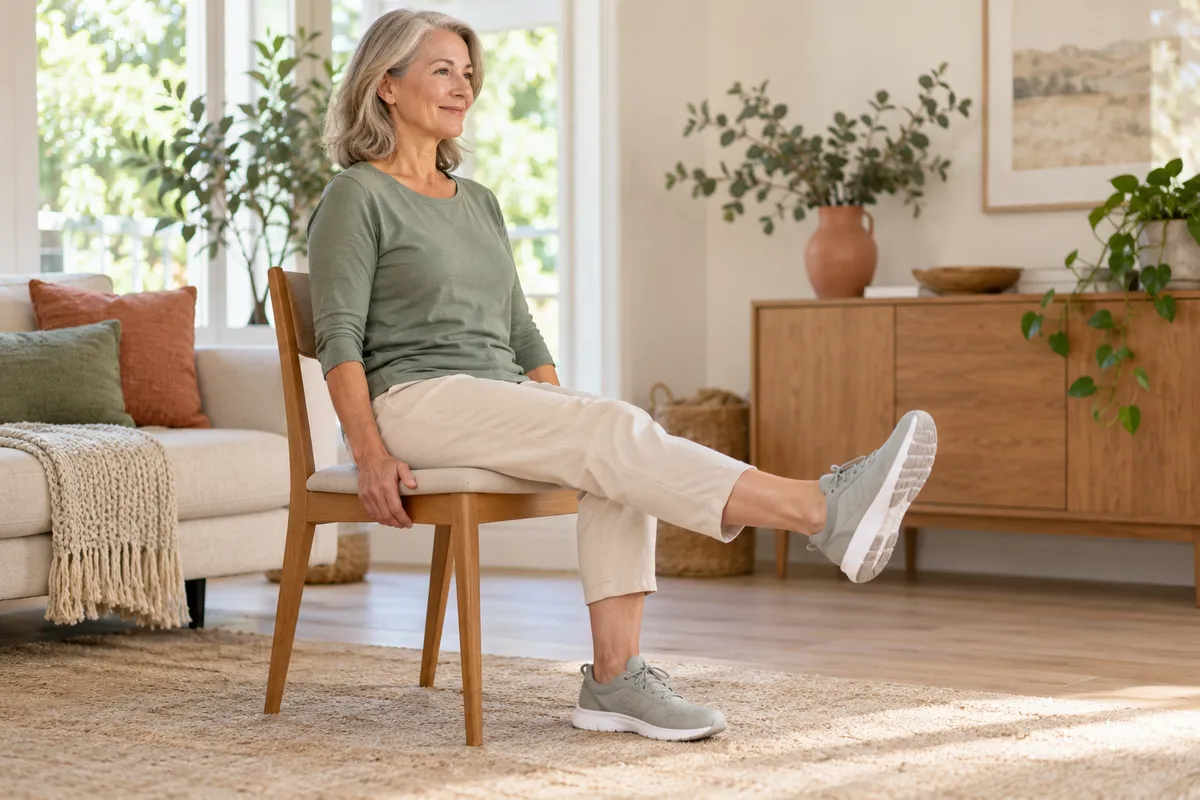
A seated knee extension is a simple movement to practise control, not a home test of how healthy the joint is. Choose a stable chair that does not roll or slide, with room in front of the feet. Existing restrictions after knee surgery, injury or a flare take priority over a general routine.
Sit comfortably with the back supported as needed. Slowly straighten one knee only through a comfortable range, then lower the foot with control. Avoid throwing the leg forwards or forcing the knee to lock. Keep the rest of the body quiet enough that you are not leaning back to lift the foot higher.
Start with an amount you can manage without pain or loss of control. There is no requirement to add ankle weights, hold for a fixed count or match both sides. If the chair edge presses uncomfortably behind the thigh, change the setup rather than continuing. Rest between attempts when needed.
Stop for sharp pain, swelling that increases, catching or new weakness. A hot swollen joint, inability to bear weight or symptoms after a significant injury need assessment. General strength references do not prescribe this exact routine for every knee condition. If symptoms are persistent, get a plan suited to the cause rather than increasing repetitions on your own.
Ingredients
- A stable upright chair
- Supportive shoes
- Clear floor space
How to prepare
- Use a stable chair and clear space.
- Straighten one knee slowly within comfort.
- Lower with control and rest as needed.
How to use
- No fixed repetition target or added weights; individual rehabilitation advice comes first.
Helpful habits
- Do not snap the knee straight.
- Adjust pressure from the chair edge.
- Keep personal restrictions.
Precautions
- Stop for sharp pain, locking, giving way or swelling; injury or inability to bear weight needs assessment.
- Ask a clinician first if you have allergies, are pregnant, have a long-term condition or take regular medicines.
- Seek urgent care for severe pain, breathing difficulty, fainting, repeated vomiting, bleeding or rapidly worsening symptoms.
Frequently asked questions
Should I add weights?
- Not automatically; seek individual guidance.
Must both sides match?
- No. Do not force a painful side.
Prepared by: All Ayurvedics editorial team
No clinician review is recorded for this page. This is general information, not individual diagnosis or treatment advice.
Responsible site owner/editor: Manoj Singh. Editorial responsibility