Digestion10 min
Hing and Ghee Tadka for Gassy Dals and Beans
A pinch of hing bloomed in hot ghee with cumin, poured over rajma, chana or urad dal to make them easier on the stomach.
What to know about hing
Hing (asafoetida) is a dried resin with a strong smell that softens in hot ghee. A pinch goes into dals and beans across India to make them easier to digest.
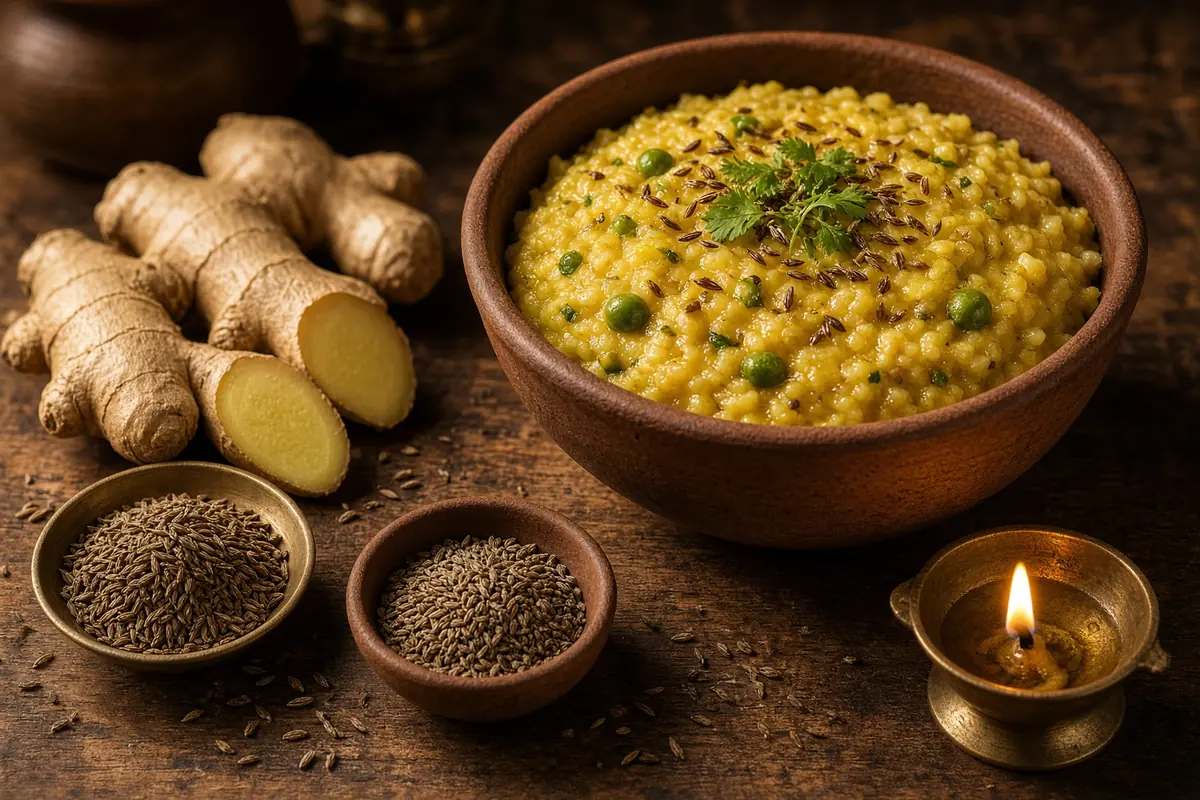
Beans and heavier dals are a common cause of gas. Indian cooks have long added hing, cumin and ginger to them; soaking well and cooking until soft matter just as much.
Ingredients
- 1 tsp ghee
- A pinch of hing
- ½ tsp jeera
- A little grated ginger
How to prepare
- Heat ghee, add jeera and let it crackle.
- Add hing and ginger, stir for five seconds and pour over the cooked dal.
How to use
- Use in rajma, chole, urad or mixed dals.
- Eat a moderate portion with rice or roti and some salad.
Helpful habits
- Compounded hing often contains wheat flour; check the label if you avoid gluten.
Precautions
- Hing burns quickly; keep the heat low.
- Only a pinch; large amounts can cause stomach upset. Do not give by mouth to babies.
- A home remedy, not a treatment. See a doctor if symptoms last more than a few days or get worse.
Frequently asked questions
Does soaking beans help?
- Yes, soaking overnight and discarding the water reduces gas.
Can I add hing directly to dal?
- Yes, but blooming it in fat gives better flavour.
Why fry hing in ghee first?
- Heat mellows its sharp smell and spreads the flavour.