Heart & BP support2 min
A Teaspoon Measure for Cooking Oil
Measuring oil by the spoon instead of the pour, for the whole family's sabzi. A habit to keep oil in check.
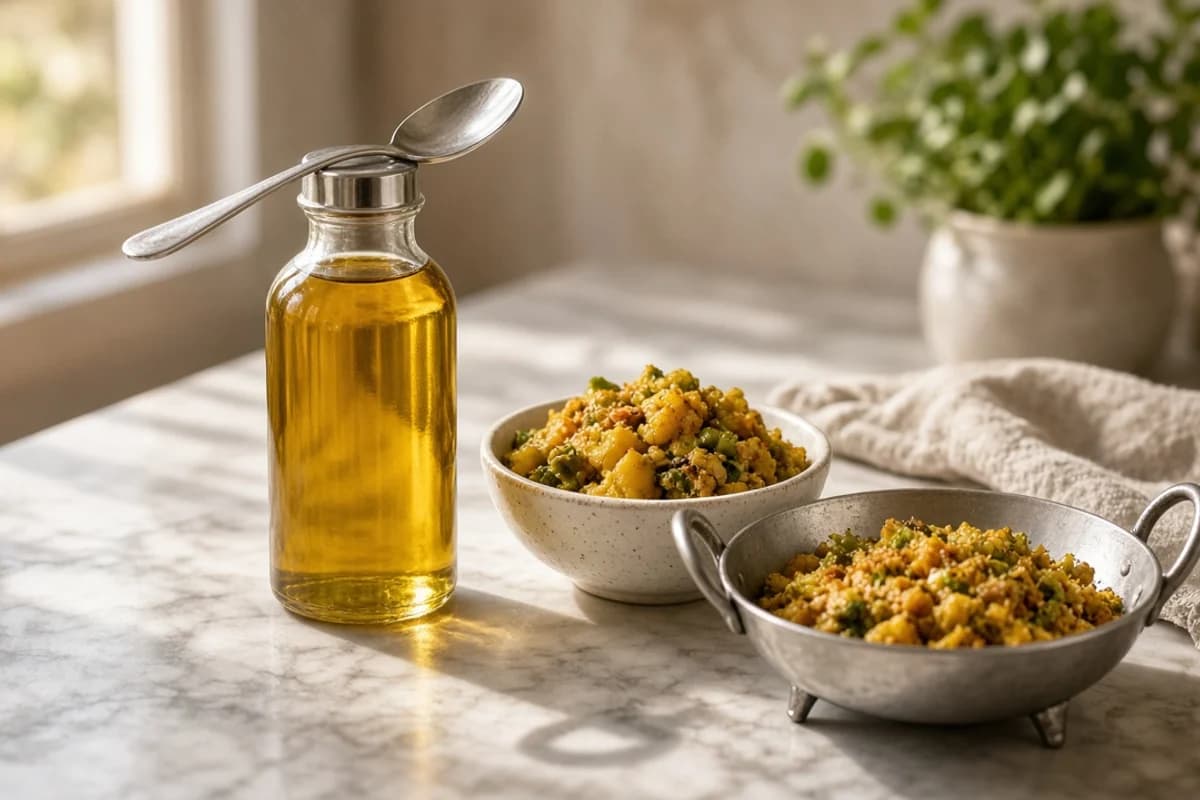
Measure it, do not pour it
Oil is easy to overpour, and one free-handed glug can add several teaspoons. Many health bodies suggest keeping total cooking oil to a modest amount per person each day, and a measuring spoon makes that easy to see. This is a kitchen habit and not a treatment for blood pressure, cholesterol or weight.
Use a teaspoon to measure the oil for each dish, such as one teaspoon per person for a sabzi, and adjust to your needs. Use a non-stick pan or a lid to cook with less oil. Choose a variety of oils as your doctor advises. High blood pressure, cholesterol or heart disease need a doctor's plan, not only a spoon.
Ingredients
- A steel teaspoon or measuring spoon
- Your usual cooking oil
- A small bottle or pourer
How to prepare
- Keep a measuring spoon next to the oil.
- Fill a small bottle for the week's use if you like.
How to use
- Measure the oil with the spoon for each dish.
- Use a lid to cook vegetables in their own steam.
Helpful habits
- Use a non-stick or heavy pan.
- Dry-roast spices and temper with just a little oil.
Precautions
- High blood pressure, high cholesterol or heart disease need a doctor's plan.
- Do not cut oil so far that you skip healthy fats.
- A habit, not a treatment.
Frequently asked questions
How much oil is right?
- It depends on your needs; ask your doctor or dietitian.
Does less oil taste bland?
- Spices and tempering add flavour.
Does this lower BP?
- It is one small habit, not a treatment.