Writing Down Home Blood Pressure Readings
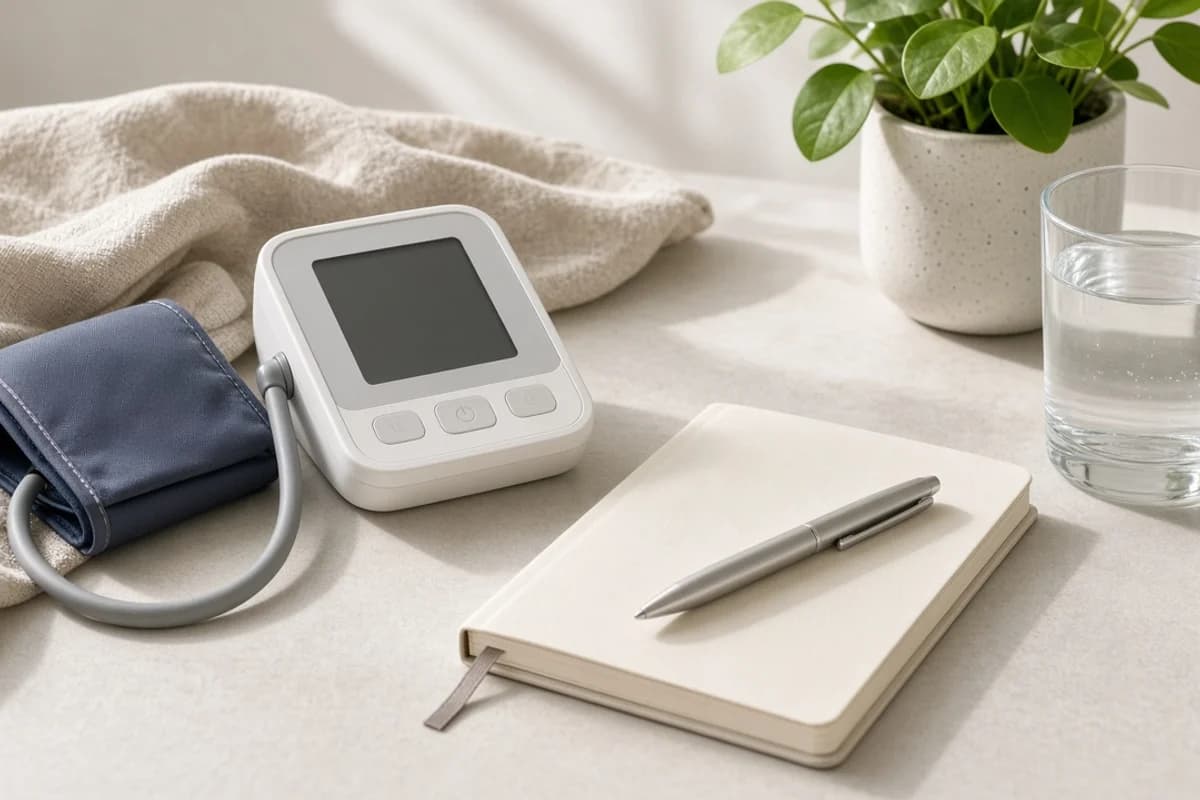
A digital BP monitor and a small log to show the doctor. A record to take to the clinic, not a treatment.
Important: this remedy is only a supportive home measure. Keep taking any medicine your doctor has prescribed, monitor your readings, and consult your doctor before adding anything new.
A record the doctor can use
Blood pressure varies through the day, and a single clinic reading can be higher from nerves or lower by chance. A few home readings written in a small log give the doctor a clearer picture of your usual numbers. The log itself does not lower blood pressure or treat anything.
Use a validated upper-arm digital monitor, sit quietly for five minutes with your back supported and arm at heart level, and take two readings a minute apart, at the same time of day. Do not take readings right after tea, coffee, exercise or smoking. Never change your medicines because of a reading without asking your doctor. Very high readings with chest pain, headache or breathlessness need urgent care.
Ingredients
- A validated digital upper-arm BP monitor
- A small notebook and a pen
- A chair with back support
How to prepare
- Sit quietly for five minutes with your feet flat and back supported.
- Rest the arm at heart level with the cuff on bare skin.
How to use
- Take two readings a minute apart and write the average with the date and time.
- Take the log to every doctor visit.
Helpful habits
- Take readings at the same time of day.
- Check the cuff size fits your arm.
Precautions
- Never change medicines because of a reading without asking your doctor.
- Very high readings with chest pain, headache or breathlessness need urgent care.
- A record, not a treatment.
Frequently asked questions
How often should I measure?
- As your doctor advises; many people measure a few days a month.
Are wrist monitors good?
- Upper-arm ones are generally more reliable.
What is a normal reading?
- Ask your doctor what your target is.