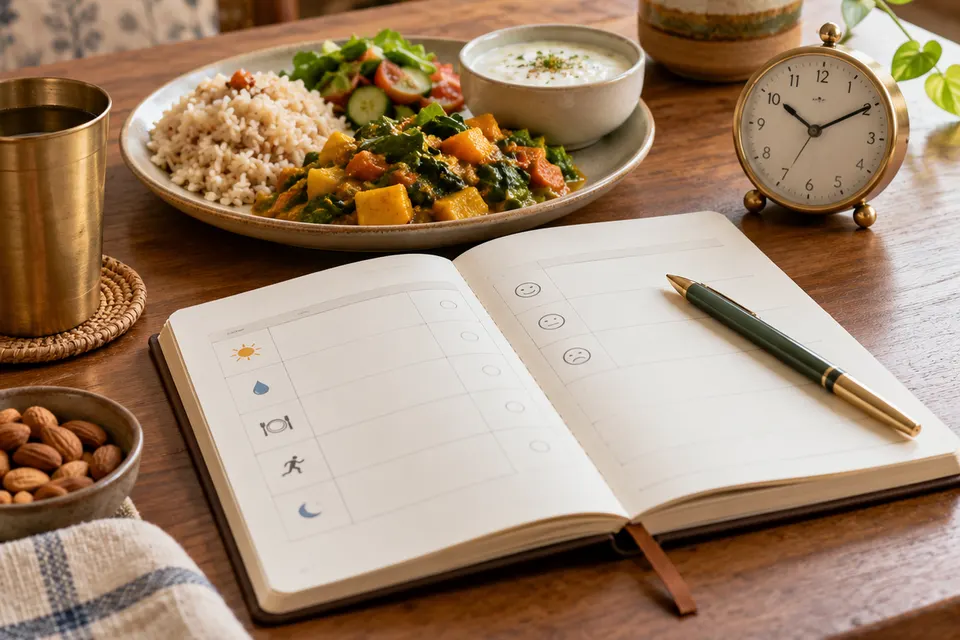
- dinner before bed
- meal gap for reflux
- late night eating
- sleep digestion
Three-Hour Dinner-to-Bed Gap: A Flexible Trial
How to test an earlier dinner for nighttime reflux while preserving adequate food intake and medicine instructions.

Important: this remedy is only a supportive home measure. Keep taking any medicine your doctor has prescribed, monitor your readings, and consult your doctor before adding anything new.
meal gap before bed: method, benefits and precautions
A gap between the evening meal and lying down is a scheduling idea for people whose symptoms relate to late eating. The title's three hours is not a stopwatch rule or a reason to skip essential food. The NHS reflux page suggests avoiding eating in the three to four hours before bed, but individual needs and clinical advice can differ.
Work backwards from your realistic bedtime and household meal schedule. Prepare part of dinner earlier or shift a heavy late meal rather than simply going hungry. If you work shifts, the clock time printed on a general routine may not match your sleep period.
Keep the experiment understandable: record dinner and lying-down time together with symptoms. Changing portion, ingredients and sleep schedule all at once makes the effect of timing hard to judge. If medication or a medical nutrition plan requires food at a particular time, follow that advice.
Persistent reflux or swallowing problems need assessment, not an increasingly long fasting interval. This guide separates a practical timing option from promises that everyone must finish dinner by a universal hour or that hunger itself signals healing.
Ingredients
- A realistic bedtime
- A balanced dinner
- A one-week symptom record
How to prepare
- Choose a dinner time about three hours earlier.
- Keep the meal nutritionally adequate.
- Review sleep and reflux after one week.
How to use
- Use a small portion or short session the first time.
- Change one thing at a time and note your response.
- Continue normal meals, hydration and prescribed treatment.
Helpful habits
- Plan from your actual sleep period.
- Prepare earlier rather than skip needed food.
- Keep prescribed food-and-medicine timing first.
Precautions
- Diabetes medicine, pregnancy or poor appetite may require personalised meal timing.
- Ask a clinician first if you have allergies, are pregnant, have a long-term condition or take regular medicines.
- Seek urgent care for severe pain, breathing difficulty, fainting, repeated vomiting, bleeding or rapidly worsening symptoms.
Frequently asked questions
Is exactly three hours compulsory?
- No. It is not a universal prescription.
What about shift work?
- Plan around your sleep and individual advice, not a fixed evening clock time.
Prepared by: All Ayurvedics editorial team
No clinician review is recorded for this page. This is general information, not individual diagnosis or treatment advice.
Responsible site owner/editor: Manoj Singh. Editorial responsibility