Women's health5 min
Amla with Jaggery and Iron-Rich Meals
A fresh amla or a spoon of amla murabba with iron-rich meals, using vitamin C to help the body absorb plant iron. A food habit for women prone to low haemoglobin.
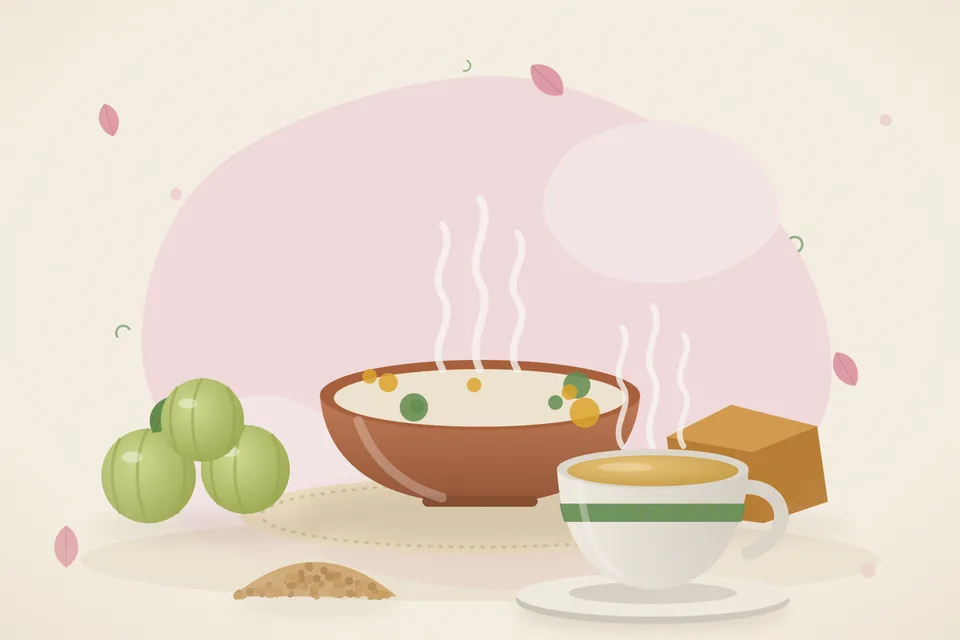
The Ayurvedic view of amla
Amla, the Indian gooseberry, is sour, astringent and rich in vitamin C. Ayurveda calls it cooling and uses it in chyawanprash, triphala, murabba and hair oils.
Anaemia is very common among Indian women. Plant iron from greens, dals and jaggery is absorbed better with vitamin C, and amla is one of the richest sources. Jaggery provides some iron but also sugar, so use it in small amounts.
Ingredients
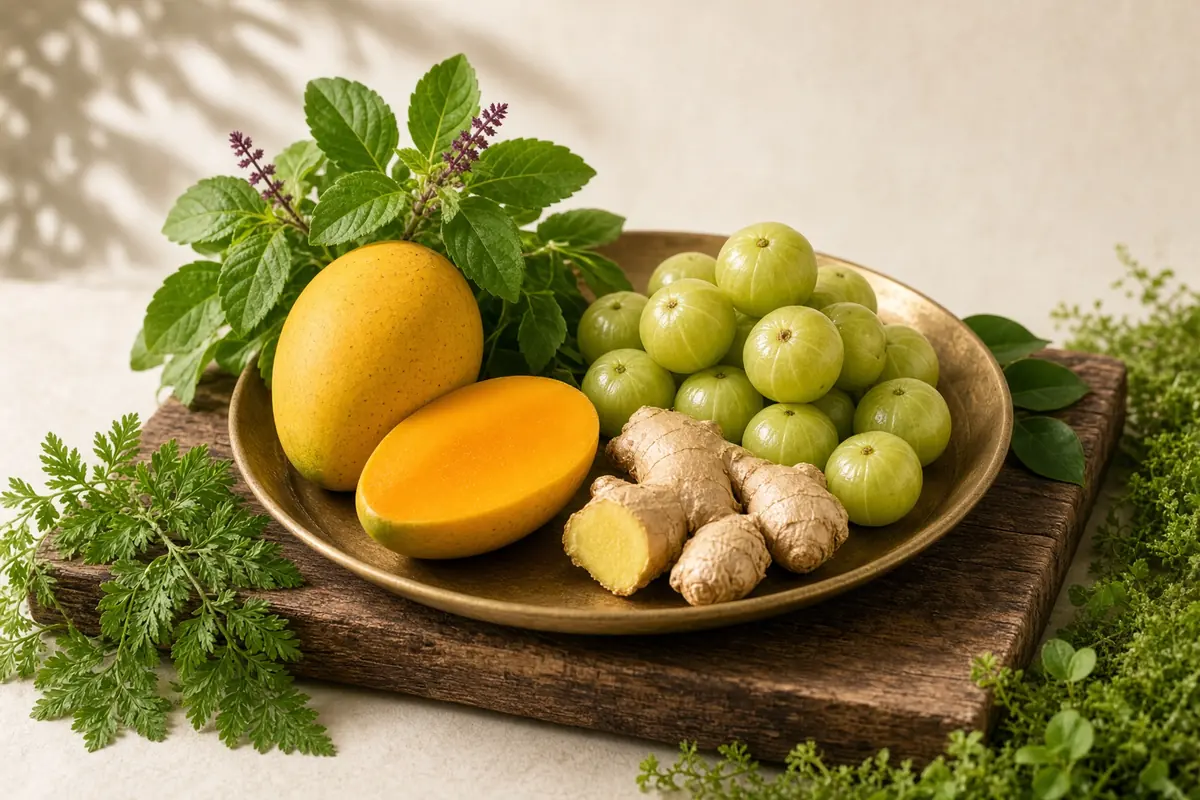
- 1 fresh amla or 1 tbsp amla murabba
- A small piece of jaggery
- Iron-rich meal (palak, chana, rajma, ragi)
How to prepare
- Cut fresh amla into pieces or serve murabba on the side.
How to use
- Eat with lunch along with an iron-rich dish.
- Avoid tea or coffee for an hour around iron-rich meals.
Helpful habits
- Buy firm, pale-green amla in winter and freeze or dry some for later.
Precautions
- Get your haemoglobin checked; diagnosed anaemia needs iron tablets as prescribed. People with diabetes should skip murabba and jaggery.
- Very sour; on an empty stomach it can trigger acidity in some people.
- In pregnancy or while breastfeeding, check with your doctor first.
- If you take regular medicines or have a long-term condition, check with your doctor first.
Frequently asked questions
Can amla replace iron tablets?
- No; it helps absorption from food but cannot correct significant anaemia.
Is amla juice as good?
- Fresh amla or juice without added sugar both provide vitamin C.
Is amla powder as good as fresh amla?
- Powder is convenient; fresh fruit has more vitamin C.