- sit to stand exercise
- chair exercise beginners
- leg strength exercise
- functional fitness
Chair Sit-to-Stand for Beginner Leg Strength
A supported functional-strength routine using chair height, slow repetitions and fall precautions.
Important: this remedy is only a supportive home measure. Keep taking any medicine your doctor has prescribed, monitor your readings, and consult your doctor before adding anything new.
sit to stand exercise: method, benefits and precautions
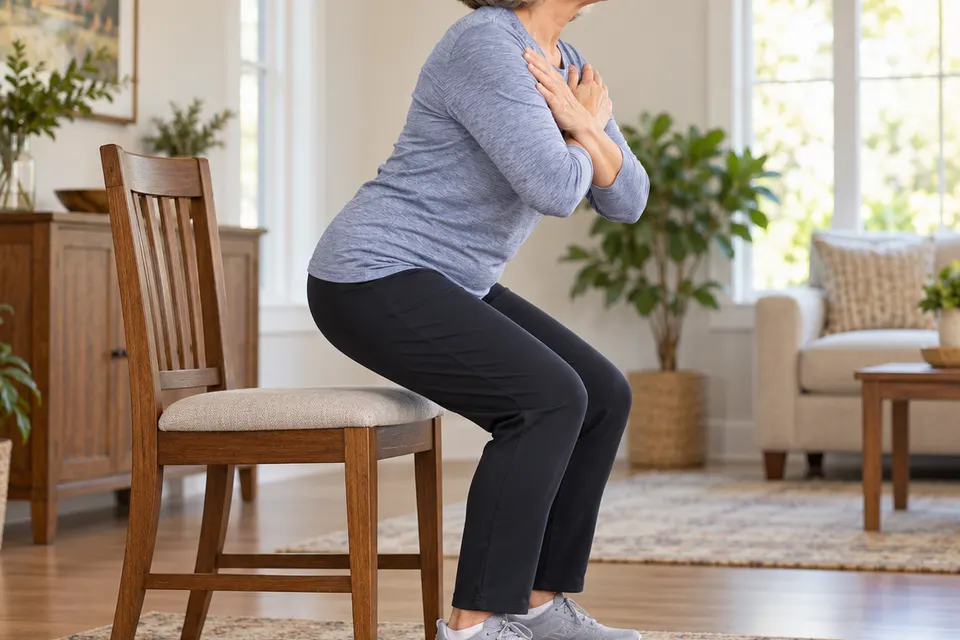
Getting out of a chair is a useful daily movement to practise, but chair height and available support matter more than completing a set number. Start with a firm, stable chair without wheels on a surface that will not slide. Keep the route around it clear and choose a seat from which your feet can rest securely on the floor.
Move towards the front of the seat without perching on its edge. Place your feet comfortably underneath you, lean forward gently and rise using the support you need. It is reasonable to use the armrests; removing hand support is not a requirement for a worthwhile practice. Sit back with control rather than dropping onto the cushion.
Try a manageable amount while you can still control the movement. If you rock repeatedly, hold your breath or cannot lower safely, adjust the setup or ask for help rather than adding repetitions. A higher suitable seat may make the task easier, but avoid stacking loose cushions that can shift.
This is general movement guidance, not a rehabilitation plan after surgery or a test of independence. Follow existing restrictions. Stop for sharp pain, dizziness or unexpected weakness; chest pain or collapse needs urgent help. Repeated difficulty standing deserves assessment rather than a harder challenge.
Ingredients
- Stable chair against a wall
- Supportive shoes
- Nearby counter for balance
How to prepare
- Place feet under the knees.
- Lean forward and stand with control.
- Sit back slowly for five repetitions.
How to use
- Practise only while rising and lowering remain controlled; use arm support as needed and follow any individual exercise plan.
Helpful habits
- Use a firm chair without wheels.
- Hand support is acceptable.
- Finish before control deteriorates.
Precautions
- Stop for chest pain, dizziness, falls, sharp joint pain or new weakness.
- Ask a clinician first if you have allergies, are pregnant, have a long-term condition or take regular medicines.
- Seek urgent care for severe pain, breathing difficulty, fainting, repeated vomiting, bleeding or rapidly worsening symptoms.
Frequently asked questions
Must I cross my arms?
- No. Use the support needed to move safely.
Are five repetitions compulsory?
- No. Capacity and any personal advice take priority.
Prepared by: All Ayurvedics editorial team
No clinician review is recorded for this page. This is general information, not individual diagnosis or treatment advice.
Responsible site owner/editor: Manoj Singh. Editorial responsibility