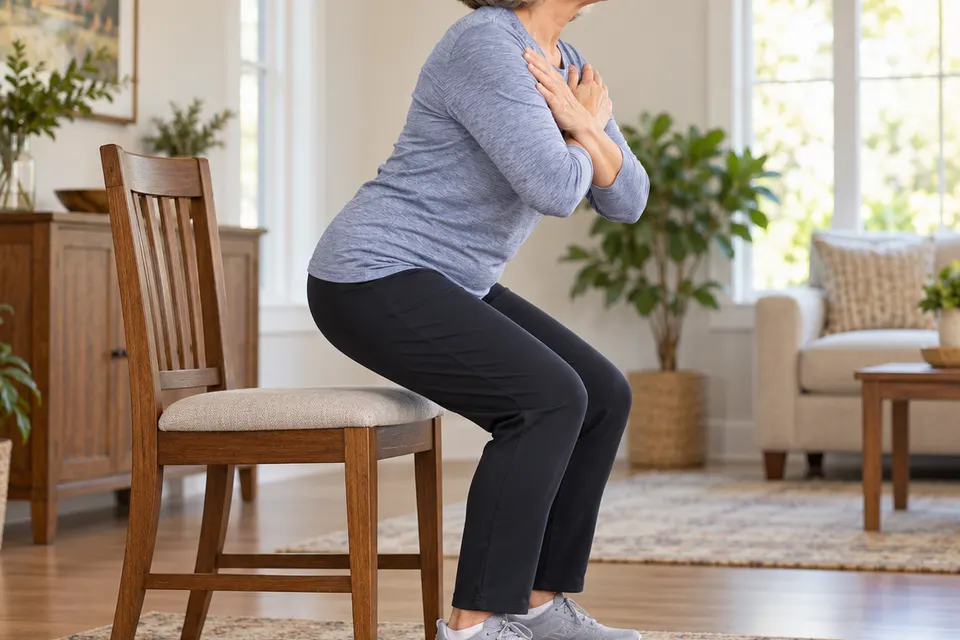
- heel raises exercise
- calf strengthening
- ankle strength
- balance exercise
Supported Heel Raises for Calf and Ankle Strength
A counter-supported calf exercise with slow lowering and Achilles precautions.
Important: this remedy is only a supportive home measure. Keep taking any medicine your doctor has prescribed, monitor your readings, and consult your doctor before adding anything new.
supported heel raises: method, benefits and precautions
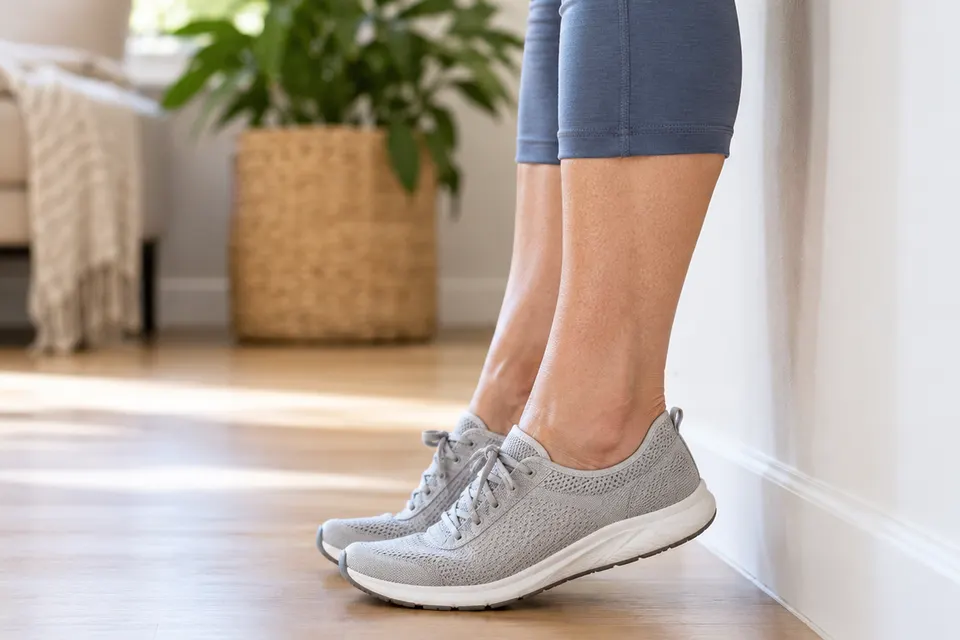
A supported heel raise lifts the heels while the front of the feet stays on the floor. It gives the calf muscles a simple movement to practise without turning the activity into a balance contest. Choose a fixed counter that can take your support, a clear non-slip surface and comfortable footwear.
Stand facing the counter with both feet comfortably apart. Hold it as firmly as needed. Rise slowly within a comfortable range, keeping the movement through the ankles rather than rocking your whole body forwards. Lower the heels gently and allow them to settle before another attempt.
Do not chase height or speed. If you grip with your toes, sway or lose control on the way down, make the movement smaller or stop. One-legged versions and standing on a step are different challenges and should not be added automatically. The support can remain throughout the practice.
This routine cannot identify the cause of calf pain or replace an injury plan. Do not start it to work through a new painful, swollen calf. A sudden snap, inability to bear weight or push off, or unexplained swelling needs assessment. Follow advice after an Achilles injury or surgery instead of using a general repetition target.
Ingredients
- Stable kitchen counter
- Supportive shoes
- Non-slip floor
How to prepare
- Stand tall with light hand support.
- Raise both heels slowly.
- Pause and lower with control five to ten times.
How to use
- Use both feet and stable hand support. Repeat only while comfortable and controlled; no fixed count is required.
Helpful habits
- Keep the counter within easy reach.
- Lower slowly, without bouncing.
- Avoid adding a step or one-leg challenge automatically.
Precautions
- A sudden calf snap, marked swelling or inability to push off needs prompt assessment.
- Ask a clinician first if you have allergies, are pregnant, have a long-term condition or take regular medicines.
- Seek urgent care for severe pain, breathing difficulty, fainting, repeated vomiting, bleeding or rapidly worsening symptoms.
Frequently asked questions
Should I let go?
- Not unless appropriate for you; support can stay.
Should a painful calf be exercised?
- New pain or swelling needs assessment rather than this routine.
Prepared by: All Ayurvedics editorial team
No clinician review is recorded for this page. This is general information, not individual diagnosis or treatment advice.
Responsible site owner/editor: Manoj Singh. Editorial responsibility