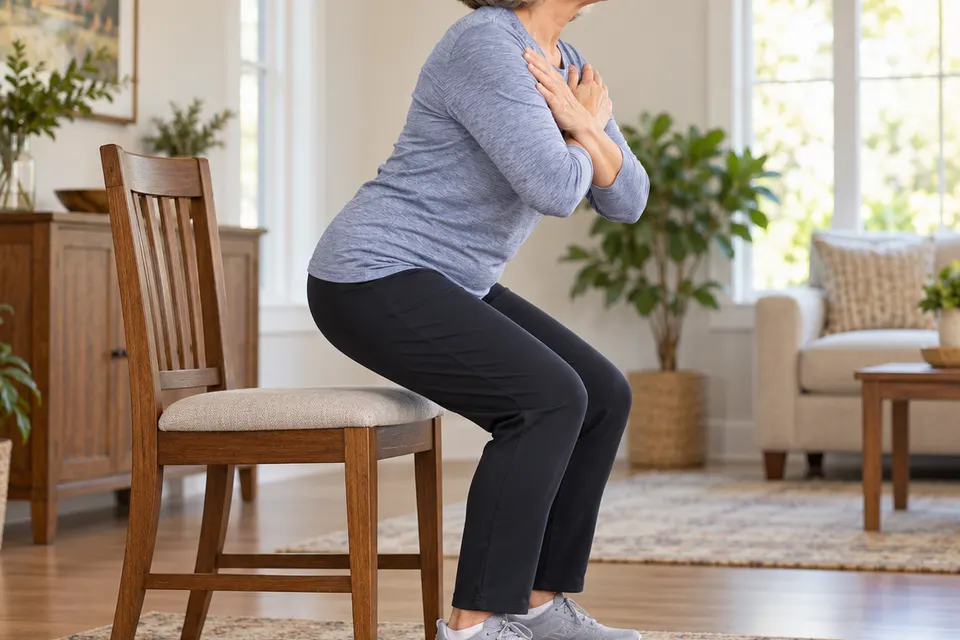
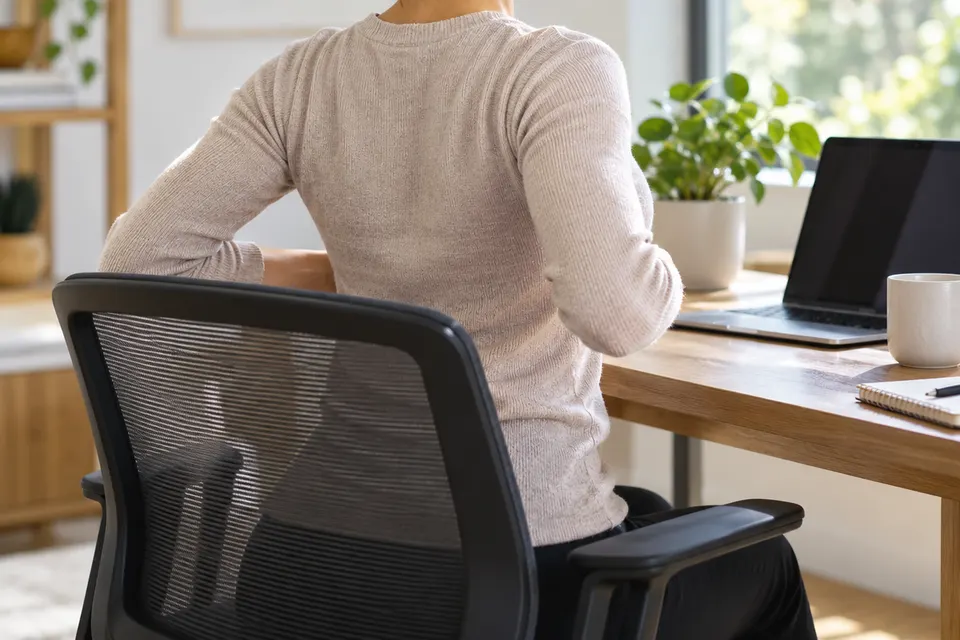
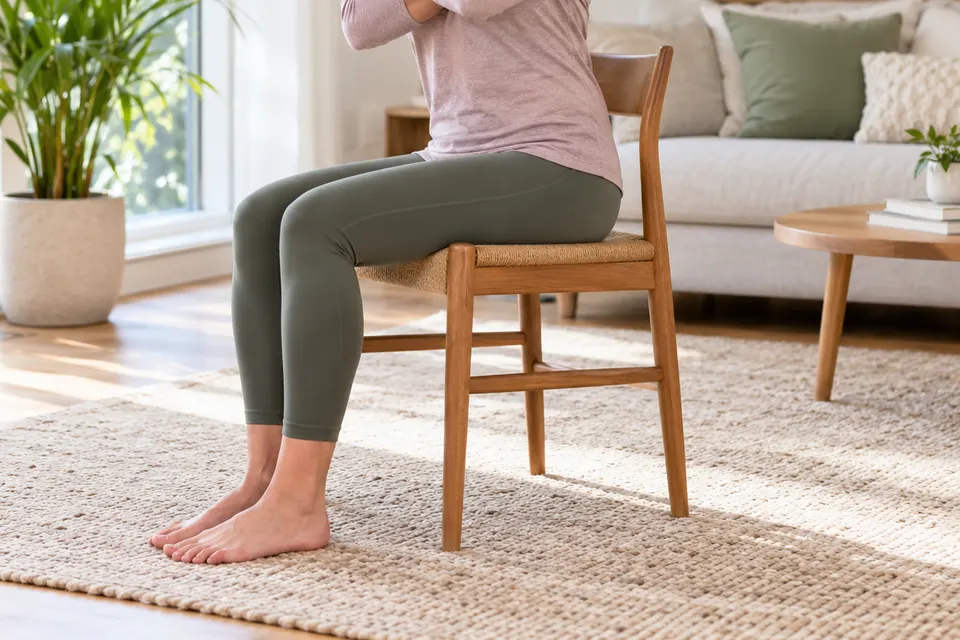
- seated thoracic rotation
- upper back mobility
- desk stretch
- chair rotation exercise
Seated Upper-Back Rotation Without Neck Forcing
A chair-supported trunk rotation that keeps the neck comfortable and movement small.
Important: this remedy is only a supportive home measure. Keep taking any medicine your doctor has prescribed, monitor your readings, and consult your doctor before adding anything new.
seated thoracic rotation: method, benefits and precautions
A seated upper-body turn is an optional way to explore a comfortable movement after sitting. It is not a spinal adjustment and should not produce a crack or a deep stretch to count as successful. Use a stable chair with feet supported and enough room to turn without hitting a desk.
Sit comfortably rather than forcing yourself rigidly upright. Turn the upper body a small amount to one side while keeping the movement easy, then return to the centre. Try the other side only within its own comfortable range. The two sides do not have to look identical.
Avoid gripping the back of the chair to pull yourself farther around. Do not bounce, twist sharply or hold your breath. If turning your head adds discomfort, reduce the movement instead of chasing a photograph of the final position. Stop if you feel dizzy or develop pain, tingling or weakness.
Someone recovering from a spinal injury, operation or fracture needs individual guidance; a general online routine cannot set their safe range. Persistent back or neck symptoms also deserve assessment. Consider ordinary changes of activity alongside any exercise, because a small seated turn is not a substitute for a workable daily movement routine.
Ingredients
- Stable chair without wheels
- Feet supported
- Pain-free movement range
How to prepare
- Cross arms lightly over the chest.
- Turn the ribcage a small distance.
- Return to centre and repeat each side.
How to use
- Turn gently within a comfortable range and return to centre. Do not use the chair as a lever.
Helpful habits
- Keep both feet supported.
- Let each side have its own range.
- Avoid pulling or bouncing.
Precautions
- Stop for dizziness, sharp pain, numbness or recent spine injury.
- Ask a clinician first if you have allergies, are pregnant, have a long-term condition or take regular medicines.
- Seek urgent care for severe pain, breathing difficulty, fainting, repeated vomiting, bleeding or rapidly worsening symptoms.
Frequently asked questions
Should my back crack?
- No. That is not the goal.
Must both sides match?
- No; do not force symmetry through discomfort.
Prepared by: All Ayurvedics editorial team
No clinician review is recorded for this page. This is general information, not individual diagnosis or treatment advice.
Responsible site owner/editor: Manoj Singh. Editorial responsibility