Herbs & foods5 min
Khus (Vetiver): Benefits and Summer Uses
Khus roots cool water, air and skin in Indian summers. How to use vetiver roots in drinking water, baths and coolers, and what to skip.

Khus in everyday Indian homes
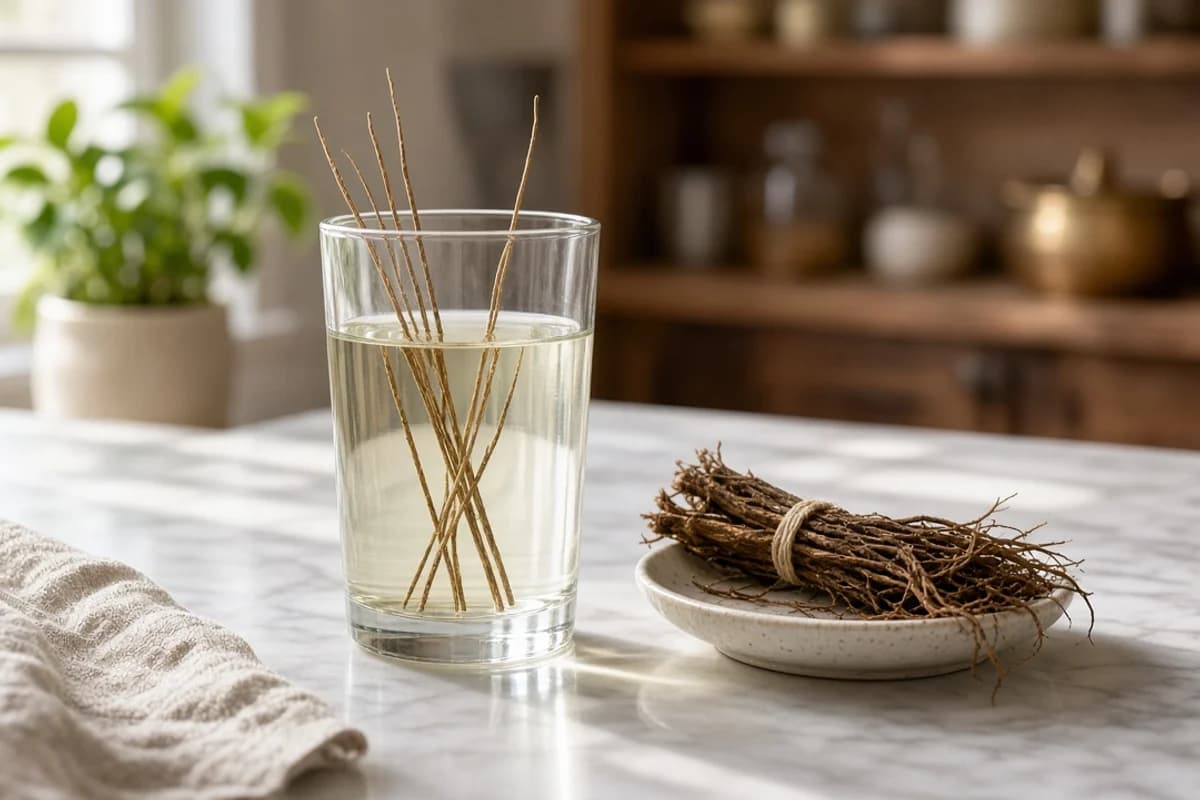
Khus (vetiver) is a grass with fragrant roots that cool the air when woven into summer screens. The roots are soaked in drinking water or sharbat as a traditional summer coolant.
Ushira (khus) is described in Ayurveda as cooling and calming for pitta, the heat dosha. North Indian homes once hung wet khus screens in doorways, and matkas of water were scented with a small bundle of roots.
Today the easiest uses are a clean bundle of roots in a clay pot of drinking water, or a handful in bath water on very hot days.
Ingredients
- A small bundle (about 10 g) of clean khus roots
- A clay matka or steel pot of drinking water
How to prepare
- Rinse the roots well under running water.
- Tie them loosely and drop them into the pot.
How to use
- Drink the lightly scented water through the day.
- Replace water daily and sun-dry the roots between uses; change the roots every two to three weeks.
Helpful habits
- Rinse roots well; dry them in the sun between uses.
Precautions
- Discard roots that smell sour or musty.
- Ready khus syrup is mostly sugar and colour; use roots where possible.
- Traditional use; scientific evidence is limited. Do not stop prescribed medicine.
Frequently asked questions
Does khus water have a taste?
- A light, earthy, cool aroma; it should not taste bitter.
Can I use khus in a cooler?
- Yes, khus pads in desert coolers give the classic cool, earthy smell.
Is khus the same as khus-khus?
- No, khus-khus is poppy seed; khus is vetiver root.