Shilajit for libido: traditional vitality routines and honest limits
How Ayurveda's vitality routines use shilajit with milk, honey and herbs, what evidence exists for libido, and the everyday causes of low desire.
Published 7 October 2026 · 3 min read
Libido (sexual desire) naturally goes up and down with stress, sleep, health and relationships. Shilajit is often searched for this, so here is a balanced view.
Traditional use
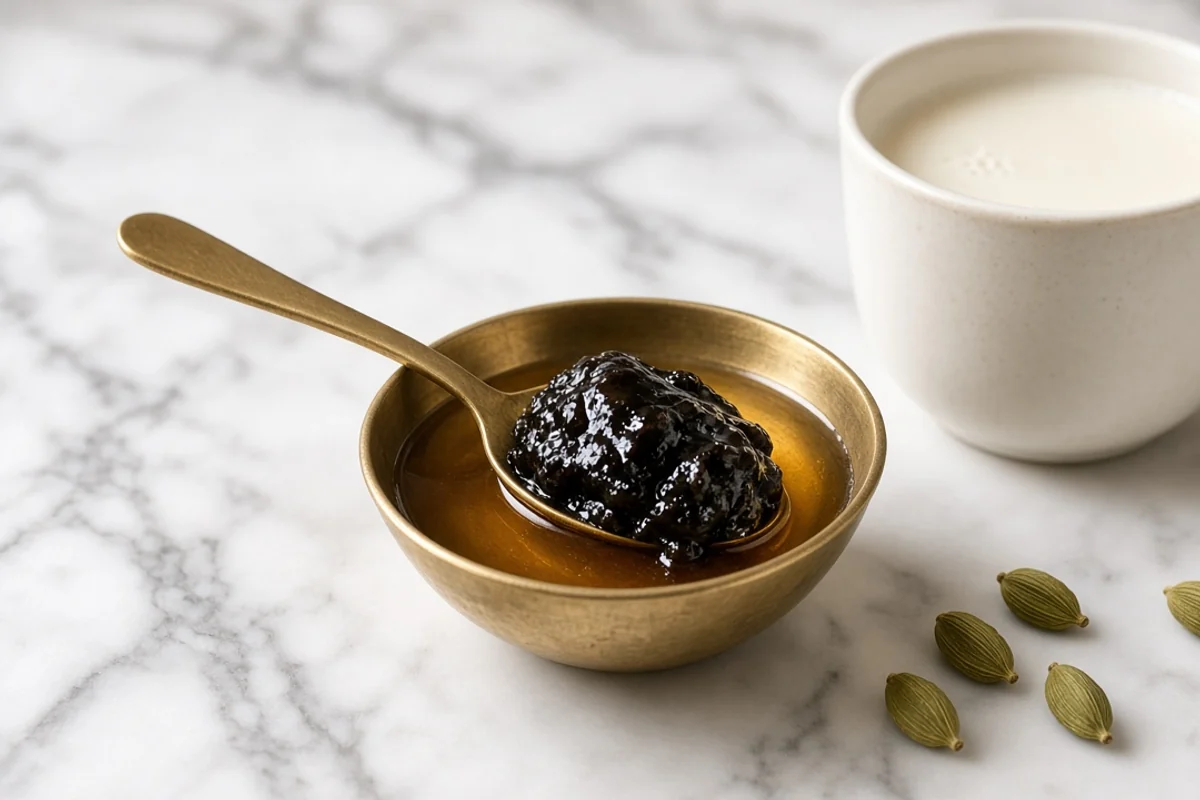
In Ayurveda, low ojas (vitality) and exhaustion are seen as reasons for low desire. Shilajit is traditionally taken as a rasayana to rebuild strength, usually with warm milk, ghee or honey, sometimes with saffron, ashwagandha or safed musli. The idea is long-term nourishment, not a quick boost.
What evidence exists
There are no good-quality trials showing shilajit increases libido. Some small studies show hormonal changes in men, and many users describe feeling more energetic, which may help. That is not the same as a proven effect.
Common causes of low desire worth checking
- Stress, anxiety or low mood
- Poor sleep or long working hours
- Thyroid problems, diabetes or anaemia
- Some medicines (for blood pressure, depression and others)
- Alcohol, smoking and lack of exercise
If low desire lasts or bothers you, talk to a doctor. It is a common, treatable concern.
Please read: no cure or guarantee claims
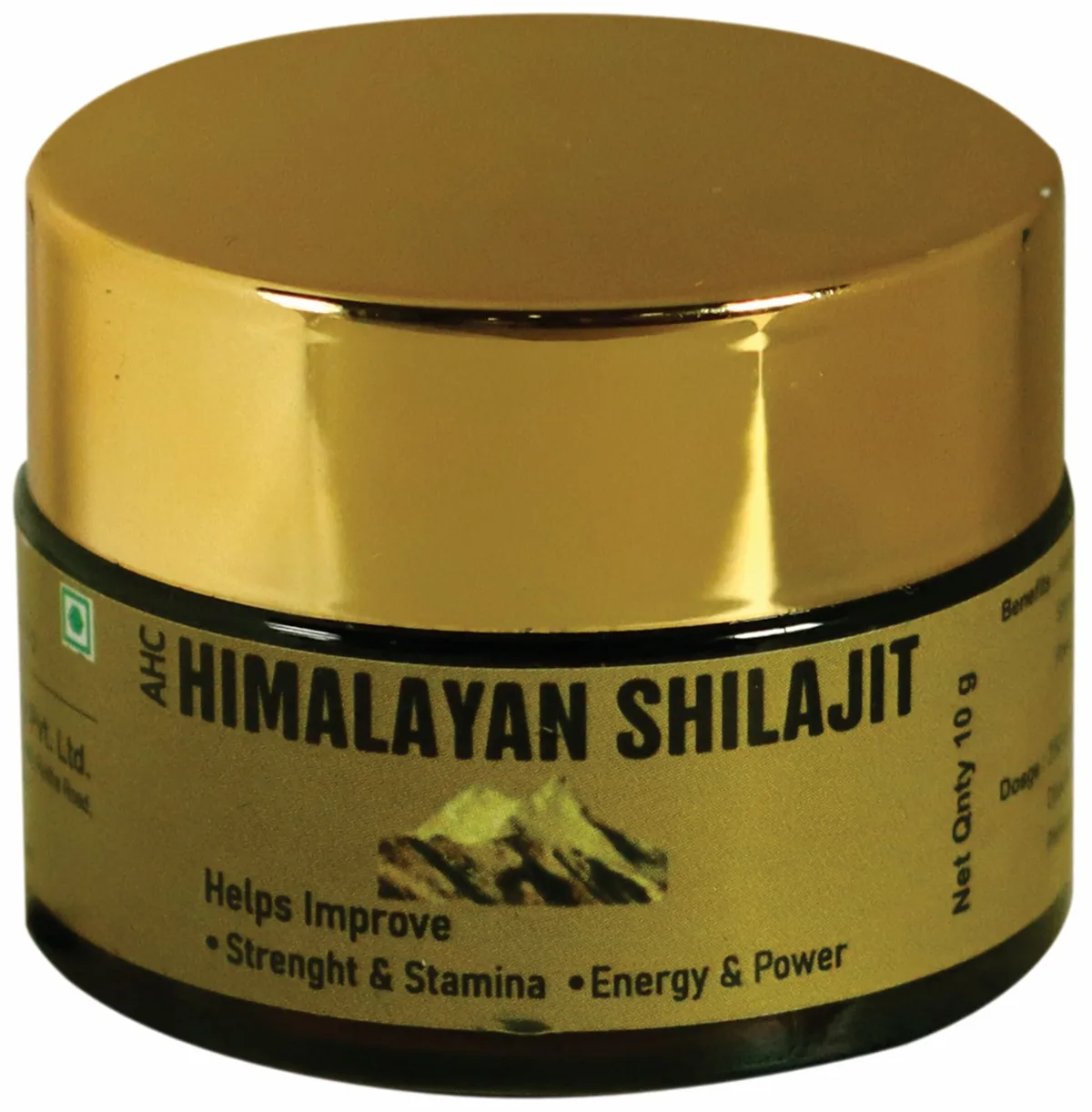
Shilajit is a traditional Ayurvedic supplement. It is not a treatment for erectile dysfunction, infertility, low testosterone or any sexual disorder, and no product can promise instant or guaranteed results. Ongoing sexual-health concerns can be an early sign of diabetes, heart or hormone problems, so please see a doctor.
How to take shilajit (general guide)
- Take a rice-grain to pea-sized piece of resin (about 300–500 mg) once a day, or follow your label dose.
- Dissolve it in a cup of warm (not boiling) water or milk and stir for a minute or two.
- Most people take it in the morning, after a light breakfast.
- Start low in the first week and stop if it does not suit you.
- Always use a clean, dry spoon so moisture does not get into the jar.
Related shilajit guides
- Shilajit for sexual health
- Shilajit with saffron (kesar) milk
- Shilajit with safed musli
- Shilajit with honey
- Shilajit benefits
- Complete shilajit guide
Doctor's note
This page shares traditional Ayurvedic use and a summary of published research; it is not medical advice. Consult a qualified doctor or Ayurvedic physician (BAMS) before taking shilajit, especially if you are pregnant or breastfeeding, under 18, have a heart condition, high or low blood pressure, gout or high uric acid, iron overload (haemochromatosis), kidney or liver disease, or take regular medicines. Do not stop prescribed medicine. Read who should not take shilajit and shilajit side effects.
Frequently asked questions
Does shilajit increase libido?
- There is no strong evidence that shilajit increases libido. Ayurveda traditionally uses it to support vitality and strength, which some people find helpful.
Can women take shilajit for low desire?
- Women traditionally use shilajit as a general rasayana. Low desire in women often has hormonal, emotional or medical causes, so speak to a doctor too. Avoid it in pregnancy and breastfeeding.
What should I take shilajit with for vitality?
- Traditionally, warm milk is the most common anupana (carrier), sometimes with a little ghee, honey (in warm, not hot, milk) or saffron.
Shilajit guides
Benefits, how to take it, pure vs fake, forms, side effects and price — in plain language.
- Shilajit benefits: what Ayurveda traditionally uses it forWhat shilajit is, the benefits Ayurveda traditionally describes — strength, stamina, energy and vitality — and the honest limits of what a supplement can do.
- How to take shilajit resin: dose, timing and the right wayA step-by-step guide to taking shilajit resin — how much, when, with water or milk, how long to continue, and the common mistakes to avoid.
- How to identify original (pure) shilajit: home checks and label checksSimple home checks for pure shilajit resin, why they are only rough guides, and the label and seller checks that matter most.
- Shilajit resin vs capsule vs powder: which form should you choose?An honest comparison of shilajit resin, capsules, powder and gummies — processing, dosing, convenience and what to check on each label.
- Shilajit side effects: precautions and who should avoid itPossible side effects of shilajit, who should not take it or should check with a doctor first, and simple ways to use it more safely.
- Shilajit price in India: how to compare and what to look forHow to compare shilajit prices fairly — per gram and per day — why very cheap shilajit is a warning sign, and what our 10 g resin costs.
Related remedies
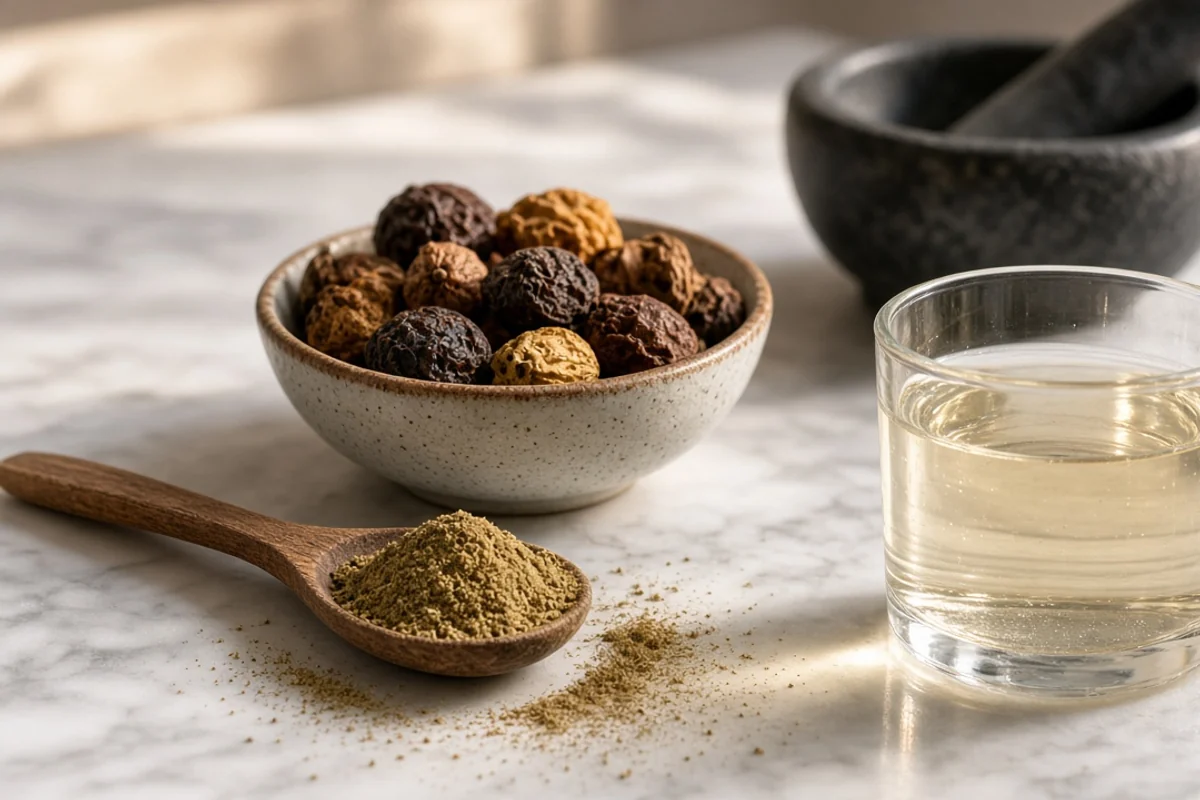 Evening light triphala for weight-support routines: Traditional Home MethodEvening light triphala for weight-support routines — a traditional Ayurvedic churna with anupana. It is traditionally paired with lighter dinners, not magic fat melt. Consult a qualified Ayurvedic doctor (BAMS) before preparing or taking this at home. It is not a substitute for medical care. Avoid self-medication in pregnancy, while breastfeeding, in children, or with chronic disease unless a doctor advises.
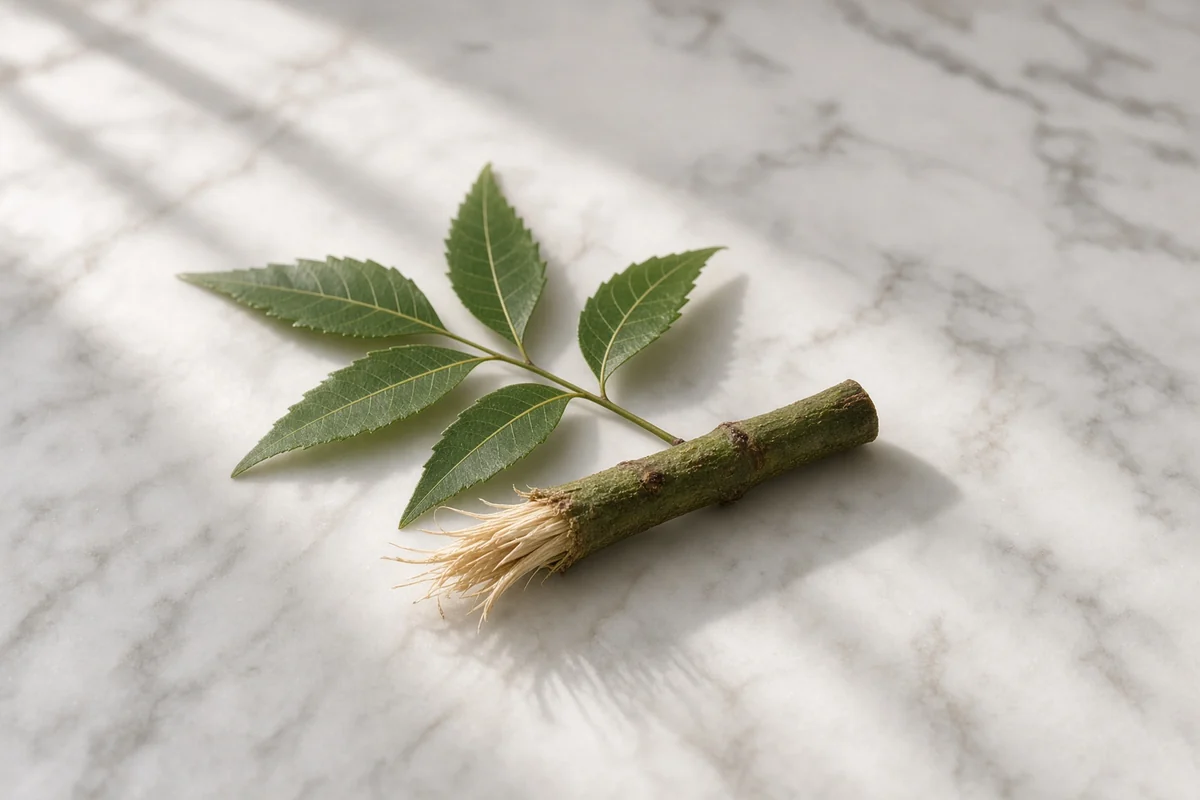 The traditional neem or babool datun (chewing stick)Before toothpaste, much of India cleaned its teeth with a fresh twig of neem or babool. Used correctly, a datun is a pleasant, zero-waste addition to your oral routine — though it works best alongside, not instead of, regular brushing.
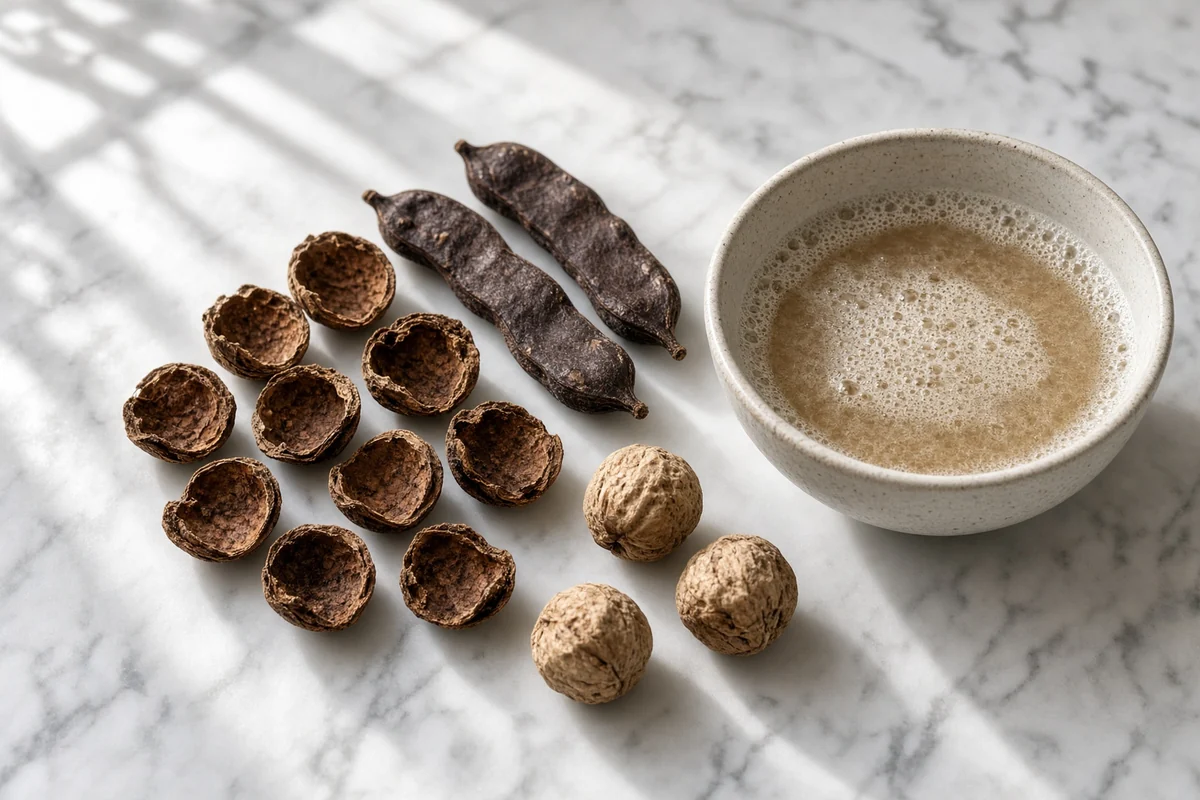 Reetha, shikakai and amla: a traditional herbal hair washLong before bottled shampoo, Indian families washed hair with soapnuts (reetha), shikakai pods and amla. The trio cleans gently, leaves hair soft and is still loved by people who want a milder wash.
Related products
Get a weekly dose of Ayurveda
One seasonal tip, one remedy and one simple habit — every week, in English or Hindi. No spam, unsubscribe any time.