Who should not take shilajit? A clear safety checklist
A clear checklist of who should avoid shilajit or check with a doctor first, with the reason for each.
Published 7 October 2026 · 3 min read
Shilajit is a traditional supplement, but it is not for everyone. Use this checklist before you start.
Avoid unless a doctor specifically advises it
- Pregnancy and breastfeeding — no safety data. See shilajit in pregnancy.
- Children and teenagers under 18 — not studied; most labels say not for children under 12.
- Haemochromatosis or iron overload — shilajit contains iron.
- Gout, high uric acid or kidney stones — it may raise uric acid in some people.
Check with your doctor first
- Heart conditions, high or low blood pressure — it may affect heart rate and BP.
- Diabetes on medicines — it may affect blood sugar.
- Kidney or liver disease
- Autoimmune conditions (lupus, rheumatoid arthritis, MS)
- Hormone-sensitive conditions (PCOS, prostate problems, hormone therapy)
- Before surgery — stop at least 2 weeks before, unless your surgeon advises otherwise
- Anyone on regular medicines — see shilajit and medicines
Stop and seek help if you get
- Rash, itching, swelling of lips or face, or breathing trouble (allergy)
- Fast or irregular heartbeat, dizziness
- Severe acidity, vomiting or dark urine
How to take shilajit (general guide)
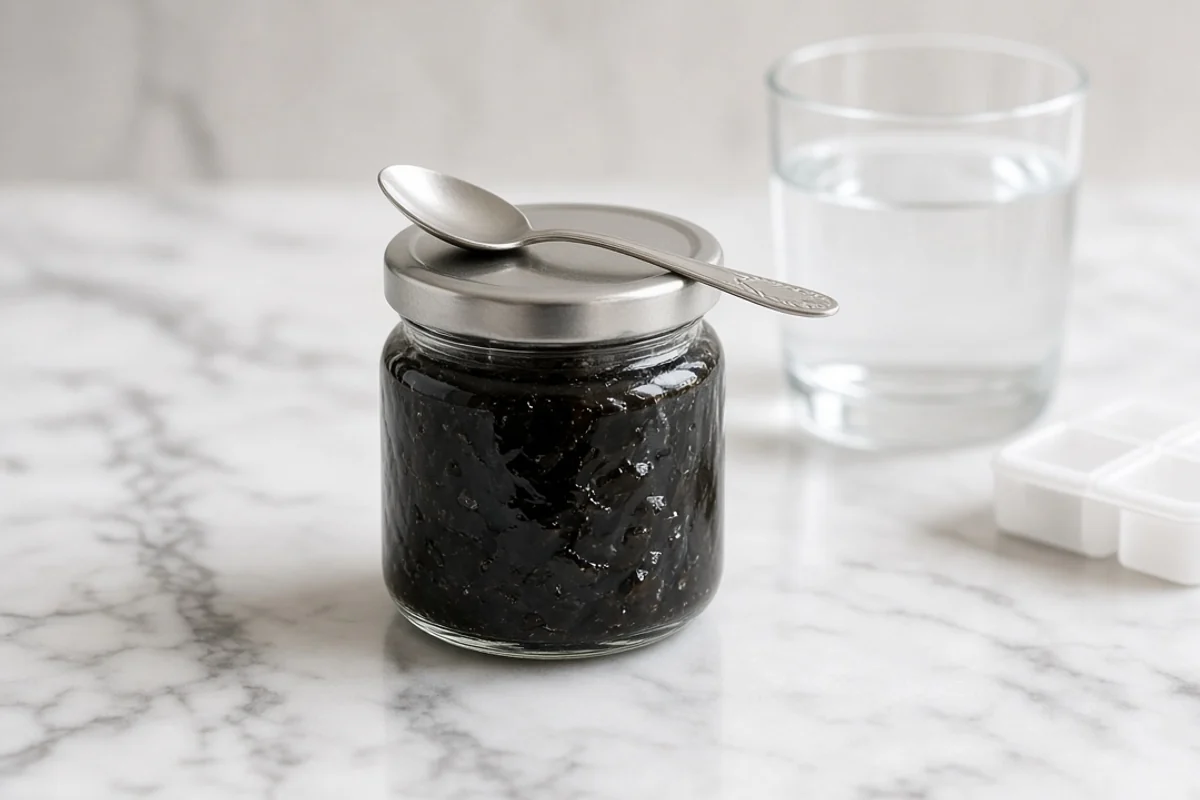
- Take a rice-grain to pea-sized piece of resin (about 300–500 mg) once a day, or follow your label dose.
- Dissolve it in a cup of warm (not boiling) water or milk and stir for a minute or two.
- Most people take it in the morning, after a light breakfast.
- Start low in the first week and stop if it does not suit you.
- Always use a clean, dry spoon so moisture does not get into the jar.
Related shilajit guides
- Shilajit in pregnancy and breastfeeding
- Shilajit and uric acid
- Shilajit, heart conditions and blood pressure
- Shilajit and medicines
- Shilajit benefits
- Complete shilajit guide
Doctor's note
This page shares traditional Ayurvedic use and a summary of published research; it is not medical advice. Consult a qualified doctor or Ayurvedic physician (BAMS) before taking shilajit, especially if you are pregnant or breastfeeding, under 18, have a heart condition, high or low blood pressure, gout or high uric acid, iron overload (haemochromatosis), kidney or liver disease, or take regular medicines. Do not stop prescribed medicine. Read who should not take shilajit and shilajit side effects.
Frequently asked questions
Who should not take shilajit?
- Pregnant and breastfeeding women, children, and people with iron overload or gout should avoid it. People with heart, kidney, liver or autoimmune conditions or on regular medicines should check with a doctor first.
Can people with high BP take shilajit?
- Only after checking with their doctor, as it may affect blood pressure and heart rate.
Should I stop shilajit before surgery?
- Yes, usually at least 2 weeks before, unless your surgeon advises otherwise.
Shilajit guides
Benefits, how to take it, pure vs fake, forms, side effects and price — in plain language.
- Shilajit benefits: what Ayurveda traditionally uses it forWhat shilajit is, the benefits Ayurveda traditionally describes — strength, stamina, energy and vitality — and the honest limits of what a supplement can do.
- How to take shilajit resin: dose, timing and the right wayA step-by-step guide to taking shilajit resin — how much, when, with water or milk, how long to continue, and the common mistakes to avoid.
- How to identify original (pure) shilajit: home checks and label checksSimple home checks for pure shilajit resin, why they are only rough guides, and the label and seller checks that matter most.
- Shilajit resin vs capsule vs powder: which form should you choose?An honest comparison of shilajit resin, capsules, powder and gummies — processing, dosing, convenience and what to check on each label.
- Shilajit side effects: precautions and who should avoid itPossible side effects of shilajit, who should not take it or should check with a doctor first, and simple ways to use it more safely.
- Shilajit price in India: how to compare and what to look forHow to compare shilajit prices fairly — per gram and per day — why very cheap shilajit is a warning sign, and what our 10 g resin costs.
Related remedies
 Giloy Safety: What to Know Before You Take ItGiloy became hugely popular, and doctors then reported liver injury in some users. Who should avoid it, safe limits and warning signs.
 Giloy (guduchi): how it's used, a simple kadha and who should avoid itGiloy, the heart-leaved climber called guduchi or amrita in Ayurveda, became a household name during the pandemic. Traditionally it's used for recurring fevers, low immunity and digestion. Here's how to use it sensibly in a mild decoction, and why it isn't for everyone.
 Rice water for hair growth: fermented rinse recipe, how often to use it and who should skip itRice water for hair growth is a kitchen classic — the cloudy water left after soaking rice is used as a hair rinse across Asia. It won't magically double your hair length, but it can make strands smoother, stronger and less prone to breakage. Here's how to make it, use it and avoid common mistakes.
Related recipes
Related products
Get a weekly dose of Ayurveda
One seasonal tip, one remedy and one simple habit — every week, in English or Hindi. No spam, unsubscribe any time.