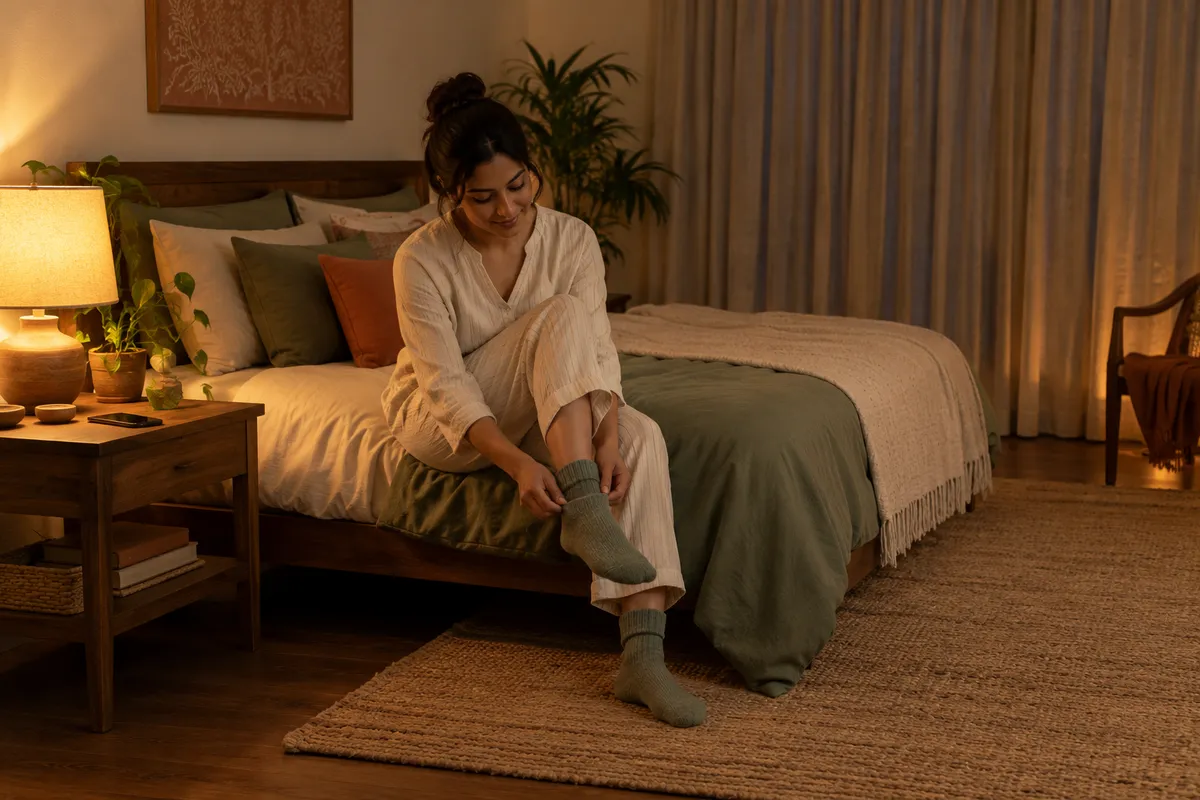
- progressive muscle relaxation
- bedtime relaxation
- sleep routine
- body tension release
Progressive Muscle Relaxation Before Bed
A head-to-toe tension-and-release routine for bedtime, adapted to avoid painful or recently injured areas.
Important: this remedy is only a supportive home measure. Keep taking any medicine your doctor has prescribed, monitor your readings, and consult your doctor before adding anything new.
progressive muscle relaxation before bed: method, benefits and precautions
Progressive muscle relaxation involves noticing the difference between a gentle muscle contraction and release. It can be part of a wind-down routine, but it does not guarantee sleep. A quiet, comfortable position and permission to stop are more useful than working through every body part regardless of symptoms.
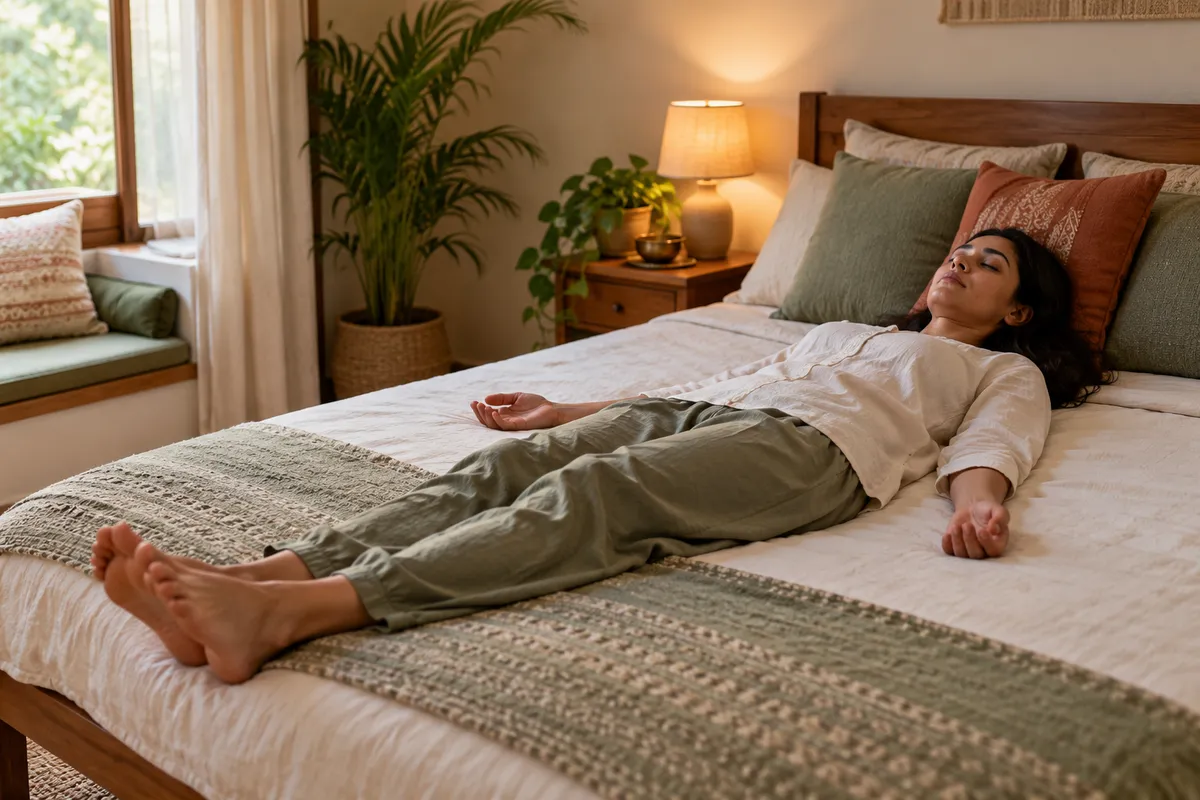
Choose a supported seat or a comfortable resting position. Begin with an uninjured area, such as the hands, and tighten only lightly before letting go. Notice the release without forcing a dramatic change. Keep breathing; do not clench the jaw, strain the neck or hold the whole body rigid.
Skip painful, recently injured or medically restricted areas. You can simply notice and soften a muscle without tensing it first. If a recording moves too quickly, pause it rather than rushing to match the narrator. Use a comfortable volume and keep the device out of the way so the session does not become another screen task.
Some people find body-focused exercises uncomfortable or distressing. Stop and choose another activity if that happens. Persistent insomnia, pain or symptoms affecting daytime function deserve assessment. The technique is an optional relaxation aid, not a substitute for mental-health care, pain treatment or a rehabilitation plan.
Ingredients
- A comfortable bed or mat
- Loose clothing
- Ten to fifteen uninterrupted minutes
How to prepare
- Settle in a supported position.
- Gently tense then release one comfortable, uninjured area.
- Skip restricted areas and stop if distressed or uncomfortable.
How to use
- Use a manageable short sequence; no need to tense every muscle or finish a recording.
Helpful habits
- Keep breathing normally.
- A release-only version is acceptable.
- Do not force sleep after finishing.
Precautions
- Skip injured, cramping or postsurgical muscles and seek help for persistent insomnia or severe anxiety.
- Ask a clinician first if you have allergies, are pregnant, have a long-term condition or take regular medicines.
- Seek urgent care for severe pain, breathing difficulty, fainting, repeated vomiting, bleeding or rapidly worsening symptoms.
Frequently asked questions
Should contractions be strong?
- No. Avoid strain and painful areas.
What if it makes me anxious?
- Stop; another wind-down activity may suit you better.
Prepared by: All Ayurvedics editorial team
No clinician review is recorded for this page. This is general information, not individual diagnosis or treatment advice.
Responsible site owner/editor: Manoj Singh. Editorial responsibility