Everyday wellness5 min
Tulsi-Infused Water as Part of Your Morning Dinacharya
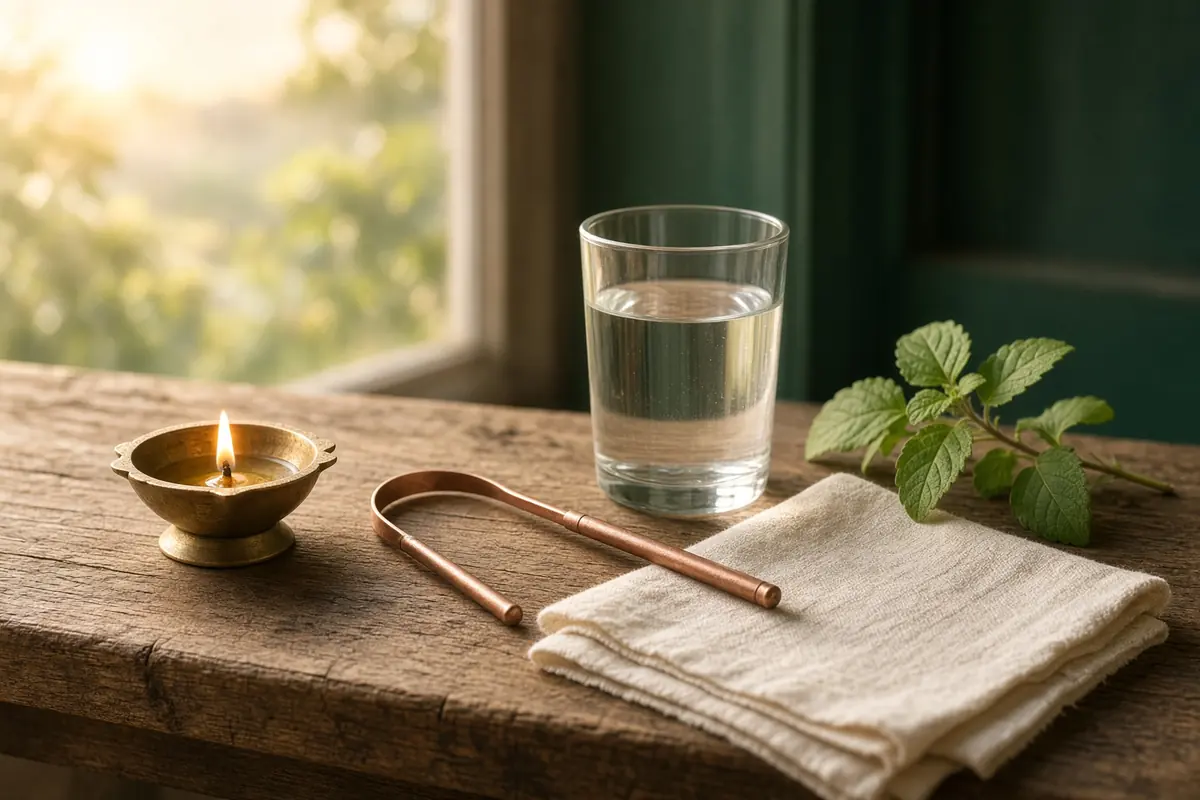
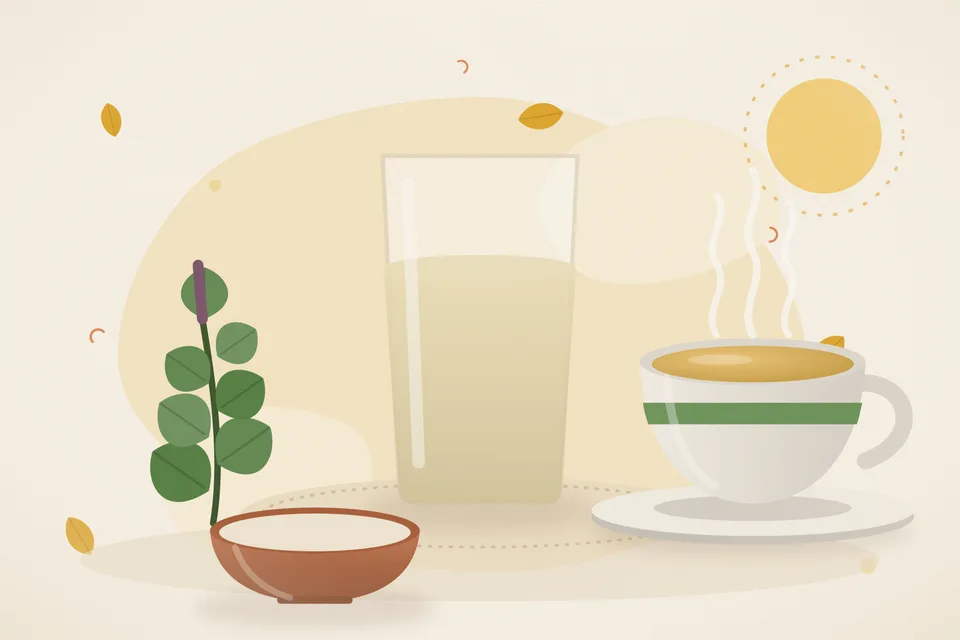
A glass of warm water with a few tulsi leaves first thing in the morning, a simple start to an Ayurvedic daily routine of hydration, movement and calm.
The Ayurvedic view of tulsi
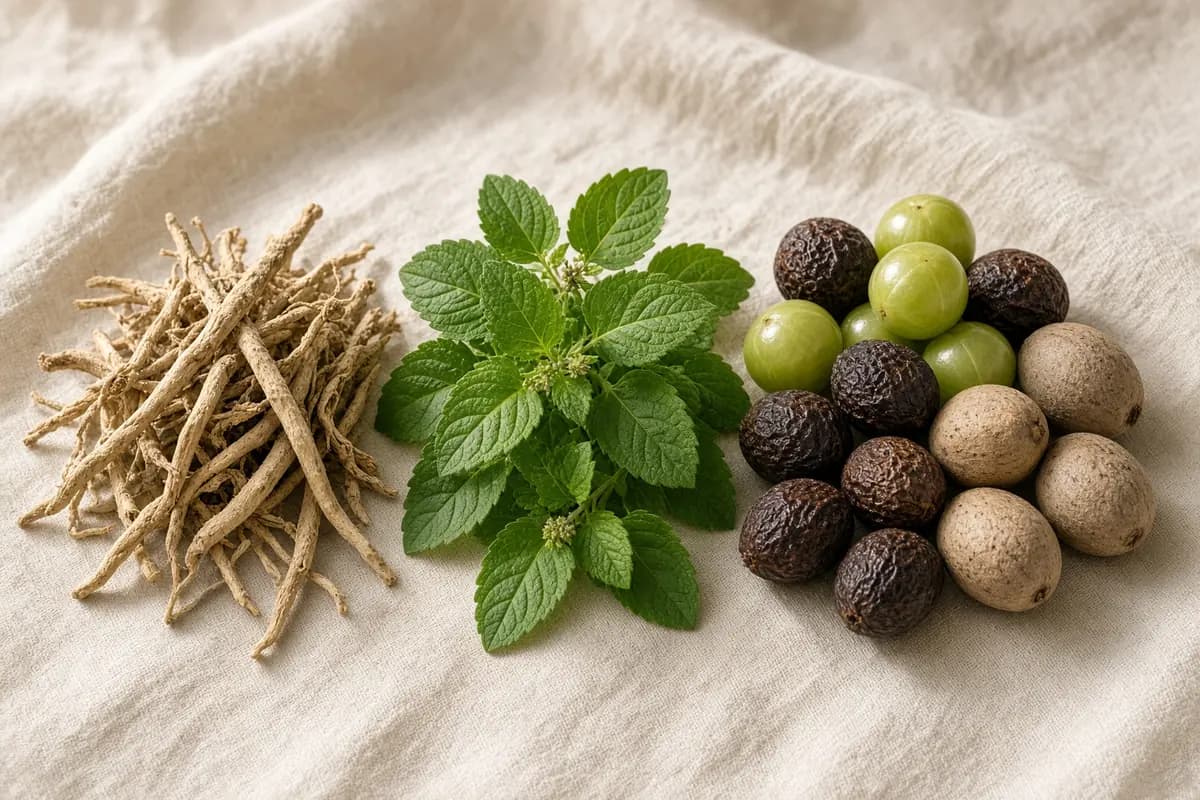
Tulsi, or holy basil, grows in a pot in many Indian courtyards. Ayurveda describes it as warming and light, and families use a few leaves in tea, kadha and morning rituals.
Dinacharya, the Ayurvedic daily routine, starts with waking early, cleaning the mouth and tongue, and drinking warm water. Adding a few tulsi leaves makes it fragrant and gives the habit a sense of ritual that helps it stick.
Ingredients
- 5 to 6 fresh tulsi leaves
- 1 glass warm water
How to prepare
- Bruise the leaves lightly and add to warm water; steep five minutes.
How to use
- Drink after brushing and tongue scraping.
- Follow with ten minutes of stretching or a short walk.
Helpful habits
- Pick fresh leaves from a clean home plant and rinse them well.
Precautions
- Tulsi may lower blood sugar slightly; monitor if on diabetes medicine.
- Use a few leaves, not handfuls; it is warming.
- Check with a doctor if you take blood thinners or are planning a pregnancy.
- A home remedy, not a treatment. See a doctor if symptoms last more than a few days or get worse.
Frequently asked questions
Can I chew the leaves too?
- Swallowing a few soft leaves is traditional; avoid chewing hard for long.
Is copper-vessel water better?
- Optional; plain clean water is what matters.
Is dried tulsi as good as fresh?
- Dried leaves work for tea; use a little less as they are concentrated.