Shilajit flame (burn) test: how to do it safely and what it shows
How to do the shilajit flame (burn) test safely, how genuine resin usually reacts, what warning signs look like and why it's only a rough check.
Published 7 October 2026 · 3 min read
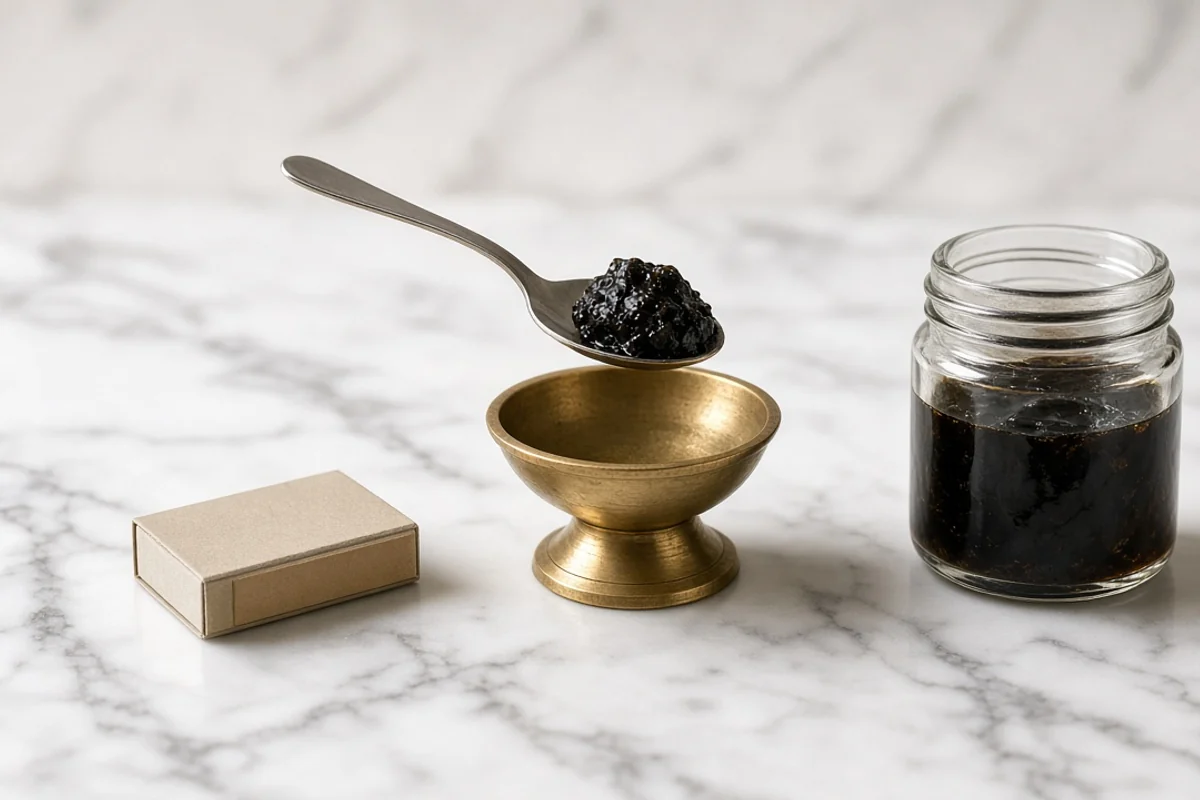
The flame test is a popular home check. Do it carefully, outdoors or near an open window, away from children.
What you need
- A tiny piece of shilajit (smaller than a rice grain)
- A steel spoon
- A lighter or candle
- A plate or sink nearby
Step-by-step method
- Step 1: Place the tiny piece on the spoon.
- Step 2: Hold the spoon over a flame for 20–40 seconds. Keep your face back.
- Step 3: Watch the shilajit, not the flame.
How genuine shilajit usually reacts
- It softens, bubbles and swells a little
- It may give off light smoke and an earthy smell
- It does not catch fire with its own flame
- It leaves a small amount of light ash after long heating
Warning signs
- It burns with a flame, like plastic or wax
- It melts into a runny, oily liquid
- It smells like burning plastic, rubber or tar
- It leaves heavy black sticky residue
Limits and safety
Results depend on moisture and heat, so they are not precise. The test cannot detect heavy metals. Never heat a large piece, don't inhale smoke, and don't do this near flammable items.
How to take shilajit (general guide)
- Take a rice-grain to pea-sized piece of resin (about 300–500 mg) once a day, or follow your label dose.
- Dissolve it in a cup of warm (not boiling) water or milk and stir for a minute or two.
- Most people take it in the morning, after a light breakfast.
- Start low in the first week and stop if it does not suit you.
- Always use a clean, dry spoon so moisture does not get into the jar.
Related shilajit guides
- Shilajit water test
- Shilajit temperature test
- Fake shilajit
- Shilajit label and lab report
- Shilajit benefits
- Complete shilajit guide
Doctor's note
This page shares traditional Ayurvedic use and a summary of published research; it is not medical advice. Consult a qualified doctor or Ayurvedic physician (BAMS) before taking shilajit, especially if you are pregnant or breastfeeding, under 18, have a heart condition, high or low blood pressure, gout or high uric acid, iron overload (haemochromatosis), kidney or liver disease, or take regular medicines. Do not stop prescribed medicine. Read who should not take shilajit and shilajit side effects.
Frequently asked questions
Does pure shilajit burn?
- Genuine resin usually bubbles and softens over a flame but does not catch fire with its own flame. Burning with a flame is a warning sign.
Is the flame test reliable?
- It is a rough check only. Use it with the water test and the label, and rely on lab reports for safety.
Is the flame test safe?
- Use a tiny piece on a steel spoon, keep your face away, do it in a ventilated place and away from children.
Shilajit guides
Benefits, how to take it, pure vs fake, forms, side effects and price — in plain language.
- Shilajit benefits: what Ayurveda traditionally uses it forWhat shilajit is, the benefits Ayurveda traditionally describes — strength, stamina, energy and vitality — and the honest limits of what a supplement can do.
- How to take shilajit resin: dose, timing and the right wayA step-by-step guide to taking shilajit resin — how much, when, with water or milk, how long to continue, and the common mistakes to avoid.
- How to identify original (pure) shilajit: home checks and label checksSimple home checks for pure shilajit resin, why they are only rough guides, and the label and seller checks that matter most.
- Shilajit resin vs capsule vs powder: which form should you choose?An honest comparison of shilajit resin, capsules, powder and gummies — processing, dosing, convenience and what to check on each label.
- Shilajit side effects: precautions and who should avoid itPossible side effects of shilajit, who should not take it or should check with a doctor first, and simple ways to use it more safely.
- Shilajit price in India: how to compare and what to look forHow to compare shilajit prices fairly — per gram and per day — why very cheap shilajit is a warning sign, and what our 10 g resin costs.
Related remedies
 Onion juice for hair growth: how to make it, apply it and what to expectOnion juice for hair growth is one of the most searched home remedies in India, and for good reason: it's cheap, easy and has a little research behind it. Here's how to extract and apply it properly, how to manage the smell, and realistic expectations for thinning hair.
 Diet for jaundice recovery: light meals, clean fluids and what to avoidJaundice means the liver is under strain, and food choices during recovery matter a lot. This diet for jaundice recovery focuses on clean boiled water, small light meals like khichdi and dal soup, fresh fruits and vegetables, and strictly no alcohol — as support for the treatment and tests your doctor advises, never as a replacement.
 Diet for dengue recovery: fluids, easy foods and what to avoid while you healDengue can leave you exhausted, with low appetite and low platelets. A thoughtful diet for dengue recovery focuses on plenty of fluids — ORS, coconut water, soups, buttermilk — soft, easily digested meals like khichdi and dalia, fruits, and gradual protein, while you follow your doctor's monitoring and treatment closely.
Related products
Get a weekly dose of Ayurveda
One seasonal tip, one remedy and one simple habit — every week, in English or Hindi. No spam, unsubscribe any time.