
How to store shilajit resin: shelf life, hard or runny resin and spoilage
Simple rules to store shilajit resin: the right jar and place, the dry-spoon rule, handling hard or runny resin, shelf life and spoilage signs.
Published 7 October 2026 · 3 min read
Good storage keeps shilajit clean, easy to use and effective until the expiry date.
Storage rules
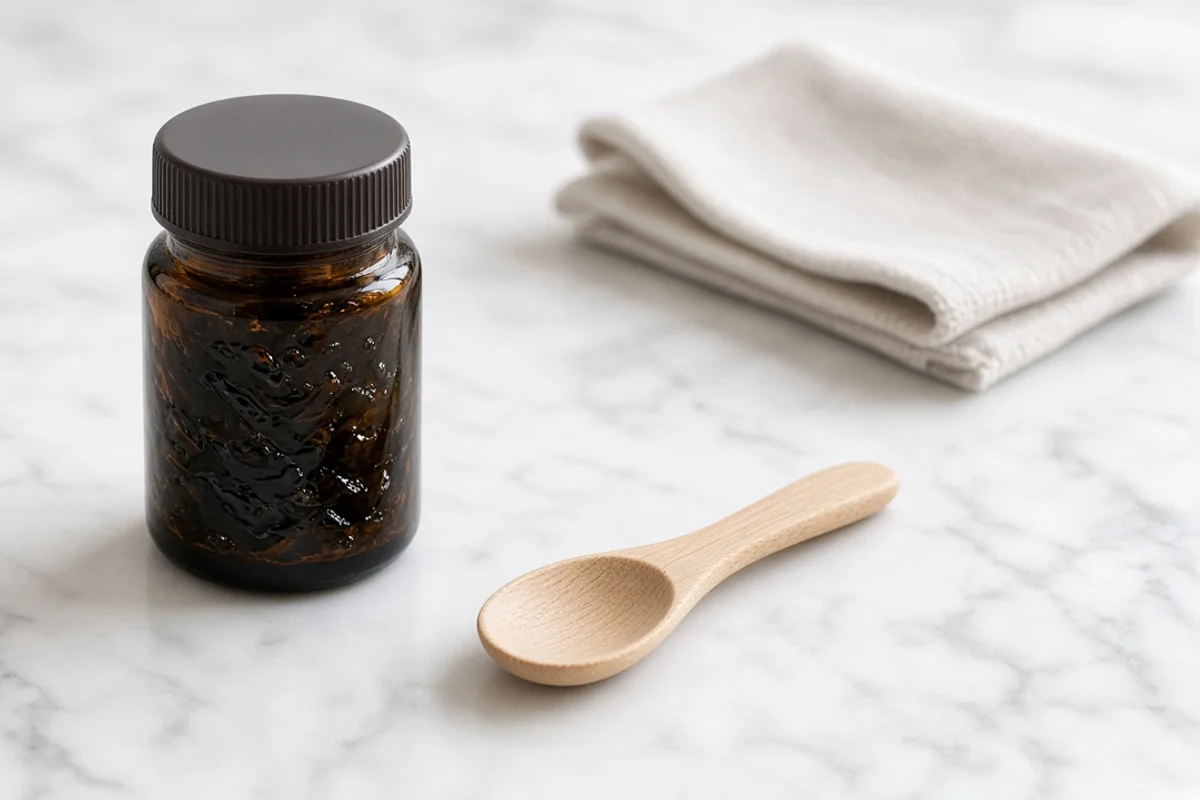
- Keep it in the original airtight jar (dark glass is best).
- Store in a cool, dry place away from sunlight, the stove and the bathroom.
- Always use a clean, dry spoon or spatula. Moisture invites mould.
- Close the lid tightly straight after use.
- Keep it out of reach of children and pets.
Fridge or not?
Not needed in most of India. In very hot, humid months, a fridge can help, but the resin will go hard — let it sit at room temperature for a few minutes or warm the spoon before scooping.
If it is too hard
Normal in winter. Warm the spoon in hot water, dry it, then scoop. Or place the closed jar in a bowl of warm water for 2–3 minutes.
If it is too runny
Normal in hot weather. Move it somewhere cooler. If it stays runny when cool, check our temperature test.
Shelf life and spoilage
- Follow the expiry date on the label (often 2–3 years from manufacture).
- Discard it if you see mould, smell something sour or rotten, or notice water droplets inside.
- Don't transfer it to plastic or metal tins that react or don't seal well.
Related shilajit guides
- Shilajit for beginners
- Shilajit temperature test
- Fake shilajit
- Shilajit dosage
- Shilajit benefits
- Complete shilajit guide
Doctor's note
This page shares traditional Ayurvedic use and a summary of published research; it is not medical advice. Consult a qualified doctor or Ayurvedic physician (BAMS) before taking shilajit, especially if you are pregnant or breastfeeding, under 18, have a heart condition, high or low blood pressure, gout or high uric acid, iron overload (haemochromatosis), kidney or liver disease, or take regular medicines. Do not stop prescribed medicine. Read who should not take shilajit and shilajit side effects.
Frequently asked questions
How should I store shilajit?
- In its airtight jar in a cool, dry place away from sunlight, using a dry spoon every time.
Should shilajit be kept in the fridge?
- Usually not needed. In very hot, humid weather a fridge helps, but the resin will harden.
Does shilajit expire?
- Yes. Follow the expiry date on the label and discard it if you see mould or smell something off.
Shilajit guides
Benefits, how to take it, pure vs fake, forms, side effects and price — in plain language.
- Shilajit benefits: what Ayurveda traditionally uses it forWhat shilajit is, the benefits Ayurveda traditionally describes — strength, stamina, energy and vitality — and the honest limits of what a supplement can do.
- How to take shilajit resin: dose, timing and the right wayA step-by-step guide to taking shilajit resin — how much, when, with water or milk, how long to continue, and the common mistakes to avoid.
- How to identify original (pure) shilajit: home checks and label checksSimple home checks for pure shilajit resin, why they are only rough guides, and the label and seller checks that matter most.
- Shilajit resin vs capsule vs powder: which form should you choose?An honest comparison of shilajit resin, capsules, powder and gummies — processing, dosing, convenience and what to check on each label.
- Shilajit side effects: precautions and who should avoid itPossible side effects of shilajit, who should not take it or should check with a doctor first, and simple ways to use it more safely.
- Shilajit price in India: how to compare and what to look forHow to compare shilajit prices fairly — per gram and per day — why very cheap shilajit is a warning sign, and what our 10 g resin costs.
Related remedies
 Morning sneezing and runny nose from allergies: a gentle daily routineBouts of sneezing every morning, an itchy, runny nose and watery eyes — often worse with dust or season change — point to allergic rhinitis. A saline rinse, steam, turmeric with honey and a few household changes can reduce the misery.
 Home remedies for hard water hair damage: lemon or vinegar rinse, filtered final rinse and oilingBorewell and hard tap water leave mineral deposits that make hair rough, dull, tangled and hard to lather. These home remedies for hard water hair damage loosen the build-up with a diluted lemon or vinegar rinse, finish with a mug of filtered or boiled water, and protect the lengths with oil.
 Supportive Slippers Instead of Bare Floors at HomeCushioned slippers worn on hard floors if heels and knees complain. A footwear habit, not a joint treatment.
Related products

Get a weekly dose of Ayurveda
One seasonal tip, one remedy and one simple habit — every week, in English or Hindi. No spam, unsubscribe any time.