Purified (shuddh) vs raw shilajit: why purification matters
What shodhana (purification) means, why raw shilajit can be risky, how purified resin looks and feels, and what to look for when buying.
Published 7 October 2026 · 3 min read
Ayurveda is very clear: shilajit must be purified (shodhita) before use. Raw (ashuddh) shilajit is not meant to be eaten.
Risks of raw shilajit
- Heavy metals such as lead, arsenic or mercury from the surrounding rock
- Microbes and fungal contamination
- Sand, stones and plant debris
- Mycotoxins if stored badly
What shodhana involves
Classical texts describe dissolving raw shilajit in hot water or herbal decoctions (triphala, dashmool and others), filtering, letting the solids settle, and drying the liquid layer slowly in the sun. The result is a clean, glossy resin. Modern manufacturers use similar steps plus filtration and lab testing.
Telling them apart
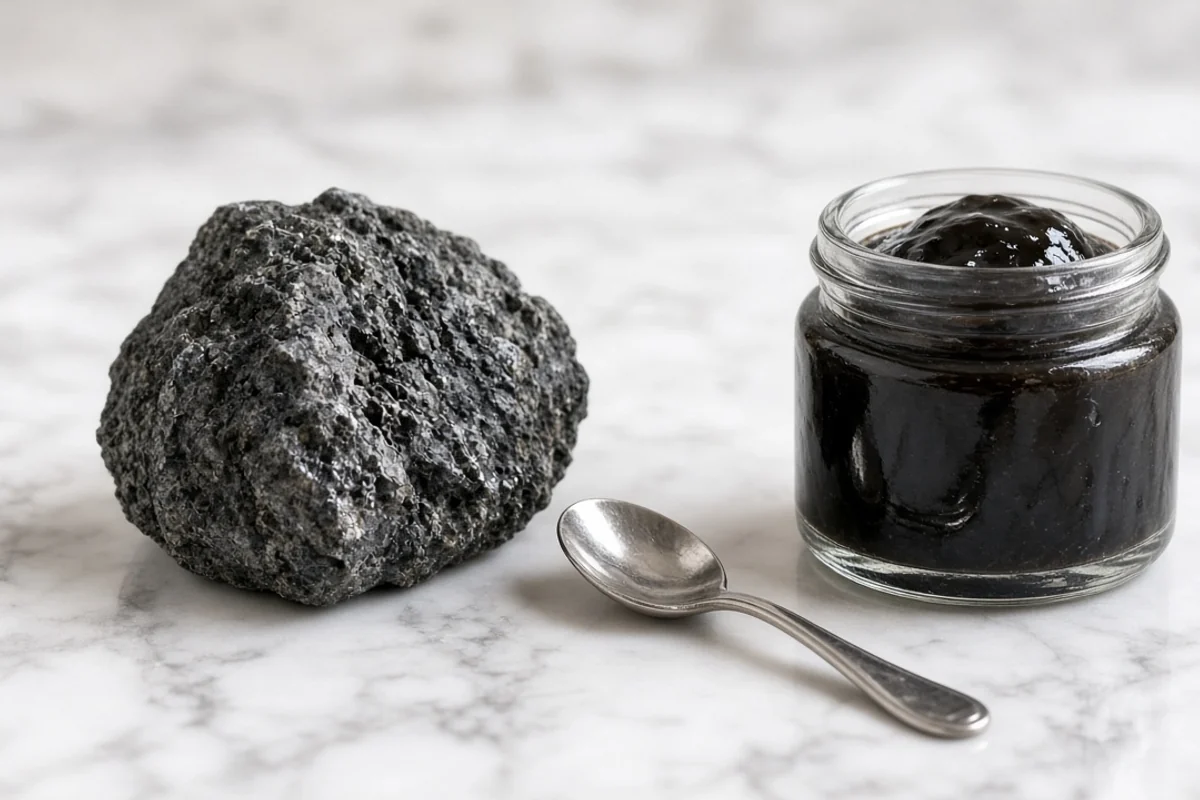
- Raw: dull, rocky, crumbly, gritty, leaves sediment in water.
- Purified: smooth, glossy, uniform resin; softens with warmth; dissolves almost completely in warm water.
What to buy
- Labelled "purified" or "shuddh" shilajit from a licensed manufacturer
- With a batch number and, ideally, a heavy-metal test report
- Avoid loose, unlabelled shilajit sold by roadside sellers or "direct from the mountain" without testing
How to take shilajit (general guide)
- Take a rice-grain to pea-sized piece of resin (about 300–500 mg) once a day, or follow your label dose.
- Dissolve it in a cup of warm (not boiling) water or milk and stir for a minute or two.
- Most people take it in the morning, after a light breakfast.
- Start low in the first week and stop if it does not suit you.
- Always use a clean, dry spoon so moisture does not get into the jar.
Related shilajit guides
- Himalayan shilajit
- Shilajit label and lab report
- Fake shilajit
- Shilajit gold
- Shilajit benefits
- Complete shilajit guide
Doctor's note
This page shares traditional Ayurvedic use and a summary of published research; it is not medical advice. Consult a qualified doctor or Ayurvedic physician (BAMS) before taking shilajit, especially if you are pregnant or breastfeeding, under 18, have a heart condition, high or low blood pressure, gout or high uric acid, iron overload (haemochromatosis), kidney or liver disease, or take regular medicines. Do not stop prescribed medicine. Read who should not take shilajit and shilajit side effects.
Frequently asked questions
What is purified shilajit?
- Shilajit that has been cleaned through shodhana — dissolved, filtered and dried — to remove rock, debris and impurities. It is the only form meant for eating.
Is raw shilajit dangerous?
- It can contain heavy metals, microbes and grit. Ayurveda does not recommend eating raw shilajit.
How do I know if my shilajit is purified?
- Check the label and licence, look for a smooth glossy resin that dissolves almost fully in warm water, and ask for a lab report.
Shilajit guides
Benefits, how to take it, pure vs fake, forms, side effects and price — in plain language.
- Shilajit benefits: what Ayurveda traditionally uses it forWhat shilajit is, the benefits Ayurveda traditionally describes — strength, stamina, energy and vitality — and the honest limits of what a supplement can do.
- How to take shilajit resin: dose, timing and the right wayA step-by-step guide to taking shilajit resin — how much, when, with water or milk, how long to continue, and the common mistakes to avoid.
- How to identify original (pure) shilajit: home checks and label checksSimple home checks for pure shilajit resin, why they are only rough guides, and the label and seller checks that matter most.
- Shilajit resin vs capsule vs powder: which form should you choose?An honest comparison of shilajit resin, capsules, powder and gummies — processing, dosing, convenience and what to check on each label.
- Shilajit side effects: precautions and who should avoid itPossible side effects of shilajit, who should not take it or should check with a doctor first, and simple ways to use it more safely.
- Shilajit price in India: how to compare and what to look forHow to compare shilajit prices fairly — per gram and per day — why very cheap shilajit is a warning sign, and what our 10 g resin costs.
Get a weekly dose of Ayurveda
One seasonal tip, one remedy and one simple habit — every week, in English or Hindi. No spam, unsubscribe any time.