Himalayan shilajit: where it comes from and how it is collected
How Himalayan shilajit forms in high rock crevices, how it is collected and purified, and what 'Himalayan' on a label really tells you.
Published 7 October 2026 · 3 min read
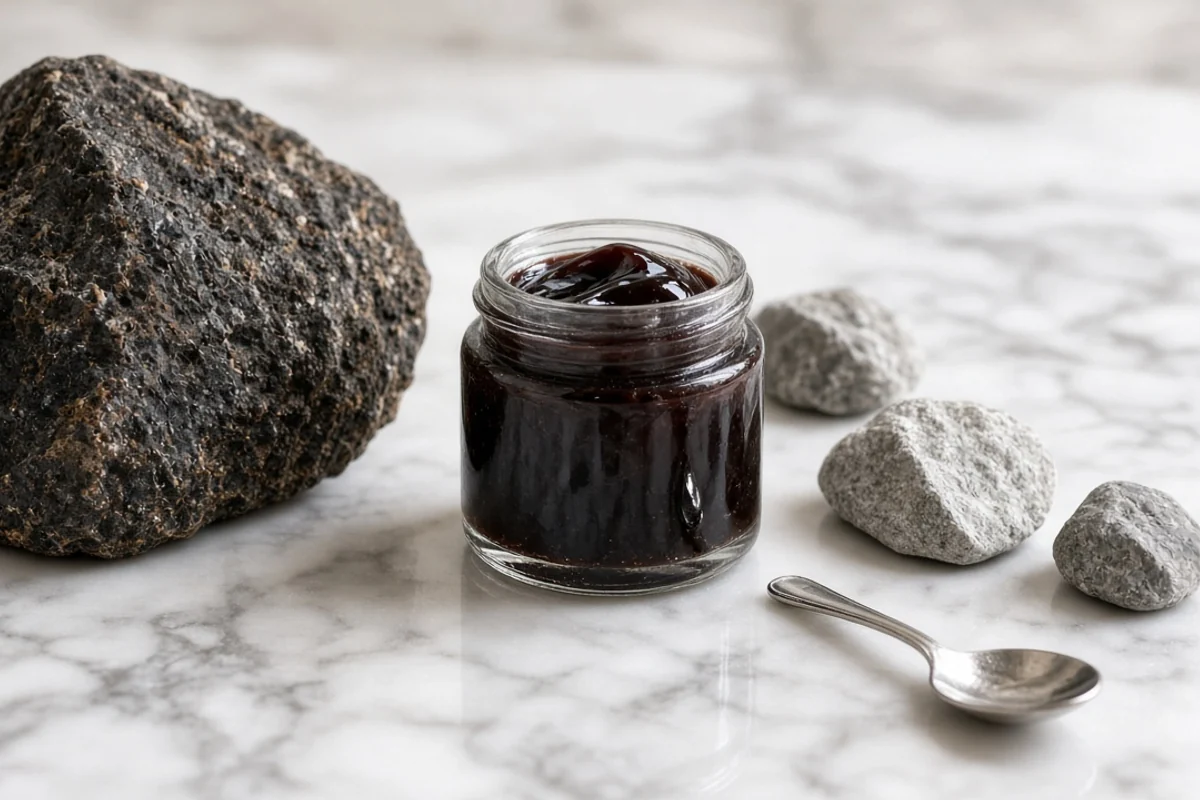
Shilajit is found in several mountain ranges — the Himalayas, Hindu Kush, Altai and Caucasus — but Himalayan shilajit is the best known in India.
How it forms
At roughly 3,000–5,000 metres, plant matter trapped in rock layers breaks down very slowly over a long time. In warm months, the resulting dark, sticky material seeps out of cracks in the rock. That exudate is raw shilajit.
How it is collected
- Collectors in Himachal, Uttarakhand, Ladakh, Nepal and neighbouring regions scrape the exudate or collect shilajit-bearing rock.
- The raw material contains rock, sand, plant debris and microbes, so it is not ready to eat.
How it is purified
The traditional process (shodhana) involves dissolving the raw material in water or herbal decoctions, filtering out solids, and slowly drying it in the sun or at low heat into resin. Modern makers add filtration and lab testing.
What "Himalayan" on a label means
It names the region of origin, but it is not a quality guarantee. What matters more:
- licensed manufacturer and batch number
- purification method
- heavy-metal and microbial testing
Sustainability
Shilajit is a limited natural resource. Buying from established, licensed suppliers supports better collection practices.
How to take shilajit (general guide)
- Take a rice-grain to pea-sized piece of resin (about 300–500 mg) once a day, or follow your label dose.
- Dissolve it in a cup of warm (not boiling) water or milk and stir for a minute or two.
- Most people take it in the morning, after a light breakfast.
- Start low in the first week and stop if it does not suit you.
- Always use a clean, dry spoon so moisture does not get into the jar.
Related shilajit guides
- Purified (shuddh) vs raw shilajit
- Shilajit and fulvic acid
- Shilajit for high altitude and trekking
- Fake shilajit
- Shilajit benefits
- Complete shilajit guide
Doctor's note
This page shares traditional Ayurvedic use and a summary of published research; it is not medical advice. Consult a qualified doctor or Ayurvedic physician (BAMS) before taking shilajit, especially if you are pregnant or breastfeeding, under 18, have a heart condition, high or low blood pressure, gout or high uric acid, iron overload (haemochromatosis), kidney or liver disease, or take regular medicines. Do not stop prescribed medicine. Read who should not take shilajit and shilajit side effects.
Frequently asked questions
Where does shilajit come from?
- It seeps from rock crevices at high altitudes, especially in the Himalayas, from plant matter that broke down over a very long time.
Is Himalayan shilajit the best?
- It is the best known in India, but origin alone does not guarantee quality. Purification and testing matter more.
Can I eat raw shilajit from the mountains?
- No. Raw shilajit contains rock, debris and microbes and must be purified first.
Shilajit guides
Benefits, how to take it, pure vs fake, forms, side effects and price — in plain language.
- Shilajit benefits: what Ayurveda traditionally uses it forWhat shilajit is, the benefits Ayurveda traditionally describes — strength, stamina, energy and vitality — and the honest limits of what a supplement can do.
- How to take shilajit resin: dose, timing and the right wayA step-by-step guide to taking shilajit resin — how much, when, with water or milk, how long to continue, and the common mistakes to avoid.
- How to identify original (pure) shilajit: home checks and label checksSimple home checks for pure shilajit resin, why they are only rough guides, and the label and seller checks that matter most.
- Shilajit resin vs capsule vs powder: which form should you choose?An honest comparison of shilajit resin, capsules, powder and gummies — processing, dosing, convenience and what to check on each label.
- Shilajit side effects: precautions and who should avoid itPossible side effects of shilajit, who should not take it or should check with a doctor first, and simple ways to use it more safely.
- Shilajit price in India: how to compare and what to look forHow to compare shilajit prices fairly — per gram and per day — why very cheap shilajit is a warning sign, and what our 10 g resin costs.
Related remedies
 Morning sneezing and runny nose from allergies: a gentle daily routineBouts of sneezing every morning, an itchy, runny nose and watery eyes — often worse with dust or season change — point to allergic rhinitis. A saline rinse, steam, turmeric with honey and a few household changes can reduce the misery.
 Stiff neck from a bad pillow or screen hunch: warm compress and gentle stretchesWoke up unable to turn your head, or feel a knot between the shoulders after a long day at the laptop? A warm compress, gentle oil massage and slow neck stretches usually ease a simple stiff neck in a few days.
 Haldi (turmeric): getting the most from India's golden spiceTurmeric colours nearly every Indian dal and sabzi. Its active compound, curcumin, has anti-inflammatory and antioxidant properties, but it's poorly absorbed on its own. Cooking it in a little fat with black pepper, and using it daily in food, is the traditional — and smartest — approach.
Related products
Get a weekly dose of Ayurveda
One seasonal tip, one remedy and one simple habit — every week, in English or Hindi. No spam, unsubscribe any time.