How to take shilajit with warm water: simple daily method
The simplest way to take shilajit: dissolved in warm water. Temperature, dose, dissolving time, what the colour tells you and taste tips.
Published 7 October 2026 · 3 min read
Warm water is the simplest and most popular way to take shilajit resin, and it suits people who avoid dairy.
What you need
- Shilajit resin: rice-grain to pea-sized (about 300–500 mg)
- 1 cup (150–200 ml) warm water — not boiling
- A dry spoon
Step-by-step method
- Step 1: Warm the water to a comfortable drinking temperature (about 40–50°C).
- Step 2: Scoop the shilajit with a dry spoon and drop it in.
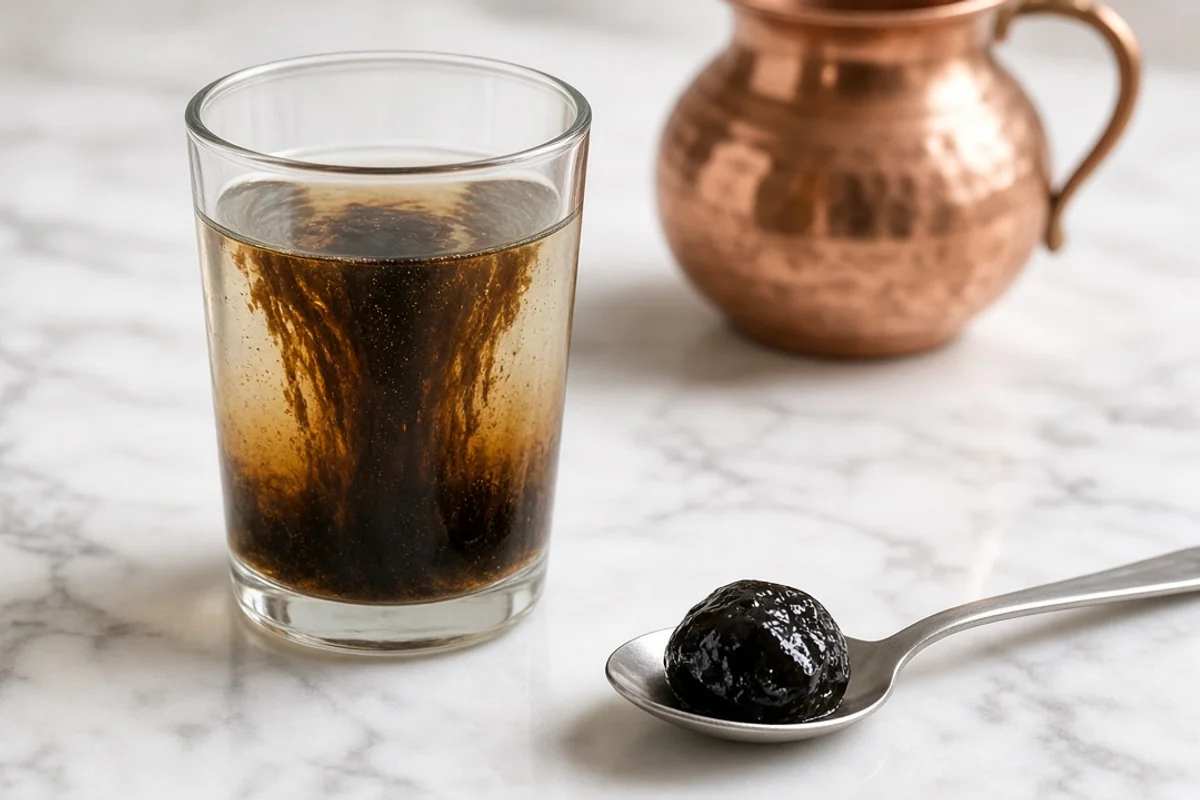
- Step 3: Stir for 1–3 minutes. Genuine resin dissolves almost completely and turns the water golden-brown to dark brown, with no gritty layer.
- Step 4: Drink it slowly. Rinse the cup and drink the last bit too, since some may stick to the glass.
Taste tips
Genuine shilajit tastes bitter, earthy and slightly smoky. If that is hard, add a few drops of lemon after it dissolves, a squeeze of honey once the water is lukewarm, or follow it with a sip of plain water.
Good to know
- Hot (not boiling) water dissolves it faster; cold water works but slowly.
- Undissolved sand or grit at the bottom suggests impurities — read our water dissolve test.
- Do not mix it into tea or coffee; caffeine and tannins are not traditional carriers.
Related shilajit guides
- How to take shilajit with warm milk
- Shilajit water test
- Can you take shilajit on an empty stomach? Pros, cons and tips
- Shilajit dosage
- Shilajit benefits
- Complete shilajit guide
Doctor's note
This page shares traditional Ayurvedic use and a summary of published research; it is not medical advice. Consult a qualified doctor or Ayurvedic physician (BAMS) before taking shilajit, especially if you are pregnant or breastfeeding, under 18, have a heart condition, high or low blood pressure, gout or high uric acid, iron overload (haemochromatosis), kidney or liver disease, or take regular medicines. Do not stop prescribed medicine. Read who should not take shilajit and shilajit side effects.
Frequently asked questions
Can I take shilajit with plain water?
- Yes. Dissolving a pea-sized piece in a cup of warm water is the simplest and most common way.
Can I mix shilajit in cold water?
- It will dissolve, but slowly. Warm water is faster and more traditional.
Can I add shilajit to tea?
- It's better not to. Take it separately in water or milk.
Shilajit guides
Benefits, how to take it, pure vs fake, forms, side effects and price — in plain language.
- Shilajit benefits: what Ayurveda traditionally uses it forWhat shilajit is, the benefits Ayurveda traditionally describes — strength, stamina, energy and vitality — and the honest limits of what a supplement can do.
- How to take shilajit resin: dose, timing and the right wayA step-by-step guide to taking shilajit resin — how much, when, with water or milk, how long to continue, and the common mistakes to avoid.
- How to identify original (pure) shilajit: home checks and label checksSimple home checks for pure shilajit resin, why they are only rough guides, and the label and seller checks that matter most.
- Shilajit resin vs capsule vs powder: which form should you choose?An honest comparison of shilajit resin, capsules, powder and gummies — processing, dosing, convenience and what to check on each label.
- Shilajit side effects: precautions and who should avoid itPossible side effects of shilajit, who should not take it or should check with a doctor first, and simple ways to use it more safely.
- Shilajit price in India: how to compare and what to look forHow to compare shilajit prices fairly — per gram and per day — why very cheap shilajit is a warning sign, and what our 10 g resin costs.
Related remedies
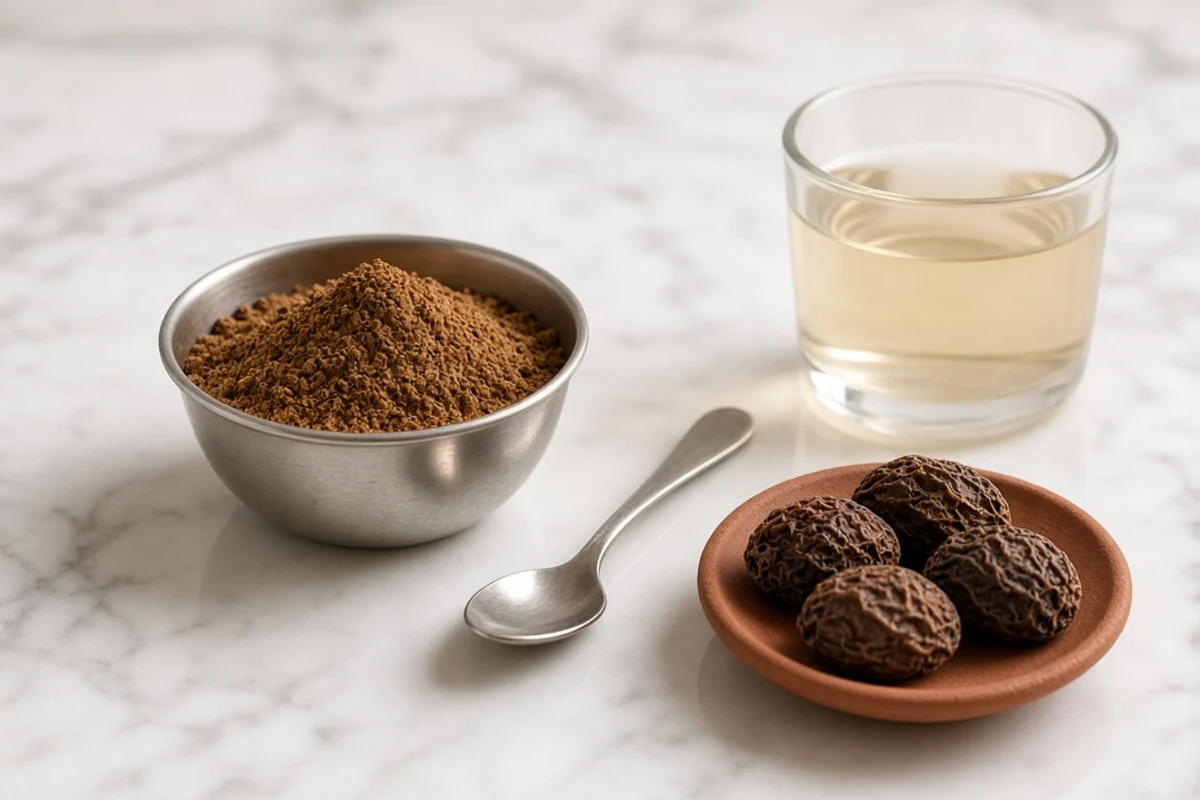 Night haritaki churna with warm water: Traditional Home MethodNight haritaki churna with warm water — a traditional Ayurvedic churna with anupana. It is traditionally used for bowel comfort routines. Consult a qualified Ayurvedic doctor (BAMS) before preparing or taking this at home. It is not a substitute for medical care. Avoid self-medication in pregnancy, while breastfeeding, in children, or with chronic disease unless a doctor advises.
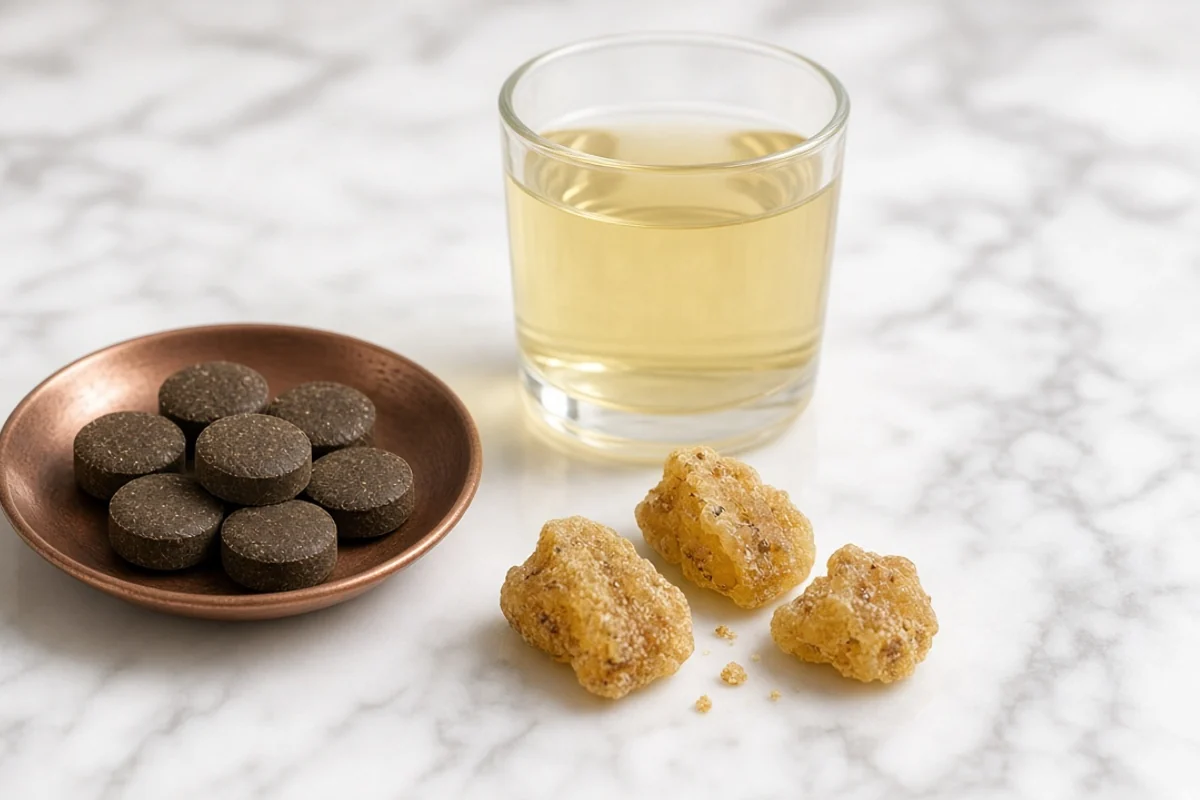 Prescribed guggulu tablet with warm water: Traditional Home MethodPrescribed guggulu tablet with warm water — a traditional Ayurvedic churna with anupana. It is traditionally taken as purified tablets, never raw resin. Consult a qualified Ayurvedic doctor (BAMS) before preparing or taking this at home. It is not a substitute for medical care. Avoid self-medication in pregnancy, while breastfeeding, in children, or with chronic disease unless a doctor advises.
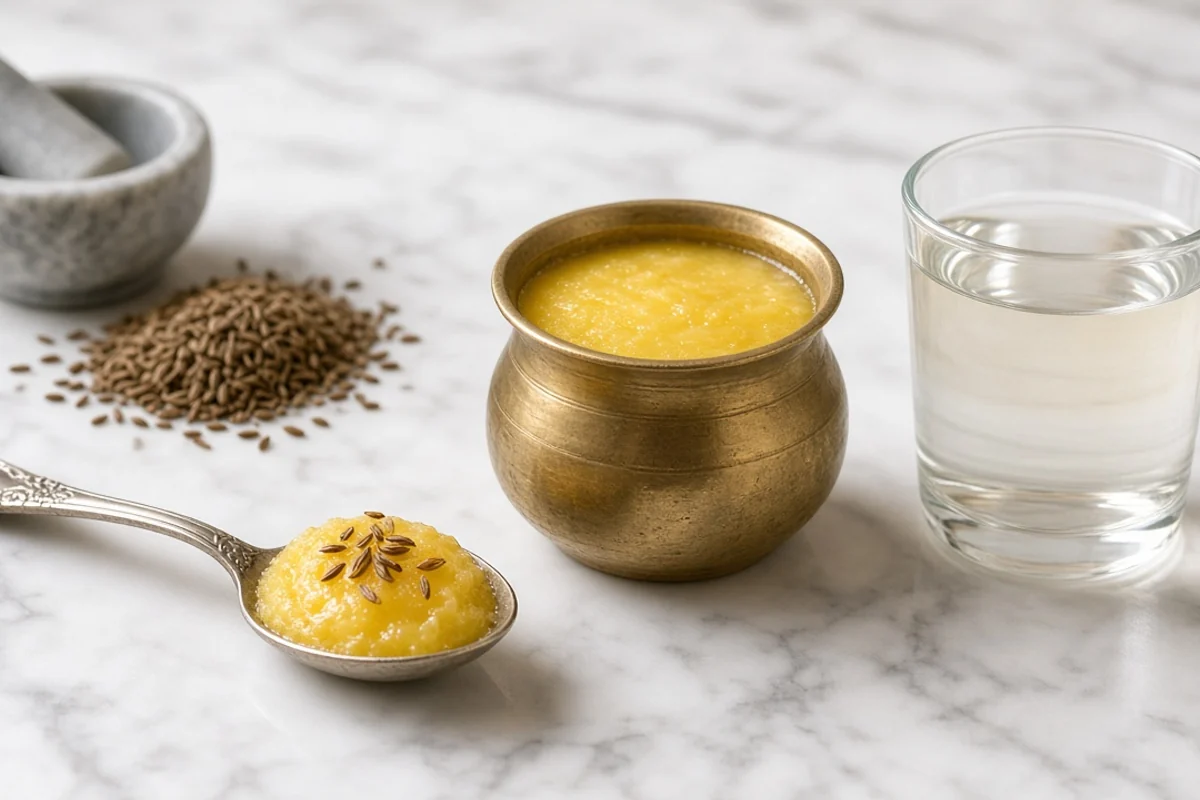 Teaspoon ghee in warm water with jeera: Traditional Home MethodTeaspoon ghee in warm water with jeera — a traditional Ayurvedic churna with anupana. It is traditionally softening when digestion feels dry and rough. Consult a qualified Ayurvedic doctor (BAMS) before preparing or taking this at home. It is not a substitute for medical care. Avoid self-medication in pregnancy, while breastfeeding, in children, or with chronic disease unless a doctor advises.
Related recipes
 Brown rice with dalChewy brown rice served with a simple toor dal tempered with cumin and ginger. A light thali with more fibre than white rice.
 Sol kadhiKokum water stirred into thin coconut milk with garlic, ginger and curry leaves. A sour Konkan cooler with no dairy and no onion.
- Vegetable oats upmaRolled oats cooked like upma with mustard, curry leaves, carrot and peas. Ready in one pan.
Related products
Get a weekly dose of Ayurveda
One seasonal tip, one remedy and one simple habit — every week, in English or Hindi. No spam, unsubscribe any time.